Turek L P, Oppermann H
J Virol. 1980 Aug;35(2):466-78. doi: 10.1128/JVI.35.2.466-478.1980.
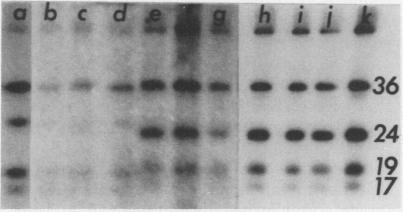
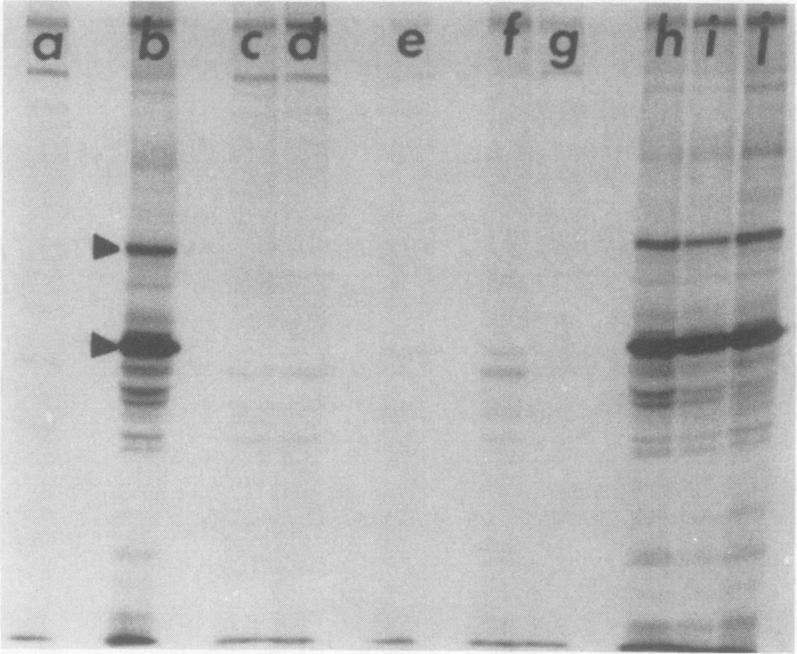
Normal rat kidney (NRK) fibroblasts were infected with the Schmidt-Ruppin strain (SR-D) of avian sarcoma virus (ASV) and cloned 20 h after infection without selection for the transformed phenotype. Most infected clones initially exhibited the flat, nontransformed morphology that is characteristic of uninfected NRK cells. In long-term culture, however, the majority of the SR-D NRK clones began segregating typical ASV-transformed cells. Transforming ASV could be rescued by fusion with chicken embryo fibroblasts from most of the infected clones tested. Three predominantly flat, independently infected clones were further analyzed by subcloning 8 to 10 weeks after infection. Most flat progeny subclones derived at random from two of these "parental" SR-D NRK clonal lines did not yield virus upon fusion with chicken embryo fibroblasts, although a nondefective transforming ASV was repeatedly recovered from the parental clones. This observation suggested that most, but not all, daughter cells in these SR-D NRK clones lost the ASV provirus after cloning. The progeny of the third independent parental cell clone, c17, gave rise to both flat and transformed subclones that carried ASV. In this case, ASV recovery by fusion and transfection from the progeny subclones was equally efficient regardless of the transformation phenotype of the cells. The 60,000-dalton phosphoprotein product of the ASV src gene was, however, expressed at high level only in the transformed variants. The results of a Luria-Delbruck fluctuation analysis and of Newcombe's respreading test indicated that the event leading to the spontaneous conversion to the transformed state occurred at random in dividing cultures of these flat ASV NRK cells at a rate predicted for somatic mutation.
将正常大鼠肾(NRK)成纤维细胞用禽肉瘤病毒(ASV)的施密特 - 鲁平株(SR - D)感染,并在感染后20小时进行克隆,未对转化表型进行选择。大多数感染的克隆最初呈现出未感染的NRK细胞特有的扁平、未转化的形态。然而,在长期培养中,大多数SR - D NRK克隆开始分离出典型的ASV转化细胞。通过与来自大多数测试感染克隆的鸡胚成纤维细胞融合,可以拯救转化性ASV。在感染后8至10周通过亚克隆对三个主要为扁平的、独立感染的克隆进行了进一步分析。从这两个“亲本”SR - D NRK克隆系中随机衍生出的大多数扁平子代亚克隆在与鸡胚成纤维细胞融合时不产生病毒,尽管从亲本克隆中反复回收了无缺陷的转化性ASV。这一观察结果表明,这些SR - D NRK克隆中的大多数(但不是全部)子代细胞在克隆后失去了ASV前病毒。第三个独立亲本细胞克隆c17的子代产生了携带ASV的扁平及转化亚克隆。在这种情况下,无论细胞的转化表型如何,通过融合和转染从子代亚克隆中回收ASV的效率是相同的。然而,ASV src基因的60,000道尔顿磷蛋白产物仅在转化变体中高水平表达。Luria - Delbruck波动分析和纽科姆再铺板试验的结果表明,导致自发转化为转化状态的事件在这些扁平ASV NRK细胞的分裂培养物中以体细胞突变预测的速率随机发生。