Mackem S, Roizman B
J Virol. 1982 Dec;44(3):939-49. doi: 10.1128/JVI.44.3.939-949.1982.
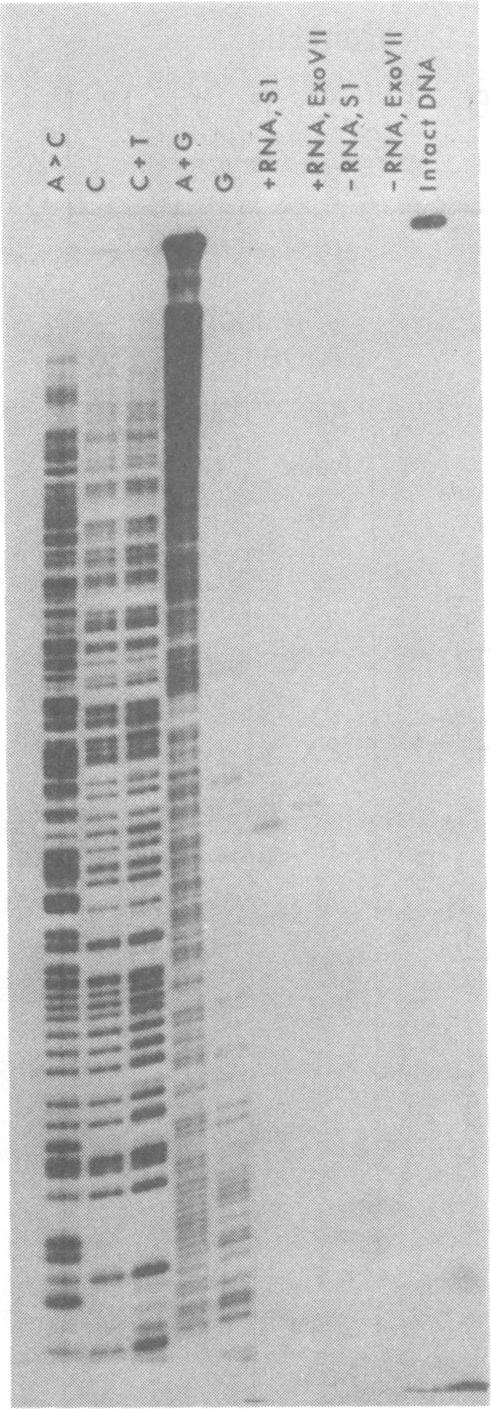
Previous studies have shown that herpes simplex virus genes form three groups, alpha, beta, and gamma, whose expression is coordinately regulated and sequentially ordered in a cascade fashion. Chimeric genes constructed by fusion of the coding and 5' nontranslated leader sequences of the thymidine kinase (TK) gene to the sequences upstream from the site of initiation of transcription of alpha genes 4 and 27 are regulated as alpha genes and are induced in cells converted to TK+ phenotype by infection with TK- virus. In alpha gene 4 (S. Mackem and B. Roizman, Proc. Natl. Acad. Sci. U.S.A. 79:4917-4921, 1982), both the promoter and the regulatory region are separable and movable. The promoter permits expression but not induction when fused to TK in the noncoding leader region of the gene. The regulator, when fused to the promoter of an expressible but noninducible portion of the natural beta TK, renders the gene inducible as an alpha gene; it consists of multiple regulatory units acting cumulatively. In this paper, we report on the precise site of initiation of transcription of alpha gene 0 within the inverted b sequences of the L component of viral DNA. We also report the following. (i) The chimeric gene consisting of the coding and 5' nontranslated leader regions of the TK gene fused to portions of the domain of alpha gene 0 extending largely upstream from the site of initiation of transcription of alpha gene 0 was regulated in the same fashion as the alpha 4- and alpha 27-TK chimeras. The regulatory region in the alpha gene 0 is largely upstream from nucleotide - 140. (ii) The promoter-regulatory regions of alpha genes 0, 4, and 27 share TATA sequences, A + T-rich (consensus) sequences occurring in regulating regions of alpha genes 0 and 4 in more than one copy, and multiple G + C-rich inverted repeats. The relation of these sequences to the function of the promoter-regulatory regions of the alpha genes is discussed.
先前的研究表明,单纯疱疹病毒基因可分为三组,即α、β和γ组,它们的表达受到协同调控,并以级联方式顺序排列。通过将胸苷激酶(TK)基因的编码序列和5'非翻译前导序列与α基因4和27转录起始位点上游的序列融合构建的嵌合基因,其调控方式与α基因相同,并在被TK-病毒感染而转化为TK+表型的细胞中被诱导。在α基因4中(S. Mackem和B. Roizman,《美国国家科学院院刊》79:4917 - 4921,1982),启动子和调控区域是可分离且可移动的。当启动子在基因的非编码前导区域与TK融合时,它允许表达但不允许诱导。该调控因子与天然β TK的可表达但不可诱导部分的启动子融合时,可使该基因作为α基因被诱导;它由多个累积作用的调控单元组成。在本文中,我们报告了病毒DNA的L成分的反向b序列内α基因0转录起始的确切位点。我们还报告了以下内容。(i)由TK基因的编码和5'非翻译前导区域与α基因0结构域的部分序列融合而成的嵌合基因,该部分序列主要位于α基因0转录起始位点上游,其调控方式与α4 - TK和α27 - TK嵌合体相同。α基因0中的调控区域主要位于核苷酸 - 140上游。(ii)α基因0、4和27的启动子 - 调控区域共享TATA序列、在α基因0和4的调控区域中出现不止一个拷贝的富含A + T(共有序列)的序列以及多个富含G + C 的反向重复序列。讨论了这些序列与α基因启动子 - 调控区域功能的关系。