Fonkalsrud E W
Ann Surg. 1980 Feb;191(2):139-44. doi: 10.1097/00000658-198002000-00002.
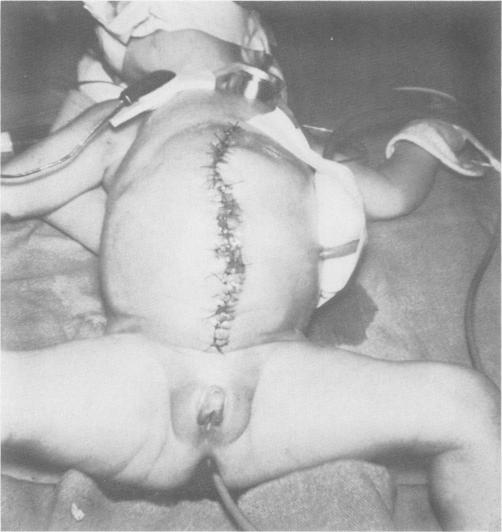
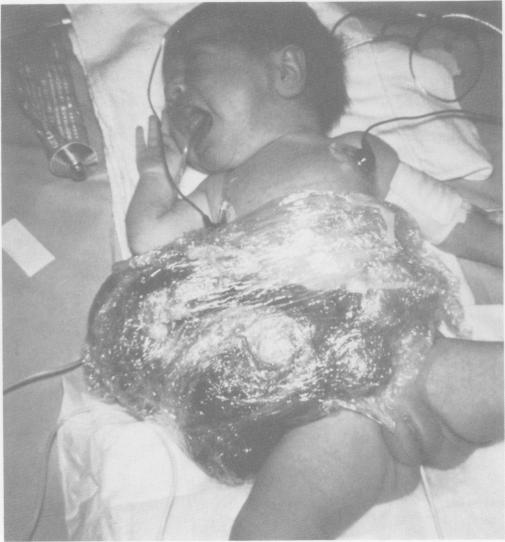
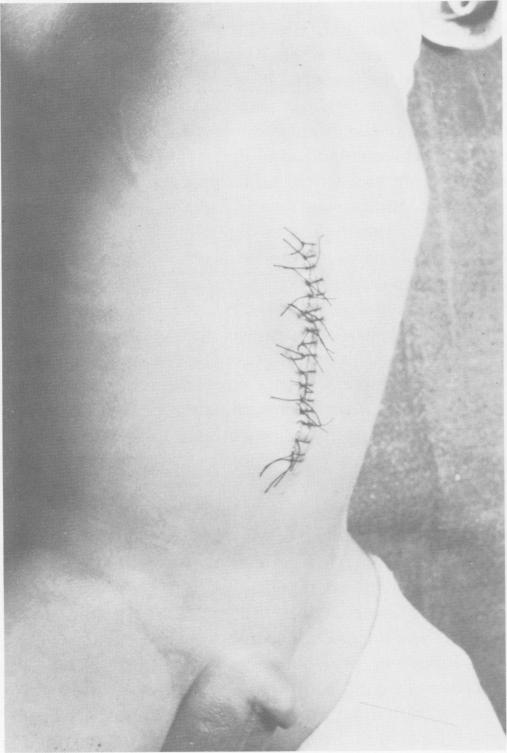
Based on 14 years' experience with the surgical repair of gastroschisis abdominal wall defects in 32 infants at the UCLA Hospital, certain aspects of care evolved which have served to reduce the overall long-term mortality to 6.2%. The severity of gastroschisis defects appears to be related to the length of time the eviscerated intestine has been exposed to amniotic fluid, and the degree of vascular obstruction to the viscera. In contrast to reports by previous authors recommending a specific operative technique for all infants with this malformation, we believe that choice of the optimal surgical repair depends on the degree of disproportion between the size of the eviscerated intestine and the size of the abdominal cavity. Three of the 32 patients with minimal disproportion underwent primary skin and muscle closure followed by early recovery. Twenty-seven who had primary skin flap closure later underwent secondary ventral hernia repair within six to 12 months. Two of the 32 infants had severe viscerobadominal disproportion and required temporary prosthesis coverage in addition to extensive skin flaps during the primary repair. The low morbidity and mortality following gastroschisis repair are apparently related to these factors: avoiding undue compression of the viscera; early coverage of the contaminated viscera with skin or muscle to minimize infection; careful supportive perioperative management to maintain body heat and provide adequate fluid repletion; and the infusion of intravenous hyperalimentation solutions during the lengthy period of post-operative ileus. Prosthetic materials should be reserved for more complex abdominal wall reconstruction in infants who have severe visceroabdominal disproportion.
基于加州大学洛杉矶分校医院对32例婴儿腹裂腹壁缺损进行手术修复的14年经验,护理的某些方面得到了改进,这有助于将总体长期死亡率降至6.2%。腹裂缺损的严重程度似乎与脱出的肠管暴露于羊水的时间长短以及内脏血管阻塞的程度有关。与之前作者建议对所有患有这种畸形的婴儿采用特定手术技术的报告不同,我们认为最佳手术修复方式的选择取决于脱出肠管大小与腹腔大小之间的不相称程度。32例中不相称程度最小的3例患者接受了一期皮肤和肌肉缝合,随后早期康复。27例接受一期皮瓣缝合的患者在6至12个月内随后接受了二期腹疝修复。32例婴儿中有2例存在严重的内脏与腹腔不相称,在一期修复时除了广泛的皮瓣外还需要临时使用假体覆盖。腹裂修复后低发病率和死亡率显然与这些因素有关:避免对内脏过度压迫;早期用皮肤或肌肉覆盖受污染的内脏以尽量减少感染;精心的围手术期支持性管理以维持体温并提供充足的液体补充;以及在术后肠梗阻的漫长时期内输注静脉高营养溶液。假体材料应保留用于内脏与腹腔严重不相称的婴儿进行更复杂的腹壁重建。