Inokuchi K, Beppu K, Koyanagi N, Nagamine K, Hashizume M, Sugimachi K
Ann Surg. 1984 Dec;200(6):711-7. doi: 10.1097/00000658-198412000-00007.
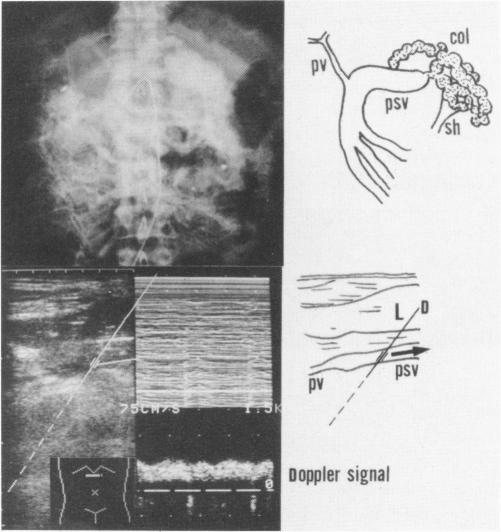
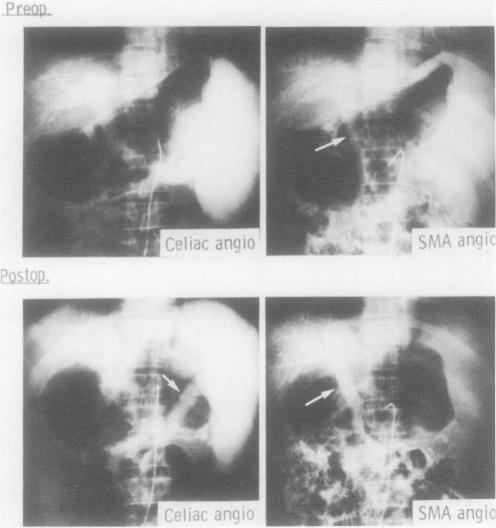
In an attempt to prevent portoprival malcirculation after distal splenorenal shunt (DSRS), a splenic hilar renal shunt (HRS) with proximal flush ligation of splenic vein was designed. To accomplish this procedure, two methods were compared: HRS alone (Group A) and HRS plus proximal flush ligation of the splenic vein (Group B). In Group A, which included 20 cirrhotic patients with esophageal varices, angiographic as well as pulsed Doppler flowmetric follow-up study revealed a portal thrombosis in two patients and severe narrowing of a portal vein in another two. Considerable stealing flow was observed in these four patients. In the Group B series, which included 33 cirrhotic patients, there were no gross changes in the portal hemodynamics. Normal prograde portal flow was confirmed by Doppler flowmeter in this series including 14 patients of more than 8 months after surgery. When the amount of nonisolated splenic vein embedded in the pancreas is minimized, portal malcirculation after distal splenorenal shunt can, to a great extent, be prevented.
为预防远端脾肾分流术(DSRS)后门静脉血流不畅,设计了一种脾门肾分流术(HRS),并对脾静脉进行近端平齐结扎。为完成该手术,比较了两种方法:单纯HRS(A组)和HRS联合脾静脉近端平齐结扎(B组)。A组包括20例肝硬化食管静脉曲张患者,血管造影及脉冲多普勒血流仪随访研究显示,2例患者出现门静脉血栓形成,另外2例患者门静脉严重狭窄。在这4例患者中观察到大量盗血现象。B组包括33例肝硬化患者,门静脉血流动力学无明显变化。在该组包括术后8个月以上的14例患者中,多普勒血流仪证实门静脉血流正常。当胰腺内包埋的非离断脾静脉数量减至最少时,远端脾肾分流术后的门静脉血流不畅在很大程度上可以得到预防。