Mori M, Morita T, Ikeda F, Amaya Y, Tatibana M, Cohen P P
Proc Natl Acad Sci U S A. 1981 Oct;78(10):6056-60. doi: 10.1073/pnas.78.10.6056.
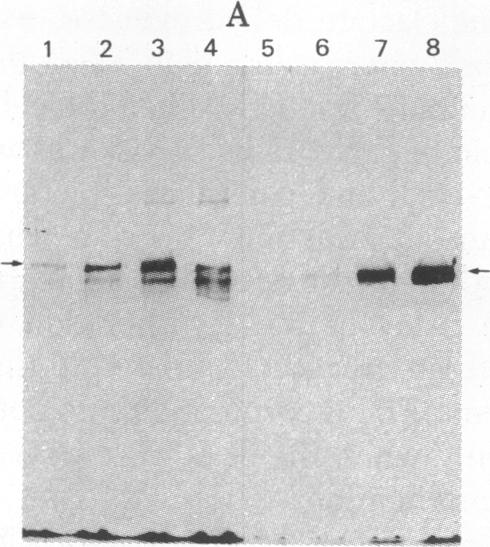
The synthesis and intracellular transport of the mitochondrial matrix enzymes ornithine transcarbamylase (carbamoylphosphate: L-ornithine carbamoyltransferase, EC 2.1.3.3.) and carbamoyl-phosphate synthetase (ammonia) I [carbon-dioxide:ammonia ligase (ADP-forming, carbamate-phosphorylating), EC 6.3.4.16] were studied in isolated rat hepatocytes. In pulse experiments at 37 degrees C, the larger precursors of the two enzymes appeared in the cytosol of the liver cells, where radioactivity levels of the precursors reached a plateau in 10-20 min after the pulse. The pulse-labeled mature enzymes appeared in the particulate fraction (containing mitochondria) after a time lag and increased almost linearly with time up to 40 min. The specific radioactivities of the precursors in the cytosol were much higher than those of the mature enzymes in the particulate fraction. In pulse--chase experiments, the labeled precursors disappeared from the cytosol with estimated half-lives of about 1-2 min. These results indicate that ornithine transcarbamylase and carbamoyl-phosphate synthetase I are initially synthesized as larger precursors and exist in a cytosolic pool from which they are transported into mitochondria and processed there to the mature enzymes concomitantly with or immediately after transport. Although the rates of synthesis, transport, and processing were decreased about 3-fold at 25 degrees C (as compared to incubation at 37 degrees C), the pool size of the precursors in the cytosol were somewhat larger at this temperature.
在分离的大鼠肝细胞中研究了线粒体基质酶鸟氨酸转氨甲酰酶(氨甲酰磷酸:L-鸟氨酸氨甲酰转移酶,EC 2.1.3.3.)和氨甲酰磷酸合成酶(氨)I [二氧化碳:氨连接酶(ADP形成,氨基甲酸酯磷酸化),EC 6.3.4.16]的合成及细胞内转运。在37℃的脉冲实验中,这两种酶的较大前体出现在肝细胞的胞质溶胶中,脉冲后10 - 20分钟前体的放射性水平达到平稳期。脉冲标记的成熟酶在一段时间延迟后出现在颗粒部分(含线粒体)中,并在长达40分钟的时间内几乎呈线性增加。胞质溶胶中前体的比放射性远高于颗粒部分中成熟酶的比放射性。在脉冲追踪实验中,标记的前体从胞质溶胶中消失,估计半衰期约为1 - 2分钟。这些结果表明,鸟氨酸转氨甲酰酶和氨甲酰磷酸合成酶I最初作为较大的前体合成,并存在于胞质溶胶池中,从那里它们被转运到线粒体中,并在转运时或转运后立即在那里加工成成熟酶。尽管在25℃时合成、转运和加工的速率降低了约3倍(与37℃孵育相比),但在此温度下胞质溶胶中前体的池大小略大。