Nag A C, Foster J D
J Anat. 1981 Jan;132(Pt 1):1-18.
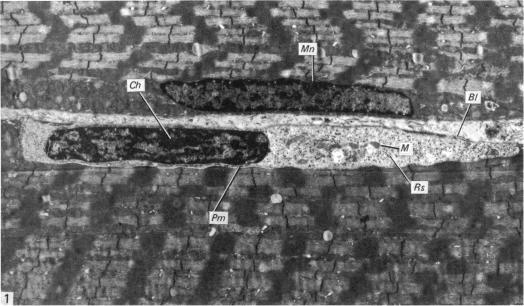
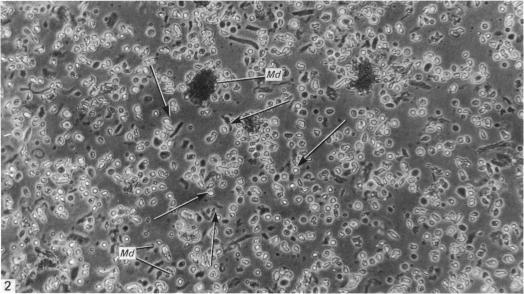
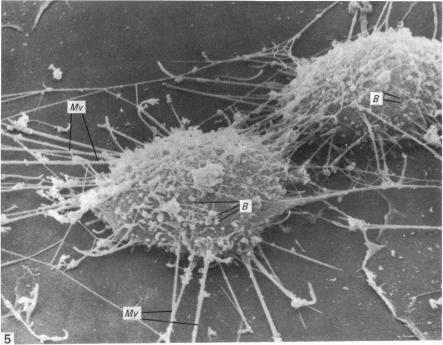
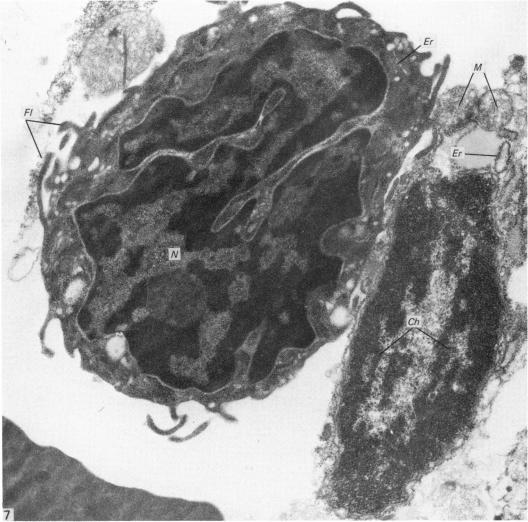
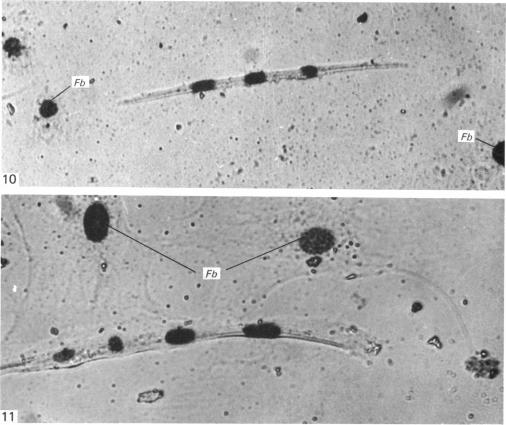
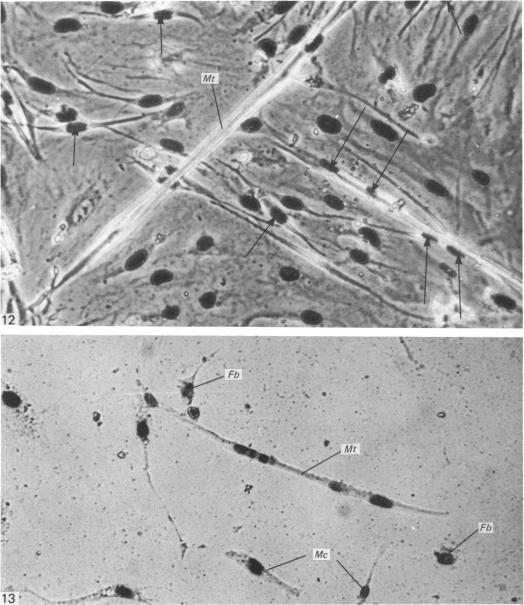
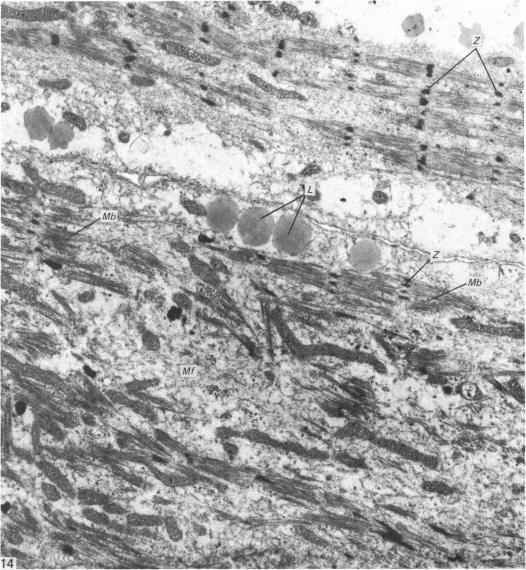
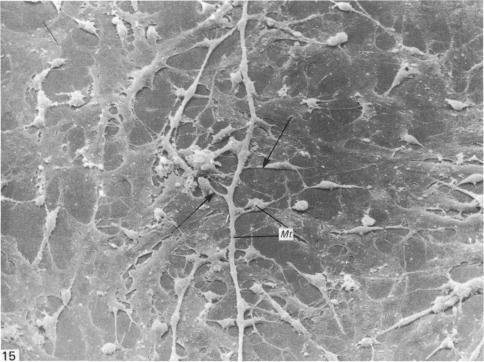
An injury to adult mammalian skeletal muscle is followed by regeneration, which involves a process believed to be similar to the differentiation of muscle fibres in the embryo. The origin of these differentiating myogenic cells is conjectural. The aim of the present study was to examine the source of myogenic cells and the process of myogenesis in adult skeletal muscle. Mononucleated cells were released from adult rat leg muscle mince after incubation with 0.1% pronase for 50-60 minutes at 37 degrees C. The ultrastructural studies revealed that the freshly dissociated mononucleated cells consisted of at least two populations of cells: myogenic satellite cells and non-myogenic fibroblastic cells. These cells were plated in growth media at various densities in cell culture dishes and incubated for 3 weeks in a balanced air atmosphere at 37 degrees C. The culture was routinely examined with a phase contrasted microscope for evidence of myogenic activities of the plated cells. At selected time intervals, the cell cultures were processed for autoradiography and scanning and transmission electron microscopy (SEM and TEM). Attachment of cells to the dish began soon after plating, with flattening of some non-muscle cells. The round- to spindle-shaped cells, indicative of myoblasts, began to appear within 24 hours. DNA synthesis and cell proliferation were observed in myogenic and non-myogenic cells within 24 hours of culture. SEM revealed that at 72 hours some myoblasts aligned and fused with one another, forming myotubes. Quantitation of autoradiographs indicated that the maximum number of labelled myotubes were present in the 3 days old culture, and thereafter, the labelled myotubes decreased in number and were absent in the 7 days old culture. Within 5-7 days the myotubes became larger and showed contractility. TEM of 6 to 21 day culture revealed that the myotubes contained well differentiated myofibrils, T-tubules and sarcoplasmic reticulum. It was evident from our studies that the mononucleated cells, having satellite cell morphology, were capable of differentiating into fully formed muscle fibres. This study lends support to the satellite cell hypothesis for regeneration of the skeletal muscle.
成年哺乳动物骨骼肌受伤后会再生,这一过程被认为与胚胎中肌纤维的分化过程相似。这些分化中的成肌细胞的起源尚无定论。本研究的目的是研究成年骨骼肌中成肌细胞的来源和肌生成过程。将成年大鼠腿部肌肉切碎,在37℃下与0.1%的链霉蛋白酶孵育50 - 60分钟后,释放出单核细胞。超微结构研究表明,刚解离的单核细胞至少由两类细胞组成:成肌卫星细胞和非成肌成纤维细胞。将这些细胞以不同密度接种于细胞培养皿中的生长培养基中,并在37℃的平衡空气环境中孵育3周。定期用相差显微镜检查培养物,以观察接种细胞的成肌活性迹象。在选定的时间间隔,对细胞培养物进行放射自显影、扫描和透射电子显微镜(SEM和TEM)处理。细胞接种后很快开始附着于培养皿,一些非肌肉细胞变扁平。圆形至梭形的细胞,即成肌细胞,在24小时内开始出现。培养24小时内,在成肌细胞和非成肌细胞中均观察到DNA合成和细胞增殖。SEM显示,72小时时一些成肌细胞相互排列并融合,形成肌管。放射自显影片的定量分析表明,标记的肌管数量在培养3天时最多,此后,标记的肌管数量减少,在培养7天时消失。在5 - 7天内,肌管变大并显示出收缩性。对培养6至21天的细胞进行TEM分析表明,肌管含有分化良好的肌原纤维、T小管和肌浆网。我们的研究表明,具有卫星细胞形态的单核细胞能够分化为完全成熟的肌纤维。本研究支持骨骼肌再生的卫星细胞假说。