Hebbel R P, Yamada O, Moldow C F, Jacob H S, White J G, Eaton J W
J Clin Invest. 1980 Jan;65(1):154-60. doi: 10.1172/JCI109646.
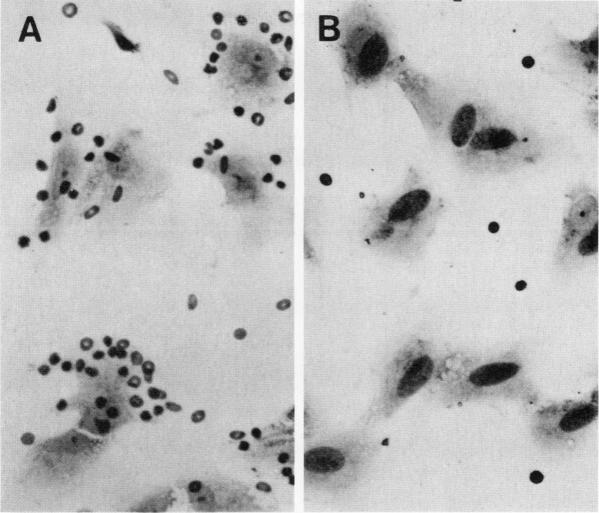
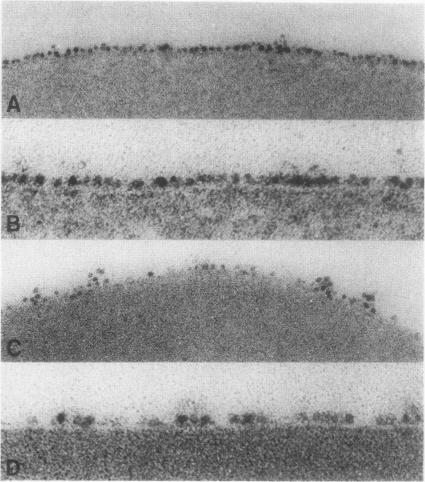
The abnormal shape and poor deformability of the sickled erythrocyte (RBC) have generally been held responsible for the microvascular occlusions of sickle cell disease. However, there is no correlation between the clinical severity of this disease and the presence of sickled RBC. In searching for additional factors that might contribute to the pathophysiology of sickle cell disease, we have investigated the possibility that sickle RBC might be less than normally repulsive of the vascular endothelium. After RBC suspensions are allowed to settle onto plates of cultured human endothelial cells, normal RBC are completely removed by as few as six washes. In contrast, sickle RBC remain adherent despite multiple washes. On subconfluent culture plates, normal RBC are distributed randomly, whereas sickle RBC cluster around endothelial cells. Sickle RBC adherence is not enhanced by deoxygenation but does increase with increasing RBC density. The enzymatic removal of membrane sialic acid greatly diminishes the adherence of sickle RBC to endothelial cells, suggesting that sialic acid participates in this abnormal cell-cell interaction. Although net negative charge appears normal, sickle RBC mainfest an abnormal clumping of negative surface charge as demonstrated by localization of cationized ferritin. These abnormalities are reproduced in normal RBC loaded with nonechinocytogenic amounts of calcium. We conclude that sickle RBC adhere to vascular endothelial cells in vitro, perhaps caused by a calcium-induced aberration of membrane topography. This adherence may be a pathogenetic factor in the microvascular occlusions characteristic of sickle cell disease.
镰状红细胞(RBC)的异常形状和较差的可变形性通常被认为是镰状细胞病微血管阻塞的原因。然而,这种疾病的临床严重程度与镰状RBC的存在之间并无关联。在寻找可能导致镰状细胞病病理生理的其他因素时,我们研究了镰状RBC对血管内皮的排斥力可能低于正常水平的可能性。将RBC悬液置于培养的人内皮细胞平板上后,只需冲洗6次就能完全去除正常RBC。相比之下,尽管多次冲洗,镰状RBC仍会黏附。在亚汇合培养平板上,正常RBC随机分布,而镰状RBC则在内皮细胞周围聚集。脱氧不会增强镰状RBC的黏附,但会随着RBC密度的增加而增加。酶促去除膜唾液酸会大大减少镰状RBC与内皮细胞的黏附,这表明唾液酸参与了这种异常的细胞间相互作用。尽管净负电荷看起来正常,但阳离子铁蛋白定位显示镰状RBC表现出负表面电荷的异常聚集。在加载非棘红细胞生成量钙的正常RBC中也出现了这些异常。我们得出结论,镰状RBC在体外会黏附于血管内皮细胞,这可能是由钙诱导的膜拓扑结构异常所致。这种黏附可能是镰状细胞病特征性微血管阻塞的一个致病因素。