
在小鼠胚胎发育过程中,植入后不久HLA - G转基因的转录就开始了。
Transcription of HLA-G transgenes commences shortly after implantation during embryonic development in mice.
作者信息
Horuzsko A, Tomlinson P D, Strachan T, Mellor A L
机构信息
Division of Molecular Immunology, National Institute for Medical Research, London.
出版信息
Immunology. 1994 Oct;83(2):324-8.
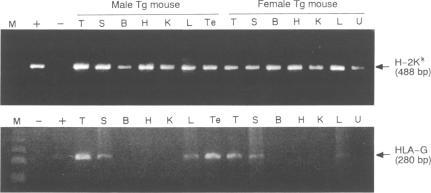
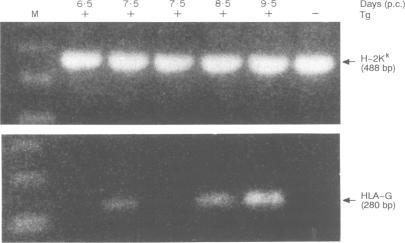
We studied the pattern of transcription of a human HLA-G transgene in mice using polymerase chain reaction (PCR) techniques. Transcription of the HLA-G transgene commenced in cells derived from embryos as soon as 48 hr after implantation of embryos in the uterine wall and continued for at least a further 48 hr during embryonic development. HLA-G transcripts were also present in RNA extracted from thymus, spleen and liver of adult HLA-G transgenic mice, although transcripts were not detected in RNA from any other tissues except testes of male transgenic mice. These results demonstrate that the restricted pattern of HLA-G transcription in embryo-derived trophoblast cells during the first trimester of human pregnancy is reproducible in mice. This suggests that transcription factors required for a highly regulated pattern of gene expression during embryonic development are present in murine trophoblast cells and provide a means to investigate the factors and study the consequences of HLA-G expression during development of the embryo.
我们使用聚合酶链反应(PCR)技术研究了小鼠体内人HLA - G转基因的转录模式。在胚胎植入子宫壁后48小时,HLA - G转基因的转录就在来源于胚胎的细胞中开始,并在胚胎发育过程中至少持续另外48小时。在成年HLA - G转基因小鼠的胸腺、脾脏和肝脏提取的RNA中也存在HLA - G转录本,不过除了雄性转基因小鼠的睾丸外,在其他任何组织的RNA中均未检测到转录本。这些结果表明,人类妊娠头三个月胚胎来源的滋养层细胞中HLA - G转录的受限模式在小鼠中是可重现的。这表明在小鼠滋养层细胞中存在胚胎发育过程中基因高度调控表达模式所需的转录因子,并提供了一种研究这些因子以及胚胎发育过程中HLA - G表达后果的方法。
 Zotero 插件