Mårtensson C, Kristensson K, Kalliomäki S, Borrebaeck C A, Carlsson R
BioInvent International AB, Lund University, Sweden.
Immunology. 1994 Oct;83(2):171-9.
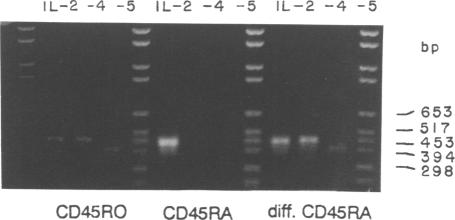
Severe combined immunodeficient (SCID) mice, lacking mature T and B cells and virtually devoid of endogenous serum immunoglobulins, spontaneously produce large amounts of human immunoglobulin after transplantation with human peripheral blood lymphocytes (PBL). Moreover, after immunization with antigen an active immune response resulting in a production of specific antibodies can be induced. Here we report that human T cells must be co-transplanted with B cells into the SCID mice for immunoglobulin production to occur. Resting human B cells could be activated to immunoglobulin production in the absence of human monocytes and a specific antibody response to tetanus toxoid (TT) could be induced, suggesting that the human B cells could present antigen to T cells in the SCID environment. Production of human immunoglobulins, as well as specific antibodies, was obtained only if CD4+ T cells of the memory phenotype, i.e. expressing CD45RO, were present. No human immunoglobulin, either of IgM or of IgG isotype, was found in SCID sera if mice were co-transplanted with human B cells and CD45RA expressing CD4+ T cells. However, FACS analysis revealed that the transplanted CD45RA+ cells became activated and differentiated towards CD45RO+ cells within 1-2 weeks. These cells also gained the lymphokine gene expression pattern associated with CD45RO+ cells, as demonstrated by polymerase chain reaction (PCR) analysis, and could support immunoglobulin production in SCID mice transplanted with fresh B cells. In fact, after differentiation of CD4+ CD45RA+ T cells towards expression of CD45RO, either in vivo in the SCID mouse or in vitro, these cells could interact with and activate human B cells to immunoglobulin production. Furthermore, in vitro activated and differentiated CD4+ CD45RA+ T cells from vaccinated donors were also able to support production of TT-specific antibodies provided the antigen was administered.
严重联合免疫缺陷(SCID)小鼠缺乏成熟的T细胞和B细胞,几乎没有内源性血清免疫球蛋白,在移植人外周血淋巴细胞(PBL)后会自发产生大量人免疫球蛋白。此外,用抗原免疫后可诱导产生特异性抗体的活跃免疫反应。在此我们报告,人T细胞必须与B细胞共同移植到SCID小鼠体内才能产生免疫球蛋白。在没有人类单核细胞的情况下,静止的人B细胞可被激活产生免疫球蛋白,并且可诱导对破伤风类毒素(TT)的特异性抗体反应,这表明人B细胞可在SCID环境中向T细胞呈递抗原。只有存在记忆表型的CD4⁺T细胞,即表达CD45RO的细胞时,才能产生人免疫球蛋白以及特异性抗体。如果将人B细胞与表达CD45RA的CD4⁺T细胞共同移植到SCID小鼠体内,在SCID血清中未发现IgM或IgG同种型的人免疫球蛋白。然而,流式细胞术分析显示,移植的CD45RA⁺细胞在1 - 2周内被激活并分化为CD45RO⁺细胞。如聚合酶链反应(PCR)分析所示,这些细胞还获得了与CD45RO⁺细胞相关的淋巴因子基因表达模式,并可支持在移植了新鲜B细胞的SCID小鼠中产生免疫球蛋白。事实上,CD4⁺CD45RA⁺T细胞在SCID小鼠体内或体外分化为表达CD45RO后,这些细胞可与人B细胞相互作用并激活其产生免疫球蛋白。此外,来自接种疫苗供体的体外激活和分化的CD4⁺CD45RA⁺T细胞,只要给予抗原,也能够支持产生TT特异性抗体。