Eldadah Z A, Brenn T, Furthmayr H, Dietz H C
Center for Medical Genetics, Johns Hopkins University School of Medicine, Baltimore, Maryland 21205.
J Clin Invest. 1995 Feb;95(2):874-80. doi: 10.1172/JCI117737.
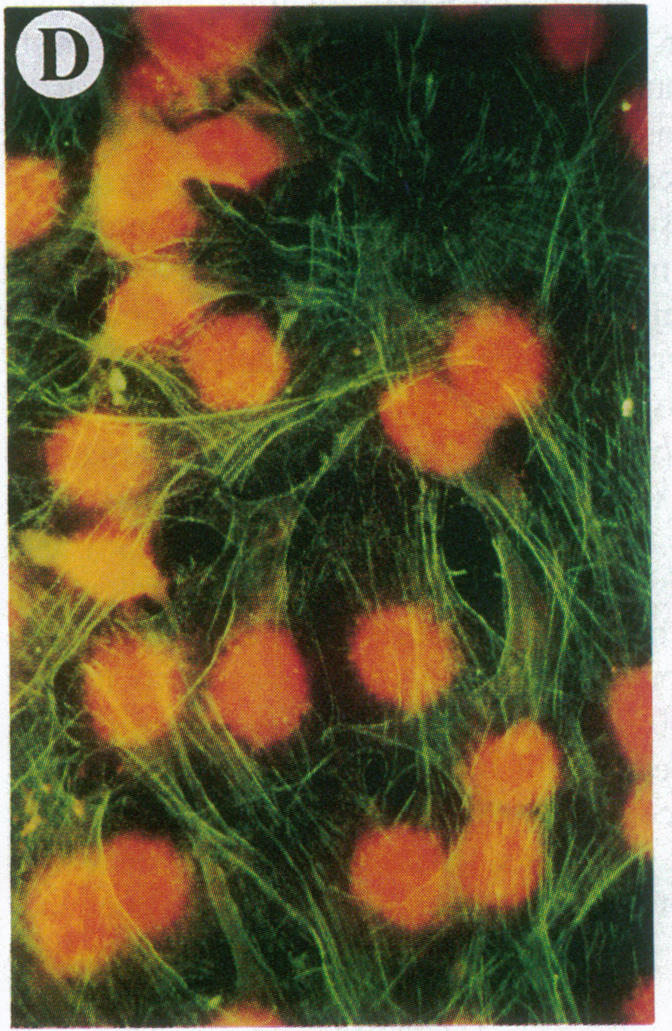
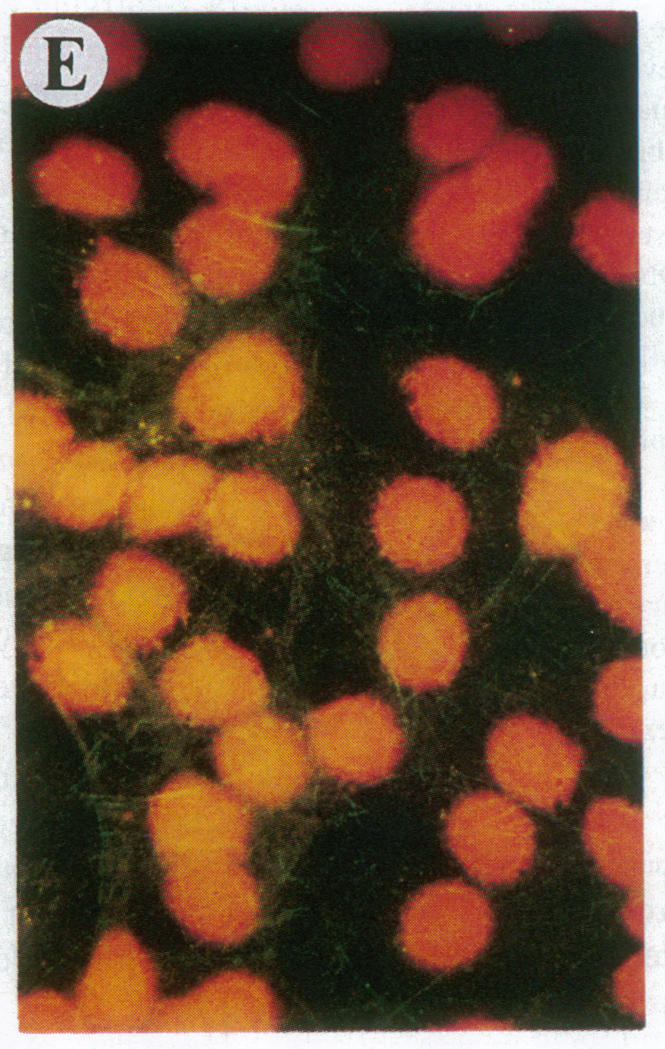
The Marfan syndrome (MFS) is a connective tissue disorder inherited as an autosomal dominant trait and caused by mutations in the gene encoding fibrillin, a 350-kD glycoprotein that multimerizes to form extracellular microfibrils. It has been unclear whether disease results from a relative deficiency of wild-type fibrillin; from a dominant-negative effect, in which mutant fibrillin monomers disrupt the function of the wild-type protein encoded by the normal allele; or from a dynamic and variable interplay between these two pathogenetic mechanisms. We have now addressed this issue in a cell culture system. A mutant fibrillin allele from a patient with severe MFS was expressed in normal human and murine fibroblasts by stable transfection. Immunohistochemical analysis of the resultant cell lines revealed markedly diminished fibrillin deposition and disorganized microfibrillar architecture. Pulse-chase studies demonstrated normal levels of fibrillin synthesis but substantially reduced deposition into the extracellular matrix. These data illustrate that expression of a mutant fibrillin allele, on a background of two normal alleles, is sufficient to disrupt normal microfibrillar assembly and reproduce the MFS cellular phenotype. This underscores the importance of the fibrillin amino-terminus in normal microfibrillar assembly and suggests that expression of the human extreme 5' fibrillin coding sequence may be sufficient, in isolation, to produce an animal model of MFS. Lastly, this substantiation of a dominant-negative effect offers mutant allele knockout as a potential strategy for gene therapy.
马凡综合征(MFS)是一种遗传性结缔组织疾病,呈常染色体显性遗传,由编码原纤蛋白的基因突变引起。原纤蛋白是一种350-kD的糖蛋白,多聚化形成细胞外微原纤维。目前尚不清楚该疾病是由于野生型原纤蛋白相对缺乏所致;还是由于显性负效应,即突变的原纤蛋白单体破坏了正常等位基因编码的野生型蛋白的功能;亦或是由于这两种致病机制之间动态且可变的相互作用。我们现在在细胞培养系统中解决了这个问题。通过稳定转染,将一名重症MFS患者的突变原纤蛋白等位基因在正常人和小鼠成纤维细胞中进行表达。对所得细胞系进行免疫组织化学分析,结果显示原纤蛋白沉积明显减少,微原纤维结构紊乱。脉冲追踪研究表明原纤蛋白合成水平正常,但沉积到细胞外基质中的量大幅减少。这些数据表明,在两个正常等位基因的背景下,突变原纤蛋白等位基因的表达足以破坏正常的微原纤维组装,并重现MFS的细胞表型。这突出了原纤蛋白氨基末端在正常微原纤维组装中的重要性,并表明单独表达人原纤蛋白编码序列最末端的5'端可能足以产生MFS动物模型。最后,这种显性负效应的证实为突变等位基因敲除作为基因治疗的潜在策略提供了依据。