Li K, Nagalla S R, Spindel E R
Division of Neuroscience, Oregon Regional Primate Research Center, Beaverton 97006.
J Clin Invest. 1994 Oct;94(4):1605-15. doi: 10.1172/JCI117502.
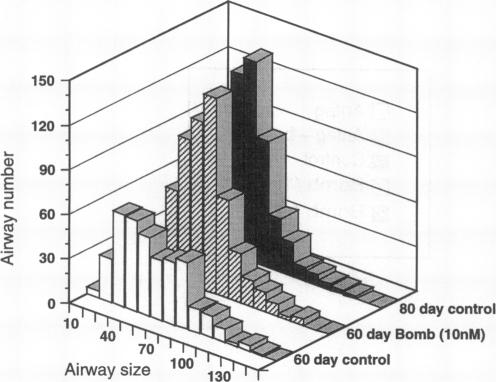
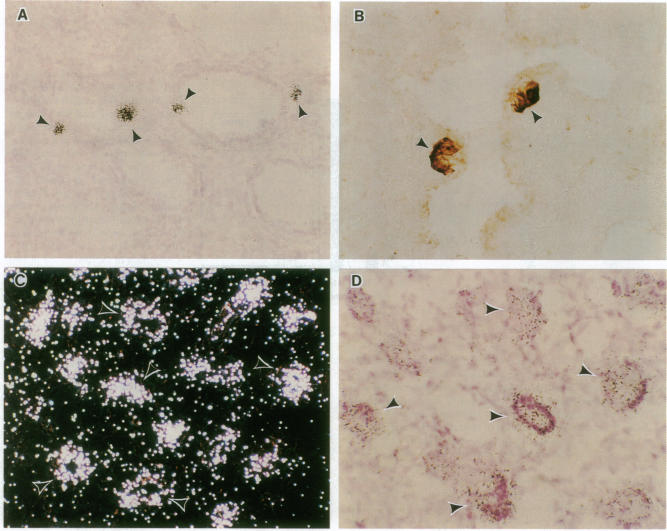
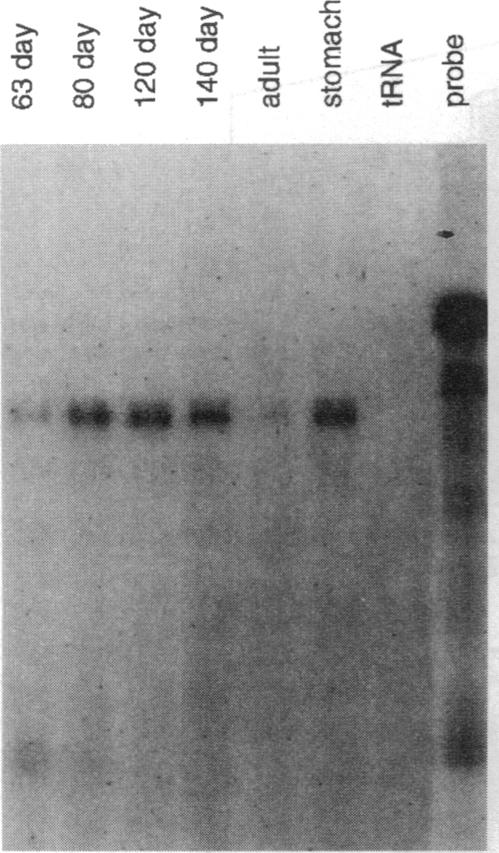
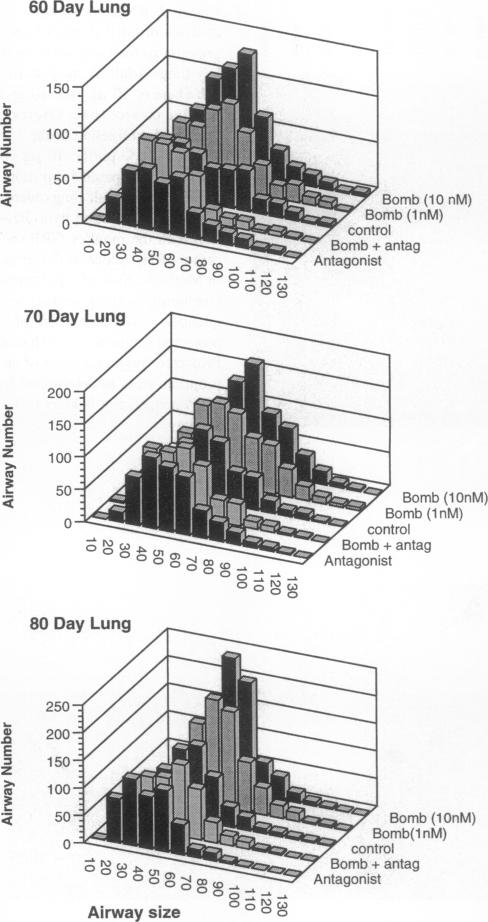
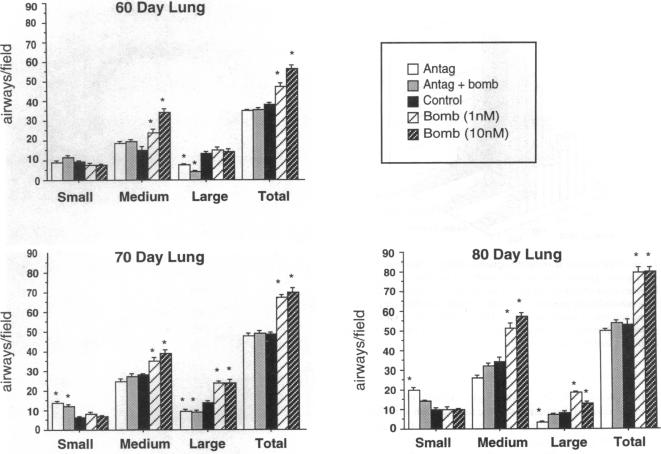
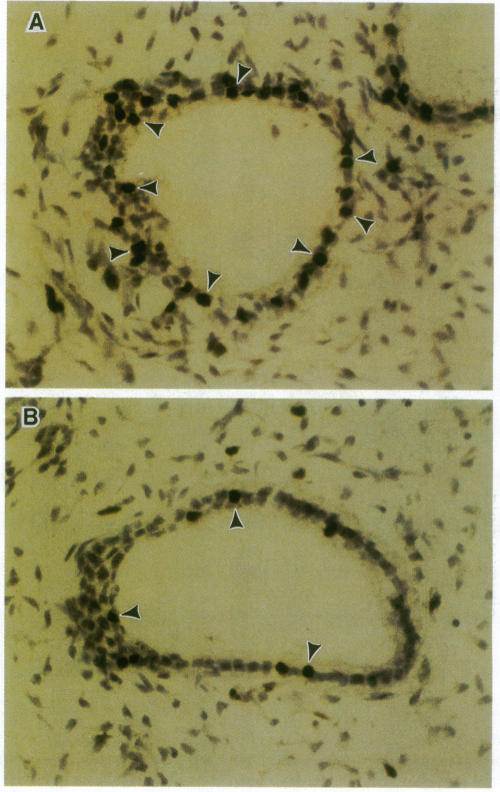
Gastrin-releasing peptide (GRP) is developmentally expressed in human fetal lung and is a growth factor for normal and neoplastic lung but its role in normal lung development has yet to be clearly defined. In this study we have characterized the expression of GRP and its receptor in fetal rhesus monkey lung and determined the effects of bombesin on fetal lung development in vitro. By RNA blot analysis, GRP mRNA was first detectable in fetal monkey lung at 63 days gestation, reached highest levels at 80 days gestation, and then declined to near adult levels by 120 days gestation; a pattern closely paralleling GRP expression in human fetal lung. As in human lung, in situ hybridization localized GRP mRNA to neuroendocrine cells though during the canalicular phase of development (between 63-80 days gestation) GRP mRNA was present not only in classic pulmonary neuroendocrine cells, but also in cells of budding airways. Immunohistochemistry showed that bombesin-like immunoreactivity was present in neuroendocrine cells, but not in budding airways, suggesting that in budding airways either the GRP mRNA is not translated, is rapidly secreted, or a related, but different RNA is present. RNase protection analysis using a probe to the monkey GRP receptor demonstrated that the time course of receptor RNA expression closely paralleled the time course of GRP RNA expression. In situ hybridization showed that GRP receptors were primarily expressed in epithelial cells of the developing airways. Thus GRP would appear to be secreted from neuroendocrine cells to act on target cells in developing airways. This hypothesis was confirmed by organ culture of fetal monkey lung in the presence of bombesin and bombesin antagonists. Bombesin treatment at 1 and 10 nM significantly increased DNA synthesis in airway epithelial cells and significantly increased the number and size of airways in cultured fetal lung. In fact, culturing 60 d fetal lung for 5 d with 10 nM bombesin increased airway size and number nearly to that observed in cultured 80 d fetal lung. The effects of bombesin could be blocked by specific GRP receptor antagonists. Thus this study demonstrates that GRP receptors are expressed on airway epithelial cells in developing fetal lung and that the interaction of GRP with the GRP receptor stimulates airway development.
胃泌素释放肽(GRP)在人类胎儿肺中呈发育性表达,是正常肺和肿瘤性肺的生长因子,但其在正常肺发育中的作用尚未明确界定。在本研究中,我们对恒河猴胎儿肺中GRP及其受体的表达进行了特征分析,并确定了蛙皮素对体外胎儿肺发育的影响。通过RNA印迹分析,GRP mRNA在妊娠63天时首次在猴胎儿肺中可检测到,在妊娠80天时达到最高水平,然后在妊娠120天时降至接近成年水平;这一模式与人类胎儿肺中GRP的表达密切平行。与人类肺一样,原位杂交将GRP mRNA定位于神经内分泌细胞,尽管在发育的小管期(妊娠63 - 80天之间),GRP mRNA不仅存在于经典的肺神经内分泌细胞中,也存在于萌芽气道的细胞中。免疫组织化学显示,蛙皮素样免疫反应性存在于神经内分泌细胞中,但不存在于萌芽气道中,这表明在萌芽气道中,要么GRP mRNA未被翻译,要么被迅速分泌,要么存在一种相关但不同的RNA。使用针对猴GRP受体的探针进行的核糖核酸酶保护分析表明,受体RNA表达的时间进程与GRP RNA表达的时间进程密切平行。原位杂交显示,GRP受体主要在发育中气道的上皮细胞中表达。因此,GRP似乎是从神经内分泌细胞分泌出来,作用于发育中气道的靶细胞。在存在蛙皮素和蛙皮素拮抗剂的情况下对猴胎儿肺进行器官培养证实了这一假设。用1 nM和10 nM的蛙皮素处理显著增加了气道上皮细胞中的DNA合成,并显著增加了培养的胎儿肺中气道的数量和大小。事实上,用10 nM的蛙皮素将60天胎儿肺培养5天,气道大小和数量几乎增加到与培养80天胎儿肺中观察到的水平相当。蛙皮素的作用可被特异性GRP受体拮抗剂阻断。因此,本研究表明,GRP受体在发育中的胎儿肺气道上皮细胞上表达,并且GRP与GRP受体的相互作用刺激气道发育。