Lal B, Indurti R R, Couraud P O, Goldstein G W, Laterra J
Department of Neurology, Johns Hopkins University School of Medicine, Baltimore, MD 21205.
Proc Natl Acad Sci U S A. 1994 Oct 11;91(21):9695-9. doi: 10.1073/pnas.91.21.9695.
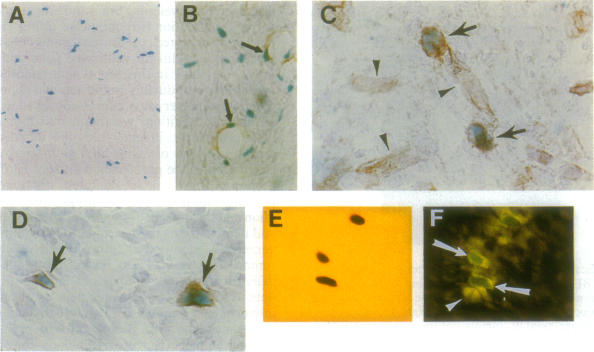
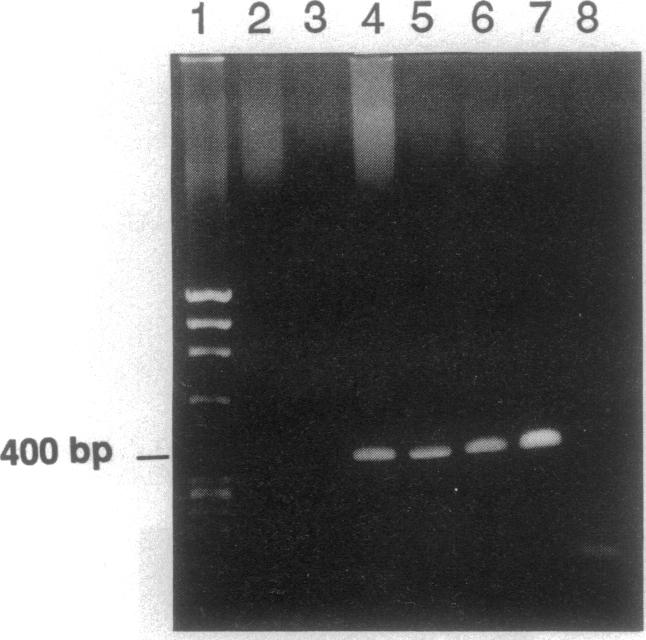
The delivery of therapeutic genes to primary brain neoplasms opens new opportunities for treating these frequently fatal tumors. Efficient gene delivery to tissues remains an important obstacle to therapy, and this problem has unique characteristics in brain tumors due to the blood-brain and blood-tumor barriers. The presence of endothelial mitogens and vessel proliferation within solid tumors suggests that genetically modified endothelial cells might efficiently transplant to brain tumors. Rat brain endothelial cells immortalized with the adenovirus E1A gene and further modified to express the beta-galactosidase reporter were examined for their ability to survive implantation to experimental rat gliomas. Rats received 9L, F98, or C6 glioma cells in combination with endothelial cells intracranially to caudate/putamen or subcutaneously to flank. Implanted endothelial cells were identified by beta-galactosidase histochemistry or by polymerase chain reaction in all tumors up to 35 days postimplantation, the latest time examined. Implanted endothelial cells appeared to cooperate in tumor vessel formation and expressed the brain-specific endothelial glucose transporter type 1 as identified by immunohistochemistry. The proliferation of implanted endothelial cells was supported by their increased number within tumors between postimplantation days 14 and 21 (P = 0.015) and by their expression of the proliferation antigen Ki67. These findings establish that genetically modified endothelial cells can be stably engrafted to growing gliomas and suggest that endothelial cell implantation may provide a means of delivering therapeutic genes to brain neoplasms and other solid tumors. In addition, endothelial implantation to brain may be useful for defining mechanisms of brain-specific endothelial differentiation.
将治疗性基因递送至原发性脑肿瘤为治疗这些常见的致命肿瘤带来了新的机遇。有效地将基因递送至组织仍然是治疗的一个重要障碍,并且由于血脑屏障和血肿瘤屏障,这个问题在脑肿瘤中具有独特的特征。实体肿瘤中存在内皮细胞促细胞分裂剂和血管增殖,这表明基因修饰的内皮细胞可能有效地移植到脑肿瘤中。用腺病毒E1A基因永生化并进一步修饰以表达β-半乳糖苷酶报告基因的大鼠脑内皮细胞,检测其植入实验性大鼠胶质瘤后的存活能力。大鼠颅内尾状核/壳核或皮下侧腹接受9L、F98或C6胶质瘤细胞与内皮细胞的联合移植。通过β-半乳糖苷酶组织化学或聚合酶链反应在植入后长达35天(检测的最晚时间)的所有肿瘤中鉴定植入的内皮细胞。植入的内皮细胞似乎参与肿瘤血管形成,并通过免疫组织化学鉴定表达脑特异性内皮葡萄糖转运蛋白1。植入的内皮细胞在植入后第14天至21天肿瘤内数量增加(P = 0.015)以及其增殖抗原Ki67的表达,支持了其增殖。这些发现证实基因修饰的内皮细胞可以稳定地植入生长中的胶质瘤,并表明内皮细胞植入可能提供一种将治疗性基因递送至脑肿瘤和其他实体肿瘤的方法。此外,内皮细胞植入脑内可能有助于确定脑特异性内皮分化的机制。