Snudden D K, Hearing J, Smith P R, Grässer F A, Griffin B E
Department of Virology, Royal Postgraduate Medical School, London, UK.
EMBO J. 1994 Oct 17;13(20):4840-7. doi: 10.1002/j.1460-2075.1994.tb06810.x.
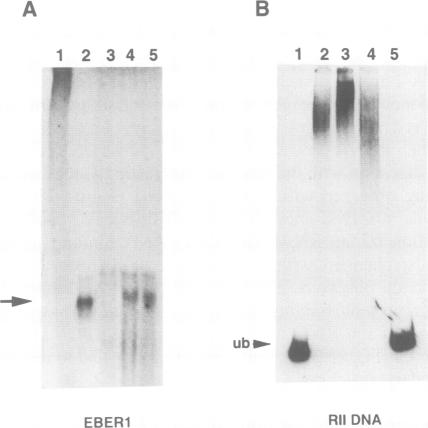
Nuclear antigen 1 (EBNA-1) is one of the key functions of the oncogenic DNA virus, Epstein-Barr virus (EBV), and is the only viral protein consistently expressed in EBV-associated malignancies. EBNA-1 binds in a site-specific manner to the viral DNA and is essential for viral replication, as well as for maintaining the genome as an extrachromosomal episome within infected cells. EBNA-1 is not recognized by the cellular immune system. Here we demonstrate that, in addition to its known DNA binding properties, EBNA-1 can also act as a strong RNA binding protein, interacting with diverse substrates in vitro, including the EBV-encoded RNA polymerase III transcript EBER1 and the HIV-encoded transactivation response (TAR) element. We also show that EBNA-1 can bind exon sequences derived from its own RNA expressed from the Fp promoter, as found in Burkitt's lymphoma-related cells and in nasopharyngeal carcinomas. EBNA-1 has been identified as a component in an RNA complex; moreover, an anti-EBNA-1 antibody 1H4-1, that does not inhibit DNA binding, blocks binding to RNA. Arginine/glycine-containing (so-called 'RGG') motifs have been found in an increasing number of proteins that interact with RNA. The EBV antigen contains three potential 'RGG' motifs located around an internal glycine/alanine-rich repetitive sequence in the protein, and outside the region of EBNA-1 mapped previously as essential for viral DNA replication and other functionally defined properties. These motifs could be involved in the observed binding between EBNA-1 and RNA.(ABSTRACT TRUNCATED AT 250 WORDS)
核抗原1(EBNA-1)是致癌DNA病毒——爱泼斯坦-巴尔病毒(EBV)的关键功能蛋白之一,也是在EBV相关恶性肿瘤中持续表达的唯一病毒蛋白。EBNA-1以位点特异性方式与病毒DNA结合,对病毒复制至关重要,同时对于在受感染细胞中将基因组维持为染色体外附加体也必不可少。EBNA-1不会被细胞免疫系统识别。在此我们证明,除了其已知的DNA结合特性外,EBNA-1还可作为一种强大的RNA结合蛋白,在体外与多种底物相互作用,包括EBV编码的RNA聚合酶III转录本EBER1和HIV编码的反式激活应答(TAR)元件。我们还表明,EBNA-1可以结合源自其自身从Fp启动子表达的RNA的外显子序列,如在伯基特淋巴瘤相关细胞和鼻咽癌中所发现的那样。EBNA-1已被鉴定为一种RNA复合物的组成成分;此外,一种不抑制DNA结合的抗EBNA-1抗体1H4-1可阻断其与RNA的结合。在越来越多与RNA相互作用的蛋白质中发现了含精氨酸/甘氨酸(所谓的“RGG”)基序。EBV抗原在该蛋白富含甘氨酸/丙氨酸的内部重复序列周围以及先前被确定为对病毒DNA复制和其他功能特性至关重要的EBNA-1区域之外,含有三个潜在的“RGG”基序。这些基序可能参与了所观察到的EBNA-1与RNA之间的结合。(摘要截短于250词)