Murry C E, Giachelli C M, Schwartz S M, Vracko R
Department of Pathology, University of Washington School of Medicine, Seattle 98195.
Am J Pathol. 1994 Dec;145(6):1450-62.
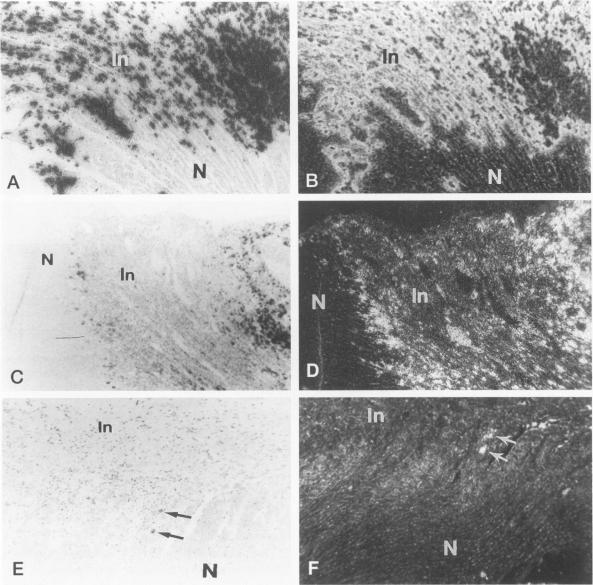
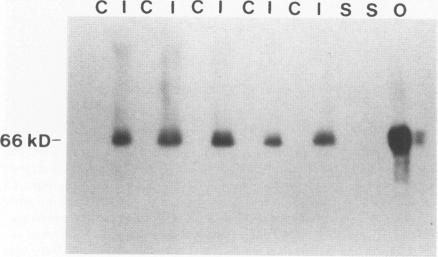
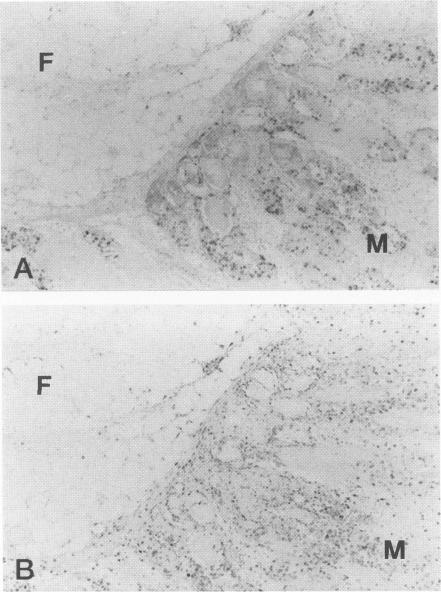
Osteopontin is a secreted glycoprotein implicated in a variety of functions, including cell adhesion and migration. Because these functions may be of general importance in the response of tissue to injury, we examined osteopontin expression after experimental cardiac injury and human myocardial infarction. Rat hearts were injured by transdiaphragmatic freeze-thaw and examined from 1 to 28 days after injury. Osteopontin was absent from normal myocardium by immunocytochemistry, Western blotting, and in situ hybridization. On days 1 and 2 after injury, osteopontin mRNA and protein were expressed at high levels by macrophages infiltrating necrotic myocardium. Double labeling with the macrophage marker ED1, however, demonstrated that only a subset of macrophages expressed osteopontin. Western blot analysis showed a single 66-kd band in injured myocardium that was absent from control tissue. Although macrophages remained abundant in the ensuing granulation response and scar tissue formation, the expression of osteopontin was diminished on day 4 and markedly downregulated at 1 and 4 weeks after injury, with only rare cells expressing the message or protein. In a human heart with an 8-day-old myocardial infarct, there was abundant expression of osteopontin mRNA and protein in macrophages within the necrotic and granulation tissue. Transient expression of osteopontin was also observed in a subset of macrophages infiltrating lung, skin, and skeletal muscle injured during the experiment, indicating the response was not limited to the heart. Thus, synthesis of osteopontin by macrophages appears to be a generalized response in the reaction to tissue injury. Although macrophages persist in these lesions, osteopontin is dramatically downregulated as healing proceeds. These results provide the first evidence that osteopontin may be important in healing after tissue injury, possibly in cellular adhesion, chemotaxis, and/or phagocytosis.
骨桥蛋白是一种分泌型糖蛋白,参与多种功能,包括细胞黏附和迁移。由于这些功能在组织对损伤的反应中可能具有普遍重要性,我们研究了实验性心脏损伤和人类心肌梗死后骨桥蛋白的表达情况。通过经膈冷冻-解冻法损伤大鼠心脏,并在损伤后1至28天进行检查。通过免疫细胞化学、蛋白质印迹法和原位杂交,正常心肌中未检测到骨桥蛋白。在损伤后第1天和第2天,浸润坏死心肌的巨噬细胞高水平表达骨桥蛋白mRNA和蛋白质。然而,用巨噬细胞标志物ED1进行双重标记显示,只有一部分巨噬细胞表达骨桥蛋白。蛋白质印迹分析显示,损伤心肌中有一条66-kd的条带,对照组织中则没有。尽管在随后的肉芽组织反应和瘢痕组织形成过程中巨噬细胞仍然大量存在,但骨桥蛋白的表达在第4天减少,在损伤后1周和4周明显下调,只有极少数细胞表达该信息或蛋白质。在一个有8天陈旧性心肌梗死的人心脏中,坏死和肉芽组织中的巨噬细胞大量表达骨桥蛋白mRNA和蛋白质。在实验过程中,浸润受伤肺、皮肤和骨骼肌的一部分巨噬细胞中也观察到骨桥蛋白的短暂表达,表明这种反应并不局限于心脏。因此,巨噬细胞合成骨桥蛋白似乎是对组织损伤反应中的一种普遍反应。尽管巨噬细胞持续存在于这些病变中,但随着愈合的进行,骨桥蛋白显著下调。这些结果首次证明骨桥蛋白可能在组织损伤后的愈合中起重要作用,可能参与细胞黏附、趋化性和/或吞噬作用。