Chourey P S, Taliercio E W
U.S. Department of Agriculture, University of Florida, Gainesville 32611-0680.
Proc Natl Acad Sci U S A. 1994 Aug 16;91(17):7917-21. doi: 10.1073/pnas.91.17.7917.
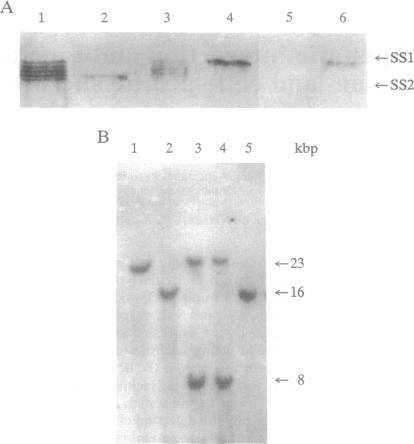
A tissue-specific epistatic mode of gene interaction was observed between molecularly homologous genes Sh1 and Sus1 (hereafter, Sh and Sus), encoding the sucrose synthase (SS) isozymes, SS1 and SS2, respectively. In Sh Sus genotype, both SS genes were expressed simultaneously and approximately equally in young seedlings; however, only the Sus-encoded SS2 protein was seen in the developing embryos. By contrast, the mutant sus genotype, lacking detectable levels of the SS2 protein in various tissues tested, showed expression of the Sh locus as judged by the detection of the SS1 protein in such embryos. Ectopic expression in embryos was seen from two separate Sh alleles, Sh-W22 and Sh'-5 (a revertant allele derived upon Ds excision from sh-m5933). In each case, the Sh expression at the protein level in embryos was unique to genotypes with the mutant sus gene. Based on the observed lack of phenotypic change in the sus mutant, we suggest that the ectopic expression of the Sh in otherwise Sus-specific tissues leads to functional compensation. There was no epistatic interaction of Sh and Sus at the RNA level as SS1 transcripts were detectable in both Sus and sus embryos. Thus, embryo specificity between the two SS genes was determined at posttranscriptional or at translational level of control. We surmise on the basis of these data that metabolic regulatory controls seem to override the normal constraints of tissue and cell specificity of the nonallelic isozyme genes to maintain efficient use of the pathways.
在分别编码蔗糖合酶(SS)同工酶SS1和SS2的分子同源基因Sh1和Sus1(以下简称Sh和Sus)之间观察到了一种组织特异性的基因上位性互作模式。在Sh Sus基因型中,两个SS基因在幼苗中同时表达且表达量大致相等;然而,在发育中的胚中仅能看到由Sus编码的SS2蛋白。相比之下,在测试的各种组织中缺乏可检测水平的SS2蛋白的突变体sus基因型,通过在这类胚中检测到SS1蛋白来判断,显示出Sh位点的表达。在胚中的异位表达见于两个独立的Sh等位基因,Sh-W22和Sh'-5(一个从sh-m5933经Ds切除后获得的回复等位基因)。在每种情况下,胚中Sh在蛋白水平的表达对于具有突变体sus基因的基因型是独特的。基于在sus突变体中观察到的表型变化缺失,我们认为Sh在原本Sus特异性组织中的异位表达导致了功能补偿。在RNA水平上Sh和Sus之间没有上位性互作,因为在Sus和sus胚中均能检测到SS1转录本。因此,两个SS基因之间的胚特异性是在转录后或翻译水平的调控中确定的。基于这些数据我们推测,代谢调控似乎超越了非等位同工酶基因的组织和细胞特异性的正常限制,以维持途径的有效利用。