Berger M, Wetzler E, August J T, Tartakoff A M
Department of Pediatrics, Case Western Reserve University School of Medicine, Cleveland, Ohio 44106.
J Clin Invest. 1994 Sep;94(3):1113-25. doi: 10.1172/JCI117426.
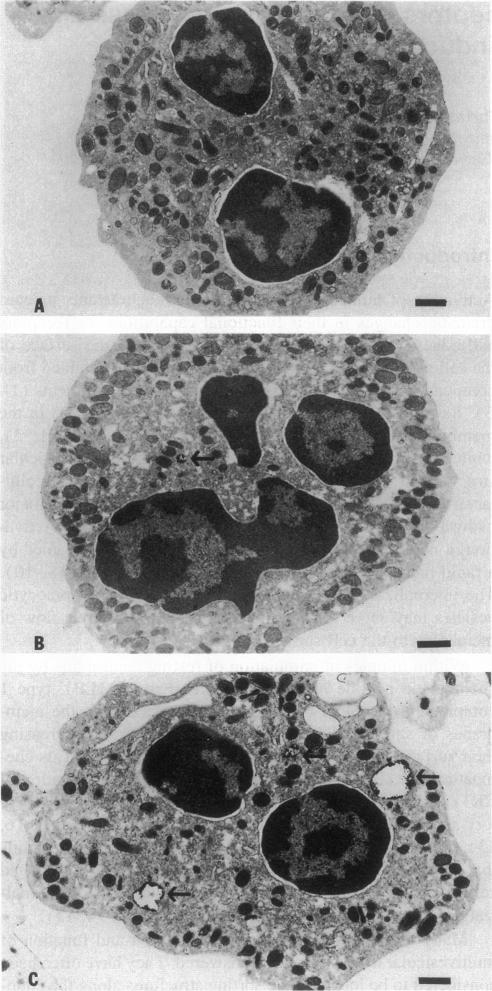
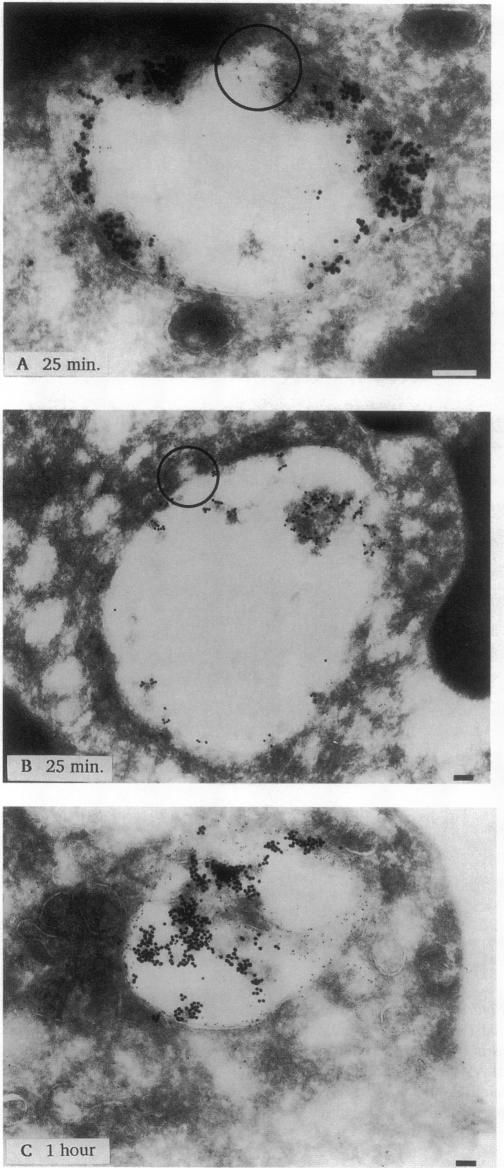
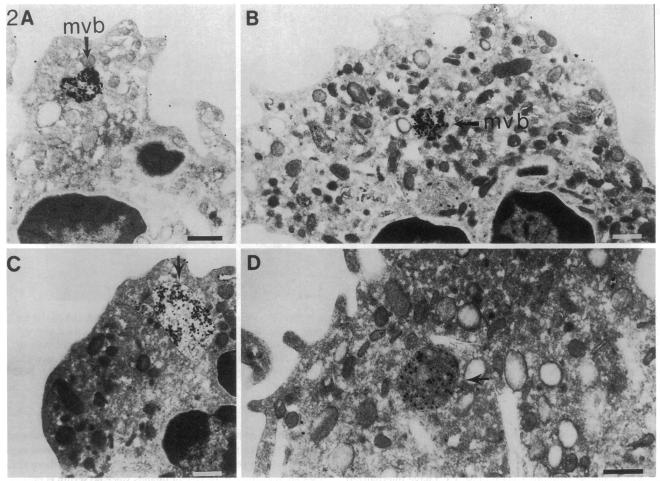
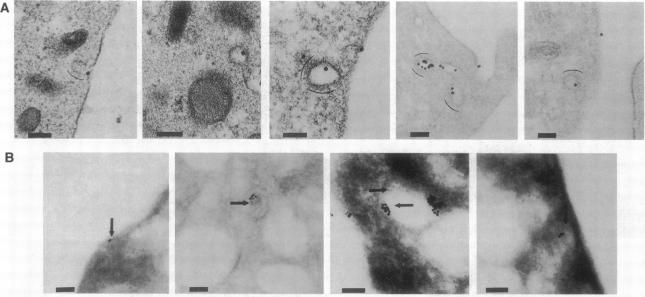
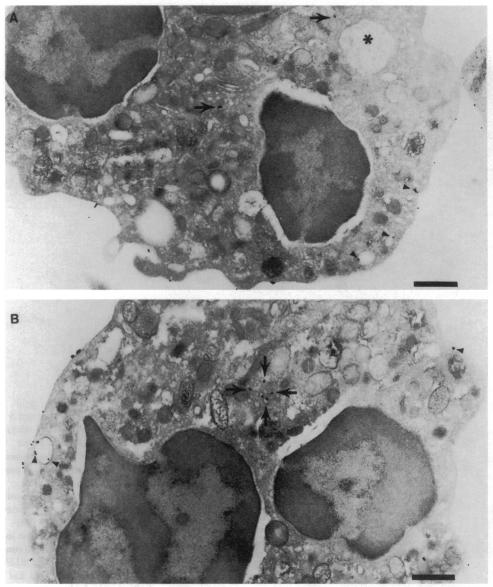
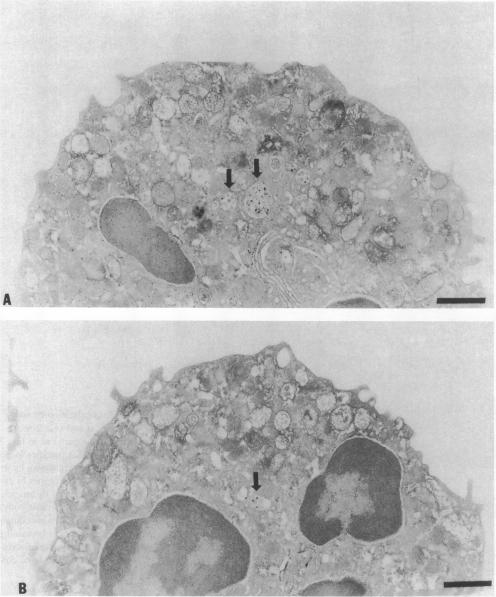
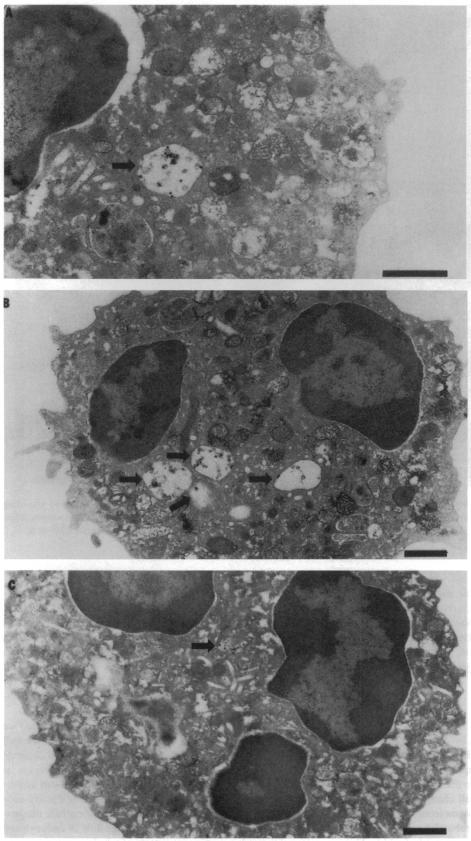
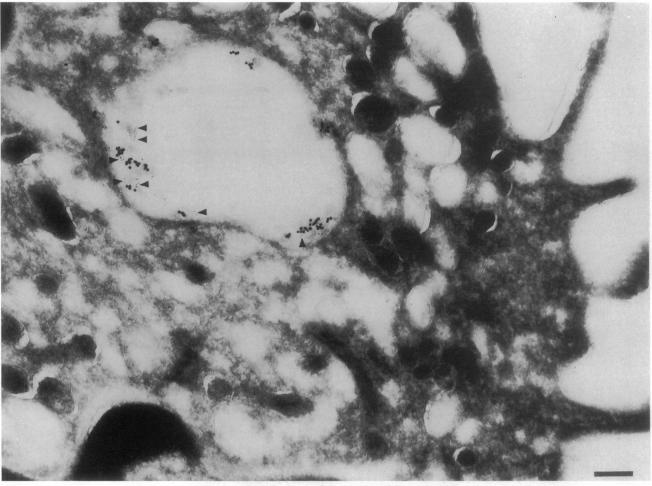
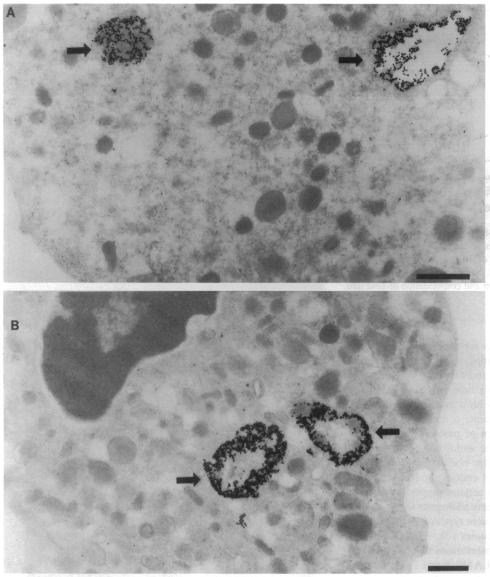
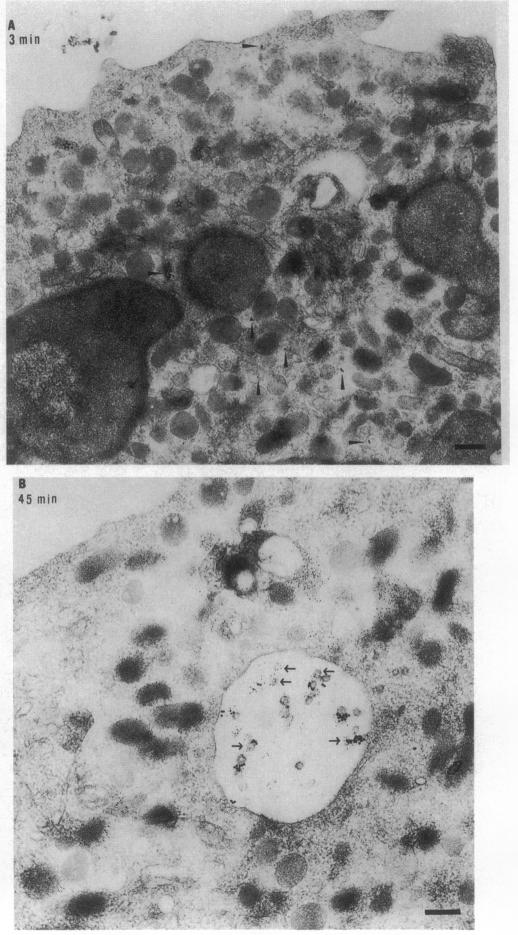
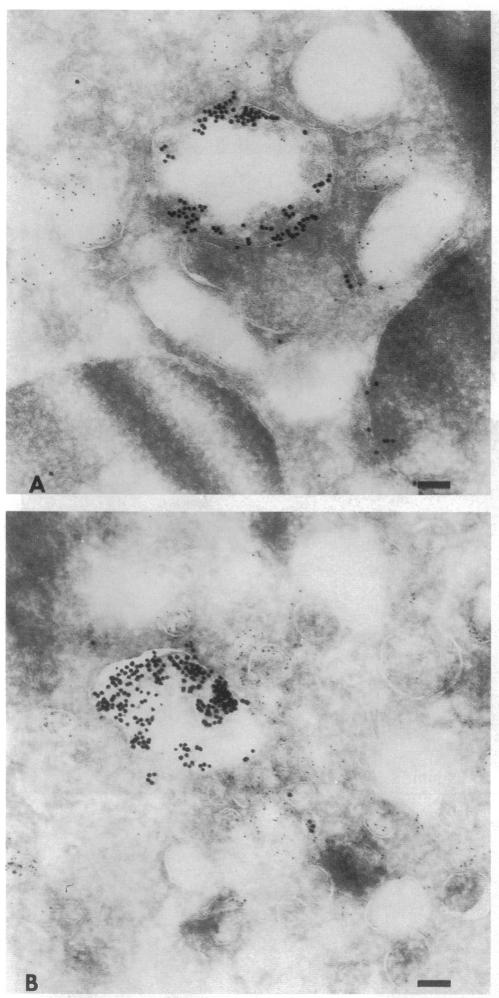
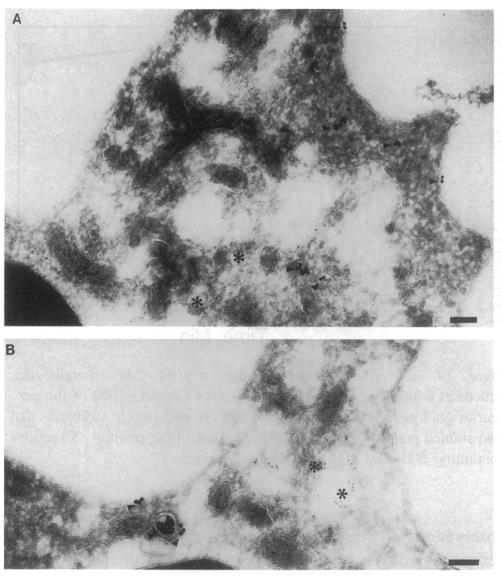
Upon activation of human neutrophils by chemoattractants, functionally important proteins are rapidly transported from intracellular granules and storage vesicles to the plasma membrane. This is accompanied by a marked increase in the rate of endocytosis and by ligand-independent internalization of type 1 complement receptors (CR1). To define the pathway of endocytosis, we used gold-conjugated BSA in a pulse-chase protocol. This tracer was initially internalized into small endocytic vesicles which rapidly traversed the cytoplasm and coalesced to form large, conspicuous multivesicular bodies. Within 5 min after addition of the chemoattractant, multivesicular bodies contained > 60% of the cell-associated BSA-gold. CR1 colocalized with the endocytic tracer in both the early endosomes and multivesicular bodies. In unstimulated cells, there was much less uptake of BSA-gold and multivesicular bodies were rarely seen. Using the acidotropic amine, DAMP, and anti-DNP antibodies, we found that the multivesicular bodies were acidified but the early endosomes did not concentrate DAMP. Neither the early endosomes nor the multivesicular bodies initially contained the lysosomal membrane antigens hLAMP 1 or 2, but hLAMP-positive structures subsequently joined the multivesicular bodies. The rapid activation of the endocytic pathway upon stimulation of neutrophils allowed us to visualize the de novo formation and maturation of multivesicular bodies. Our observations suggest that vesicles containing ion pumps and acid hydrolases fuse with multivesicular bodies, giving them characteristics of lysosomes, and that these are the probable sites of degradation of CR1. The observations do not support models which would require transport of CR1 from multivesicular bodies to defined, pre-existing lysosomes for degradation.
在趋化因子激活人类中性粒细胞后,功能重要的蛋白质会迅速从细胞内颗粒和储存囊泡转运至质膜。与此同时,内吞作用速率显著增加,且1型补体受体(CR1)发生不依赖配体的内化。为了确定内吞途径,我们在脉冲追踪实验中使用了金偶联牛血清白蛋白(BSA)。这种示踪剂最初被内化到小的内吞囊泡中,这些囊泡迅速穿过细胞质并融合形成大的、明显的多囊泡体。添加趋化因子后5分钟内,多囊泡体包含了>60%与细胞相关的BSA-金。CR1在早期内体和多囊泡体中均与内吞示踪剂共定位。在未受刺激的细胞中,BSA-金的摄取量少得多,且很少见到多囊泡体。使用亲酸性胺、DAMP和抗DNP抗体,我们发现多囊泡体被酸化,但早期内体不浓缩DAMP。早期内体和多囊泡体最初均不包含溶酶体膜抗原hLAMP 1或2,但hLAMP阳性结构随后加入了多囊泡体。中性粒细胞受到刺激后内吞途径的快速激活使我们能够观察到多囊泡体的从头形成和成熟。我们的观察结果表明,含有离子泵和酸性水解酶的囊泡与多囊泡体融合,赋予它们溶酶体的特征,并且这些可能是CR1降解的部位。这些观察结果不支持需要将CR1从多囊泡体转运至特定的、预先存在的溶酶体进行降解的模型。