Lechner M S, Laimins L A
Department of Molecular Genetics and Cell Biology, University of Chicago, Illinois 60637.
J Virol. 1994 Jul;68(7):4262-73. doi: 10.1128/JVI.68.7.4262-4273.1994.
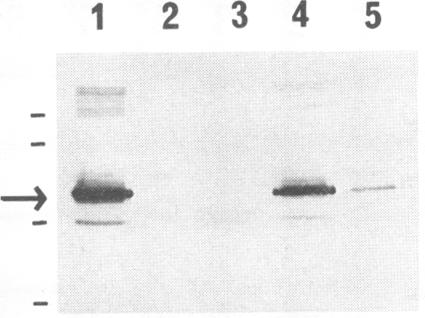
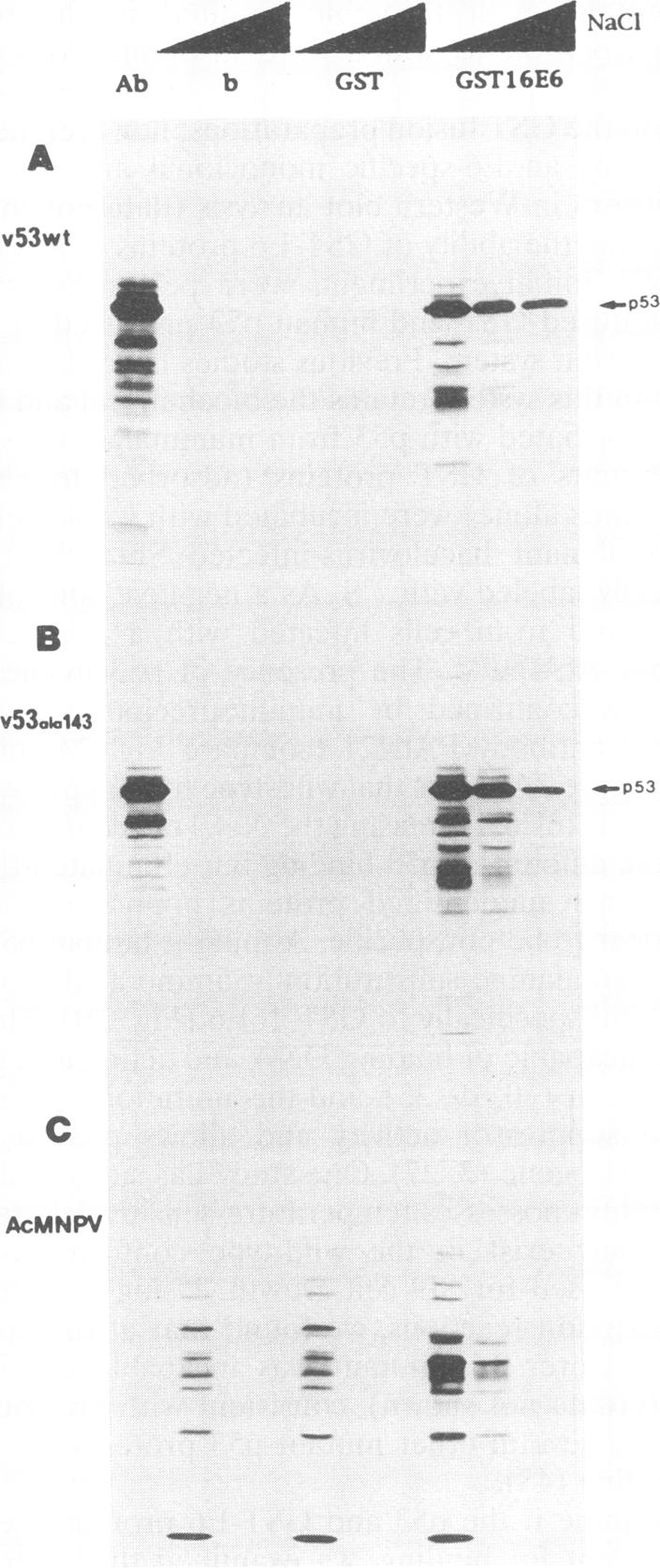
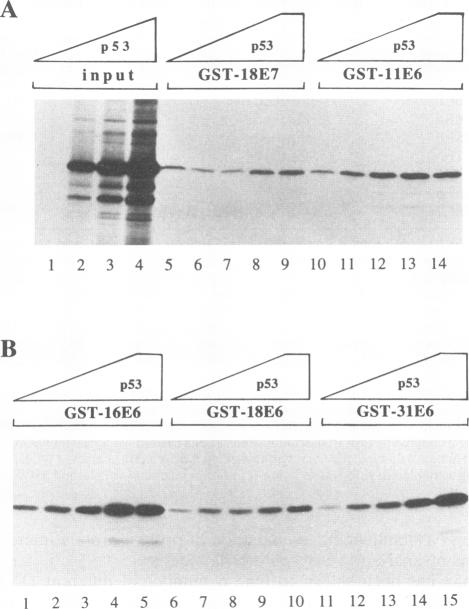
Transformation by the human papillomavirus (HPV) early gene products, E6 and E7, involves their interaction with cellular proteins p53 and Rb. Using glutathione S-transferase (GST) fusion proteins, we found that HPV E6 bound human p53 and that the relative efficiency of binding varied such that the GST-HPV type 16 E6 (16E6) protein bound p53 with highest affinity, followed by GST-31E6, GST-18E6, and GST-11E6. The GST-E6 fusion proteins were sufficient for binding p53 purified from a baculovirus expression system as well as in vitro translation sources, while no association was observed with GST-18E7 or a GST-16E6 mutant bearing a five-amino-acid deletion in E6. When the site-specific DNA binding activity of p53 was examined in the presence of GST-E6 proteins, an inhibition of DNA binding was observed. The degree of inhibition correlated with the relative affinity of different E6 proteins for p53; thus, GST-16E6 was the most potent inhibitor of p53 DNA binding activity, and GST-11E6 was the least effective. Prevention of p53 DNA binding is likely to play a role in the abrogation of the transcriptional activity of p53 by HPV E6 and provides a further mechanism for E6 disruption of p53 growth suppressor function in addition to its role in directing specific degradation of p53 through the ubiquitin-mediated pathway. The variation in inhibition of DNA binding seen with the various E6 proteins may thus contribute to the differences in oncogenic potential seen among the HPV types.
人乳头瘤病毒(HPV)早期基因产物E6和E7的转化作用涉及它们与细胞蛋白p53和Rb的相互作用。利用谷胱甘肽S-转移酶(GST)融合蛋白,我们发现HPV E6与人p53结合,且结合的相对效率有所不同,其中GST-16型HPV E6(16E6)蛋白与p53的结合亲和力最高,其次是GST-31E6、GST-18E6和GST-11E6。GST-E6融合蛋白足以与从杆状病毒表达系统以及体外翻译来源纯化的p53结合,而未观察到与GST-18E7或在E6中带有五个氨基酸缺失的GST-16E6突变体有结合。当在GST-E6蛋白存在的情况下检测p53的位点特异性DNA结合活性时,观察到DNA结合受到抑制。抑制程度与不同E6蛋白对p53的相对亲和力相关;因此,GST-16E6是p53 DNA结合活性的最有效抑制剂,而GST-11E6效果最差。p53 DNA结合的阻止可能在HPV E6消除p53转录活性中起作用,并且除了其通过泛素介导途径指导p53特异性降解的作用外,还为E6破坏p53生长抑制功能提供了另一种机制。因此,各种E6蛋白在DNA结合抑制方面的差异可能导致不同HPV类型在致癌潜力上的差异。