Särndahl E, Bokoch G M, Stendahl O, Andersson T
Department of Medical Microbiology, University of Linköping, Sweden.
Proc Natl Acad Sci U S A. 1993 Jul 15;90(14):6552-6. doi: 10.1073/pnas.90.14.6552.
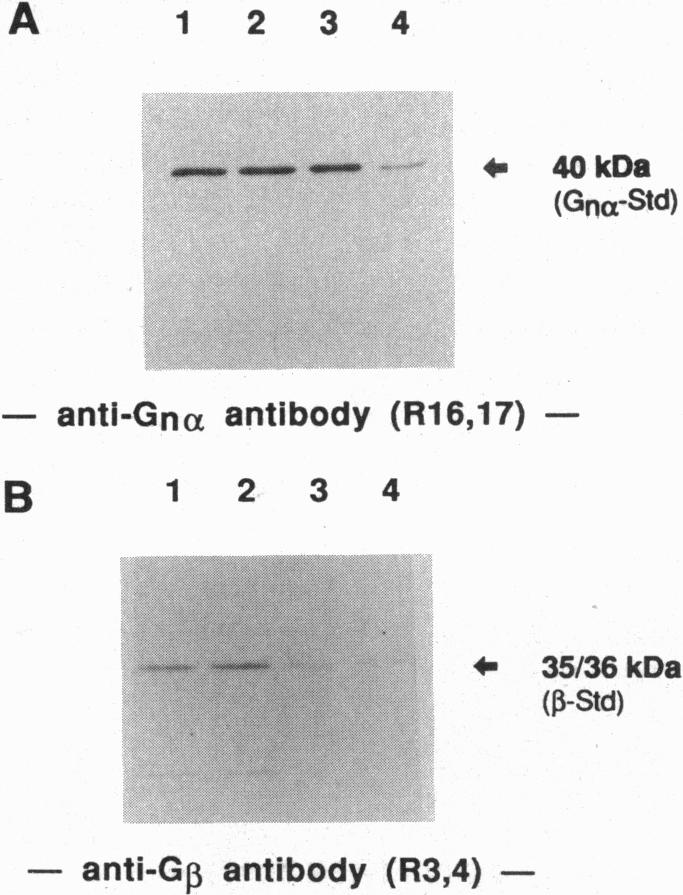
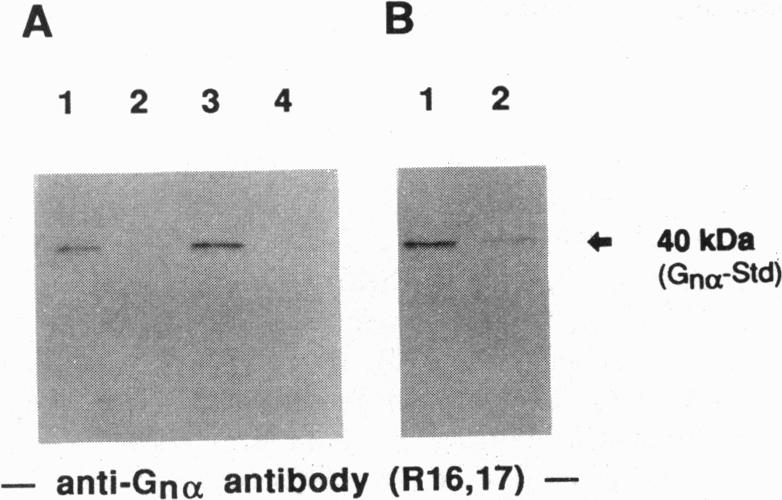
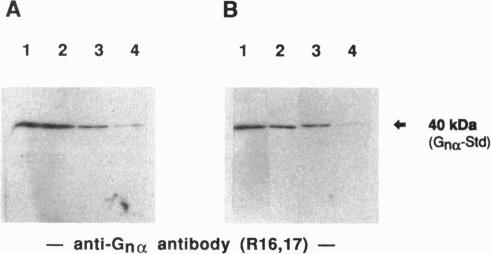
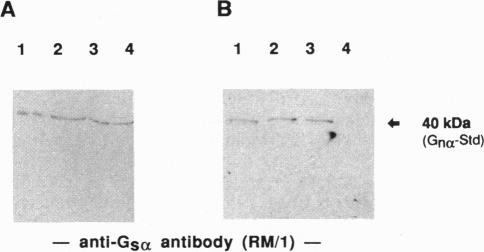
Previous studies on the mechanism responsible for terminating the generation of second messengers induced by chemotactic factor-receptor complexes have, on one hand, suggested a direct role of a GTP-binding protein(s) (G protein), and, on the other hand, proposed that there is a lateral segregation of the ligand-receptor complexes into G protein-depleted domains of the plasma membrane. In the present investigation, which addresses these apparently contradictory findings, we found that a substantial part of the alpha subunits of the Gn protein (Gn alpha) in unstimulated neutrophils were associated with a cytoskeletal fraction and that release of these subunits occurred upon stimulation with the chemotactic factor fMet-Leu-Phe. An identical Gn alpha release could also be induced by direct activation of G proteins with guanosine 5'-[gamma-thio]triphosphate or AIF4-. In contrast, the alpha subunits of the stimulatory G protein (Gs alpha) also found associated with the cytoskeletal fraction of unstimulated cells were not released by fMet-Leu-Phe stimulation. However, they were effectively released by direct G-protein activation with guanosine 5'-[gamma-thio]triphosphate. In addition, inhibition of the fMet-Leu-Phe-stimulated modulation of the actin network by pertussis toxin did not affect the fMet-Leu-Phe-induced release of Gn alpha from the cytoskeletal fraction. These observations indicate that fMet-Leu-Phe-induced activation of neutrophils involves a specific dissociation of Gn alpha from the cytoskeleton and that this release is not a consequence of the well-known effect of fMet-Leu-Phe on the cytoskeleton of neutrophils. The present data contribute ideas concerning the transducing properties of G proteins in cellular signaling and seem to reconcile the apparently contradictory concepts of how the cytoskeleton participates in the termination of the chemotactic-factor-induced generation of second messengers in human neutrophils.
以往关于趋化因子 - 受体复合物诱导的第二信使生成终止机制的研究,一方面表明一种(或多种)GTP结合蛋白(G蛋白)具有直接作用,另一方面提出配体 - 受体复合物会横向分离到质膜中G蛋白缺失的区域。在本研究中,针对这些明显相互矛盾的发现,我们发现未受刺激的中性粒细胞中Gn蛋白的α亚基(Gnα)有很大一部分与细胞骨架部分相关联,并且在用趋化因子fMet - Leu - Phe刺激时这些亚基会释放出来。用鸟苷5'-[γ - 硫代]三磷酸或AIF4-直接激活G蛋白也能诱导相同的Gnα释放。相比之下,同样在未受刺激细胞的细胞骨架部分中发现的刺激性G蛋白的α亚基(Gsα),在fMet - Leu - Phe刺激下不会释放。然而,用鸟苷5'-[γ - 硫代]三磷酸直接激活G蛋白能有效使其释放。此外,百日咳毒素抑制fMet - Leu - Phe刺激的肌动蛋白网络调节,并不影响fMet - Leu - Phe诱导的Gnα从细胞骨架部分的释放。这些观察结果表明,fMet - Leu - Phe诱导的中性粒细胞激活涉及Gnα从细胞骨架的特异性解离,并且这种释放不是fMet - Leu - Phe对中性粒细胞细胞骨架的众所周知的作用的结果。目前的数据为G蛋白在细胞信号转导中的转导特性提供了思路,并且似乎调和了关于细胞骨架如何参与人中性粒细胞中趋化因子诱导的第二信使生成终止的明显相互矛盾的概念。