McElreavey K, Vilain E, Abbas N, Herskowitz I, Fellous M
Laboratoire d'Immunogenetique Humaine, Institut National de la Santé et de la Recherche Médicale U.276, Institut Pasteur, Paris, France.
Proc Natl Acad Sci U S A. 1993 Apr 15;90(8):3368-72. doi: 10.1073/pnas.90.8.3368.
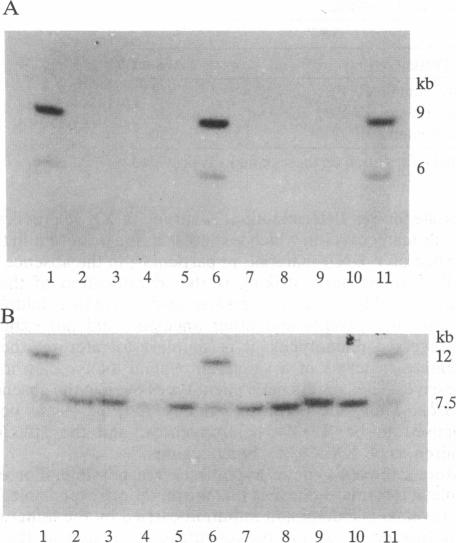
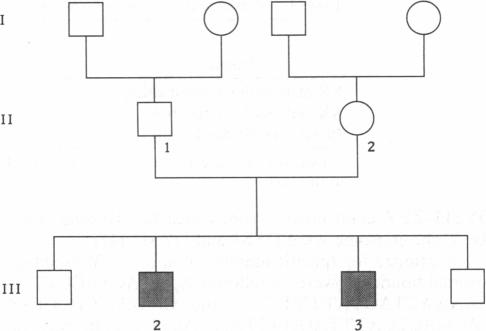
The mammalian Y chromosome carries the SRY gene, which determines testis formation. Here we review data on individuals who are XX but exhibit male characteristics: some have SRY; others do not. We have analyzed three families containing more than one such individual and show that these individuals lack SRY. Pedigree analysis leads to the hypothesis that they carry recessive mutations (in a gene termed Z) that allow expression of male characteristics. We propose that wild-type Z product is a negative regulator of male sex determination and is functional in wild-type females. In males, SRY product represses or otherwise negatively regulates Z and thereby allows male sex determination. This hypothesis can also explain other types of sex reversal in mammals, in particular, XY females containing SRY. Some of these individuals may have mutations at the Z locus rendering them insensitive to SRY. Recessive mutations (such as the polled mutation of goats) leading to sex reversal are known in a variety of animals and might be used to map and ultimately clone the human Z gene.
哺乳动物的Y染色体携带SRY基因,该基因决定睾丸的形成。在此,我们回顾了关于XX个体却表现出男性特征的相关数据:其中一些个体含有SRY基因,而另一些则没有。我们分析了三个包含不止一个此类个体的家族,结果表明这些个体缺乏SRY基因。系谱分析得出一个假设,即他们携带隐性突变(在一个名为Z的基因中),该突变使得男性特征得以表达。我们提出,野生型Z产物是雄性性别决定的负调节因子,在野生型雌性中发挥作用。在雄性中,SRY产物抑制或通过其他方式对Z进行负调节,从而实现雄性性别决定。这一假设也能够解释哺乳动物中其他类型的性反转现象,尤其是含有SRY基因的XY雌性个体。这些个体中的一些可能在Z位点发生了突变,从而使其对SRY不敏感。导致性反转的隐性突变(如山羊的无角突变)在多种动物中都有发现,可用于定位并最终克隆人类的Z基因。