Wang W, Jones C, Ciacci-Zanella J, Holt T, Gilchrist D G, Dickman M B
Center for Engineering Plants for Resistance Against Pathogens, University of California, Davis 95616, USA.
Proc Natl Acad Sci U S A. 1996 Apr 16;93(8):3461-5. doi: 10.1073/pnas.93.8.3461.
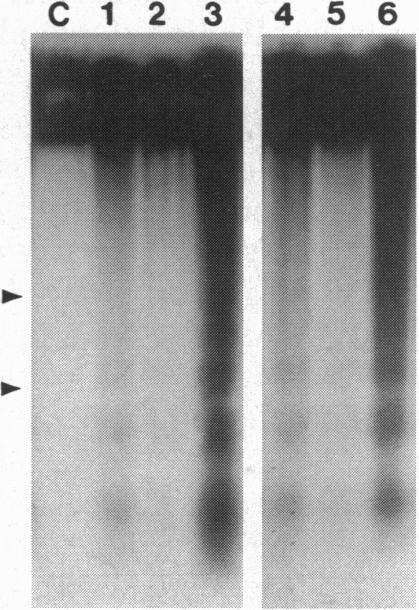
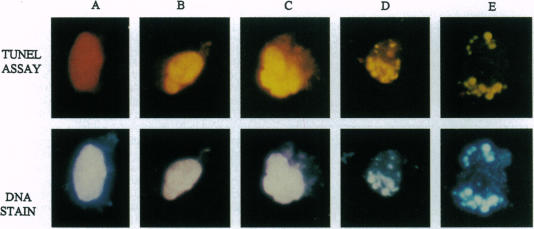
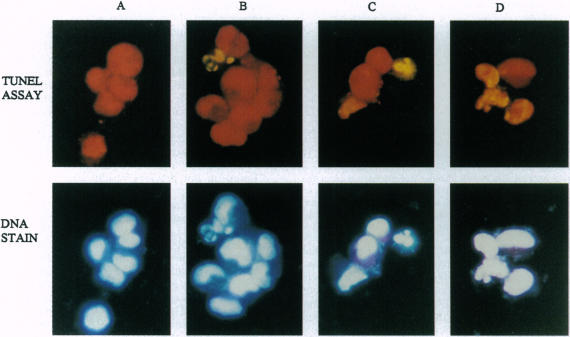
Fusarium moniliforme toxins (fumonisins) and Alternaria alternata lycopersici (AAL) toxins are members of a new class of sphinganine analog mycotoxins that occur widely in the food chain. These mycotoxins represent a serious threat to human and animal health, inducing both cell death and neoplastic events in mammals. The mechanisms by which this family of chemical congeners induce changes in cell homeostasis were investigated in African green monkey kidney cells (CV-1) by assessing the appearance of apoptosis, cell cycle regulation, and putative components of signal transduction pathways involved in apoptosis. Structurally, these mycotoxins resemble the sphingoid bases, sphingosine and sphinganine, that are reported to play critical roles in cell communication and signal transduction. The addition of fumonisin B1 or AAL toxin, TA, to CV-1 cells induced the stereotypical hallmarks of apoptosis, including the formation of DNA ladders, compaction of nuclear DNA, and the subsequent appearance of apoptotic bodies. Neither mycotoxin induced cell death, DNA ladders, or apoptotic bodies in CV-1 cells expressing simian virus 40 large T antigen (COS-7) at toxin concentrations that readily killed CV-1 cells. Fumonisin B1 induced cell cycle arrest in the G1 phase in CV-1 cells but not in COS-7 cells. AAL toxin TA did not arrest cell cycle progression in either cell line. The induction of apoptosis combined with the widespread presence of these compounds in food crops and animal feed identifies a previously unrecognized health risk to humans and livestock. These molecules also represent a new class of natural toxicants that can be used as model compounds to further characterize the molecular and biochemical pathways leading to apoptosis.
串珠镰刀菌毒素(伏马毒素)和链格孢菌番茄专化型(AAL)毒素是一类新型的鞘氨醇类似物霉菌毒素,广泛存在于食物链中。这些霉菌毒素对人类和动物健康构成严重威胁,可在哺乳动物中引发细胞死亡和肿瘤形成事件。通过评估细胞凋亡的出现、细胞周期调控以及参与凋亡的信号转导途径的假定成分,在非洲绿猴肾细胞(CV-1)中研究了这类化学同源物诱导细胞稳态变化的机制。从结构上看,这些霉菌毒素类似于鞘氨醇碱基、鞘氨醇和二氢鞘氨醇,据报道它们在细胞通讯和信号转导中起关键作用。向CV-1细胞中添加伏马毒素B1或AAL毒素TA可诱导细胞凋亡的典型特征,包括DNA梯带的形成、核DNA的浓缩以及随后凋亡小体的出现。在毒素浓度足以杀死CV-1细胞的情况下,这两种霉菌毒素都不会在表达猿猴病毒40大T抗原的CV-1细胞(COS-7)中诱导细胞死亡、DNA梯带或凋亡小体。伏马毒素B1可诱导CV-1细胞在G1期发生细胞周期阻滞,但对COS-7细胞无此作用。AAL毒素TA在两种细胞系中均未阻止细胞周期进程。细胞凋亡的诱导以及这些化合物在粮食作物和动物饲料中的广泛存在,确定了对人类和牲畜一种先前未被认识到的健康风险。这些分子还代表了一类新型的天然毒物,可作为模型化合物用于进一步表征导致细胞凋亡的分子和生化途径。