
肿瘤衍生黏附因子在肿瘤血管及培养的血管内皮细胞形成的毛细血管样结构中的特异性积聚。
Specific accumulation of tumor-derived adhesion factor in tumor blood vessels and in capillary tube-like structures of cultured vascular endothelial cells.
作者信息
Akaogi K, Okabe Y, Sato J, Nagashima Y, Yasumitsu H, Sugahara K, Miyazaki K
机构信息
Division of Cell Biology, Kihara Institute for Biological Research, Yokohama City University, Japan.
出版信息
Proc Natl Acad Sci U S A. 1996 Aug 6;93(16):8384-9. doi: 10.1073/pnas.93.16.8384.
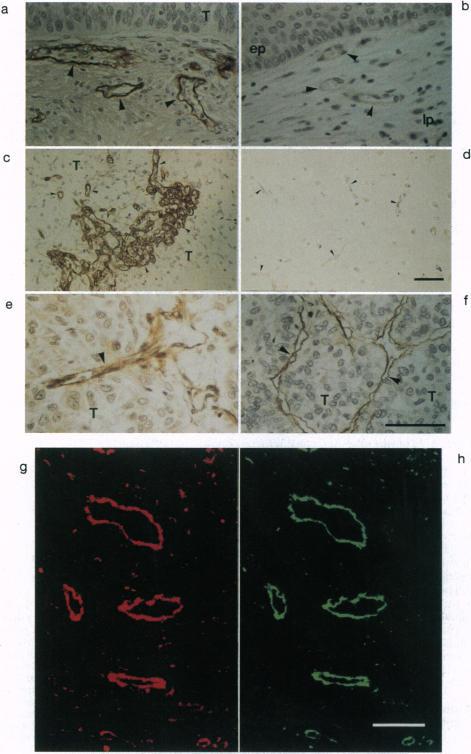
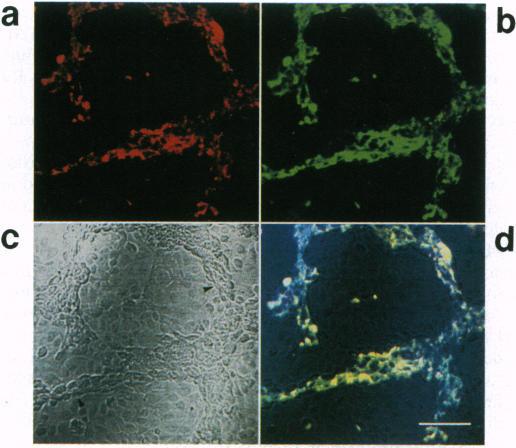
Tumor-derived adhesion factor (TAF) was previously identified as a cell adhesion molecule secreted by human bladder carcinoma cell line EJ-1. To elucidate the physiological function of TAF, we examined its distribution in human normal and tumor tissues. Immunochemical staining with an anti-TAF monoclonal antibody showed that TAF was specifically accumulated in small blood vessels and capillaries within and adjacent to tumor nests, but not in those in normal tissues. Tumor blood vessel-specific staining of TAF was observed in various human cancers, such as esophagus, brain, lung, and stomach cancers. Double immunofluorescent staining showed apparent colocalization of TAF and type IV collagen in the vascular basement membrane. In vitro experiments demonstrated that TAF preferentially bound to type IV collagen among various extracellular matrix components tested. In cell culture experiments, TAF promoted adhesion of human umbilical vein endothelial cells to type IV collagen substrate and induced their morphological change. Furthermore, when the endothelial cells were induced to form capillary tube-like structures by type I collagen, TAF and type IV collagen were exclusively detected on the tubular structures. The capillary tube formation in vitro was prevented by heparin, which inhibited the binding of TAF to the endothelial cells. These results strongly suggest that TAF contributes to the organization of new capillary vessels in tumor tissues by modulating the interaction of endothelial cells with type IV collagen.
肿瘤衍生黏附因子(TAF)先前被鉴定为一种由人膀胱癌细胞系EJ - 1分泌的细胞黏附分子。为了阐明TAF的生理功能,我们检测了它在人正常组织和肿瘤组织中的分布。用抗TAF单克隆抗体进行免疫化学染色显示,TAF特异性地聚集在肿瘤巢内及邻近的小血管和毛细血管中,而在正常组织的血管中则没有。在各种人类癌症中,如食管癌、脑癌、肺癌和胃癌中均观察到TAF的肿瘤血管特异性染色。双重免疫荧光染色显示TAF与IV型胶原在血管基底膜中明显共定位。体外实验表明,在测试的各种细胞外基质成分中,TAF优先与IV型胶原结合。在细胞培养实验中,TAF促进人脐静脉内皮细胞黏附于IV型胶原底物并诱导其形态改变。此外,当内皮细胞被I型胶原诱导形成毛细血管样结构时,在这些管状结构上仅检测到TAF和IV型胶原。体外毛细血管管形成被肝素阻止,肝素抑制TAF与内皮细胞的结合。这些结果有力地表明,TAF通过调节内皮细胞与IV型胶原的相互作用,有助于肿瘤组织中新毛细血管的形成。



 Zotero 插件