Incardona J P, Rosenberry T L
Department of Genetics, School of Medicine, Case Western Reserve University, Cleveland, Ohio 44106, USA.
Mol Biol Cell. 1996 Apr;7(4):595-611. doi: 10.1091/mbc.7.4.595.
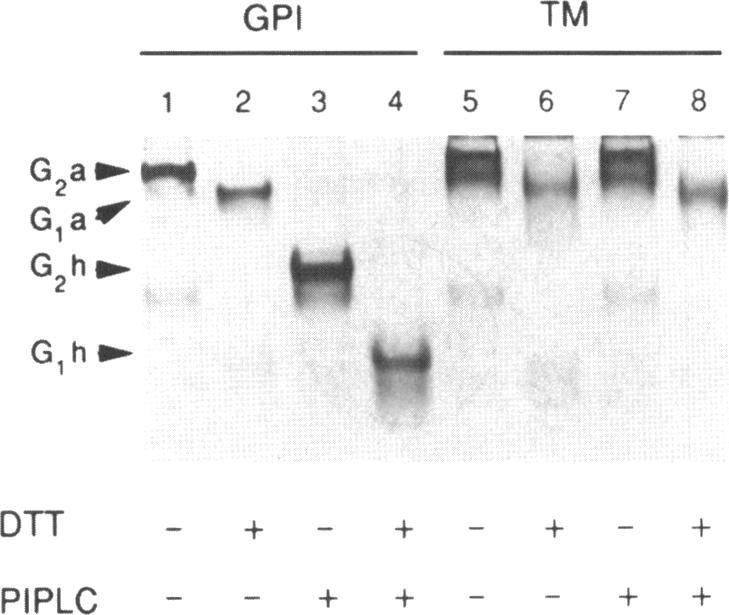
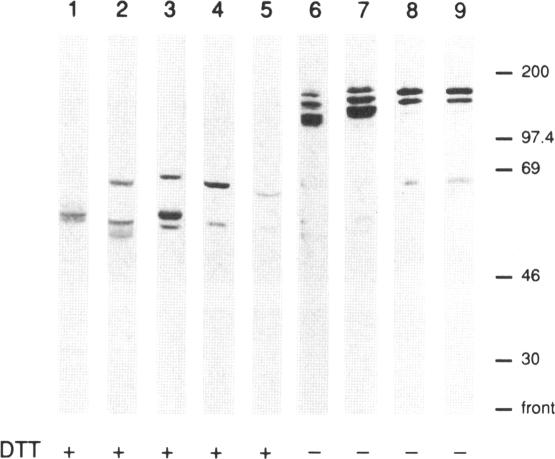
Despite advances in understanding the cell biology of glycoinositol phospholipid (GPI)-anchored proteins in cultured cells, the in vivo functions of GPI anchors have remained elusive. We have focused on Drosophila acetylcholinesterase (AChE) as a model GPI-anchored protein that can be manipulated in vivo with sophisticated genetic techniques. In Drosophila, AChE is found only as a GPI-anchored G2 form encoded by the Ace locus on the third chromosome. To pursue our goal of replacing wild-type GPI-anchored AChE with forms that have alternative anchor structures in transgenic files, we report the construction of two secreted forms of Drosophila AChE (SEC1 and SEC2) and a chimeric form (TM-AChE) anchored by the transmembrane and cytoplasmic domains of herpes simplex virus type 1 glycoprotein C. To confirm that the biochemical properties of these AChEs were unchanged from GPI-AChE except as predicted, we made stably transfected Drosophila Schneider Line 2(S2) cells expressing each of the four forms. TM-AChE, SEC1, and SEC2 had the same catalytic activity and quaternary structure as wild type. TM-AChE was expressed as an amphiphilic membrane-bound protein resistant to an enzyme that cleaves GPI-AChE (phosphatidylinositol-specific phospholipase C), and the same percentage of TM-AChE and GPI-AChE was on the cell surface according to immunofluorescence and pharmacological data. SEC1 and SEC2 were constructed by truncating the C-terminal signal peptide initially present in GPI-AChE: in SEC1 the last 25 residues of this 34-residue peptide were deleted while in SEC2 the last 29 were deleted. Both SEC1 and SEC2 were efficiently secreted and are very stable in culture medium; with one cloned SEC1-expressing line, AChE accumulated to as high as 100 mg/liter. Surprisingly, 5-10% of SEC1 was attached to a GPI anchor, but SEC2 showed no GPI anchoring. Since no differences in catalytic activity were observed among the four AChEs, and since the same percentage of GPI-AChE and TM-AChE were on the cell surface, we contend that in vivo experiments in which GPI-AChE is replaced can be interpreted solely on the basis of the altered anchoring domain.
尽管在理解培养细胞中糖基磷脂酰肌醇(GPI)锚定蛋白的细胞生物学方面取得了进展,但GPI锚的体内功能仍然难以捉摸。我们将果蝇乙酰胆碱酯酶(AChE)作为一种模型GPI锚定蛋白进行研究,它可以通过复杂的遗传技术在体内进行操作。在果蝇中,AChE仅作为由第三条染色体上的Ace基因座编码的GPI锚定G2形式存在。为了实现用具有替代锚定结构的形式替换野生型GPI锚定AChE这一目标,我们报告了两种分泌形式的果蝇AChE(SEC1和SEC2)以及一种由单纯疱疹病毒1型糖蛋白C的跨膜和细胞质结构域锚定的嵌合形式(TM-AChE)的构建。为了证实除预期外这些AChE的生化特性与GPI-AChE没有变化,我们构建了稳定转染的表达这四种形式的果蝇Schneider 2(S2)细胞系。TM-AChE、SEC1和SEC2具有与野生型相同的催化活性和四级结构。TM-AChE表达为一种两亲性膜结合蛋白,对切割GPI-AChE的酶(磷脂酰肌醇特异性磷脂酶C)具有抗性,根据免疫荧光和药理学数据,TM-AChE和GPI-AChE在细胞表面的比例相同。SEC1和SEC2是通过截短最初存在于GPI-AChE中的C末端信号肽构建的:在SEC1中,这个34个残基的肽的最后25个残基被删除,而在SEC2中,最后29个残基被删除。SEC1和SEC2都能有效分泌,并且在培养基中非常稳定;在一个克隆的表达SEC1的细胞系中,AChE积累高达100毫克/升。令人惊讶的是,5-10%的SEC1附着在GPI锚上,但SEC2没有显示出GPI锚定。由于在这四种AChE之间未观察到催化活性的差异,并且由于GPI-AChE和TM-AChE在细胞表面的比例相同,我们认为在替换GPI-AChE的体内实验中,可以仅根据改变的锚定结构域来解释实验结果。