Linden R M, Ward P, Giraud C, Winocour E, Berns K I
Department of Microbiology, Hearst Microbiology Research Center, Cornell University Medical College, New York, NY 10021, USA.
Proc Natl Acad Sci U S A. 1996 Oct 15;93(21):11288-94. doi: 10.1073/pnas.93.21.11288.
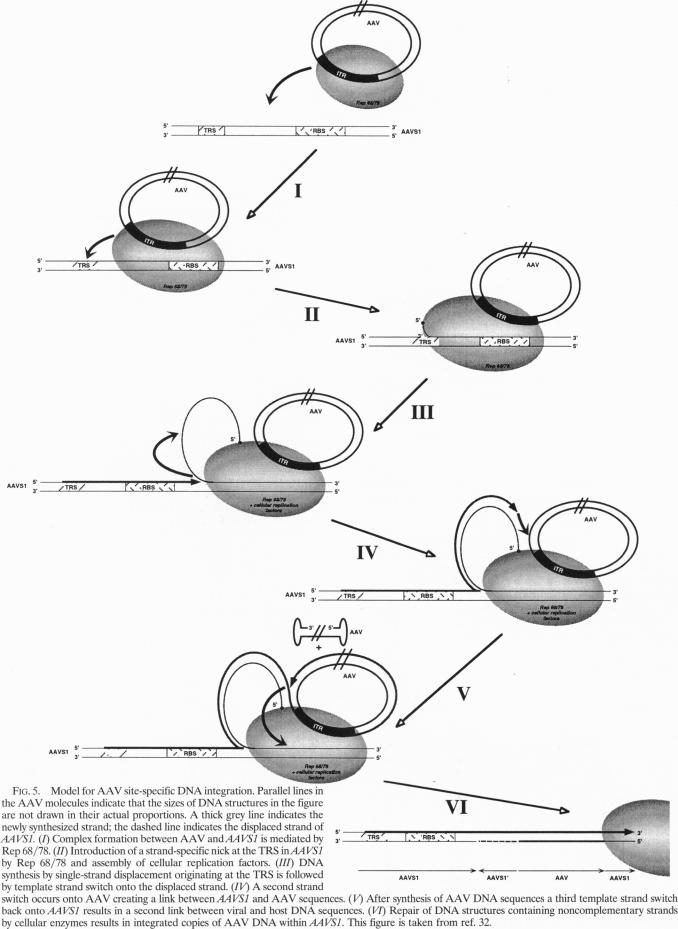
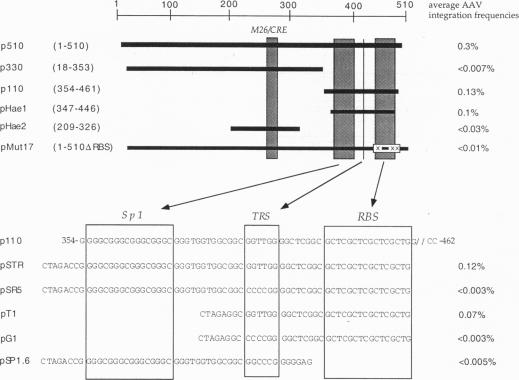
Adeno-associated virus (AAV) has attracted considerable interest as a potential vector for gene delivery. Wild-type virus is notable for the lack of association with any human disease and the ability to stably integrate its genome in a site-specific manner in a locus on human chromosome 19 (AAVS1). Use of a functional model system for AAV DNA integration into AAVS1 has allowed us to conclude that the recombination event is directed by cellular DNA sequences. Recombinant junctions isolated from our integration assay were analyzed and showed characteristics similar to those found in latently infected cell lines. The minimal DNA signals within AAVS1 required for targeted integration were identified and shown to contain functional motifs of the viral origin of replication. A replication mediated model of AAV DNA integration is proposed.
腺相关病毒(AAV)作为一种潜在的基因传递载体已引起了广泛关注。野生型病毒的显著特点是与任何人类疾病均无关联,且能够以位点特异性方式将其基因组稳定整合到人类19号染色体上的一个位点(AAVS1)。利用一个功能性模型系统来研究AAV DNA整合到AAVS1的过程,使我们能够得出结论:重组事件是由细胞DNA序列指导的。对从我们的整合试验中分离出的重组连接点进行了分析,结果显示其特征与在潜伏感染细胞系中发现的特征相似。确定了靶向整合所需的AAVS1内的最小DNA信号,并表明其包含病毒复制起点的功能基序。本文提出了一种AAV DNA整合的复制介导模型。