Alconada A, Bauer U, Hoflack B
European Molecular Biology Laboratory, Cell Biology Programme, Heidelberg, Germany.
EMBO J. 1996 Nov 15;15(22):6096-110.
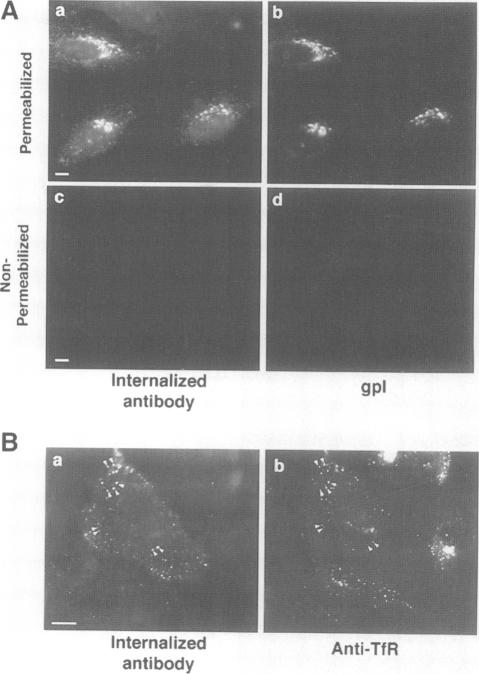
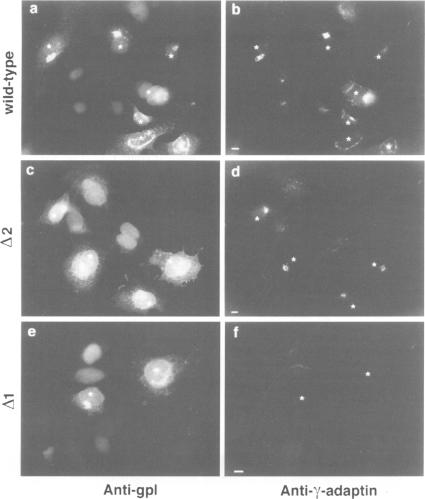
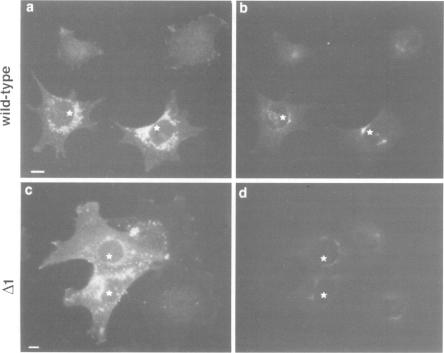
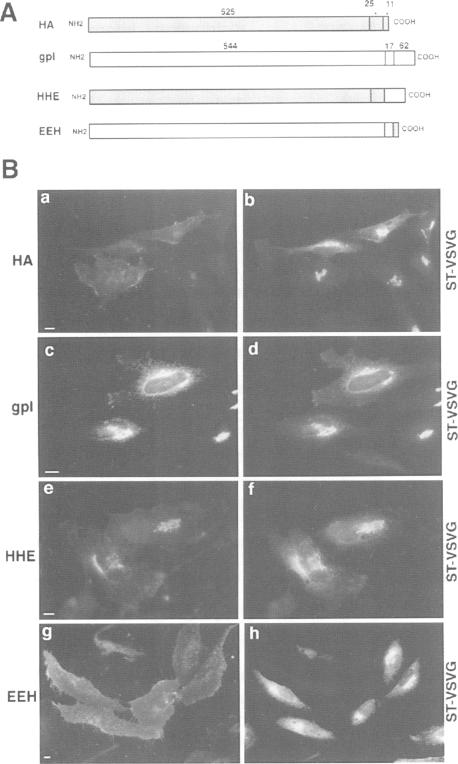
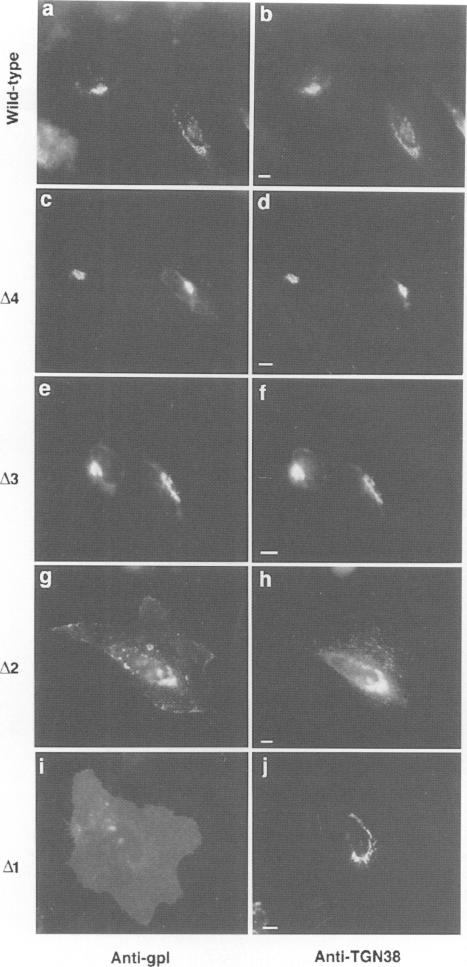
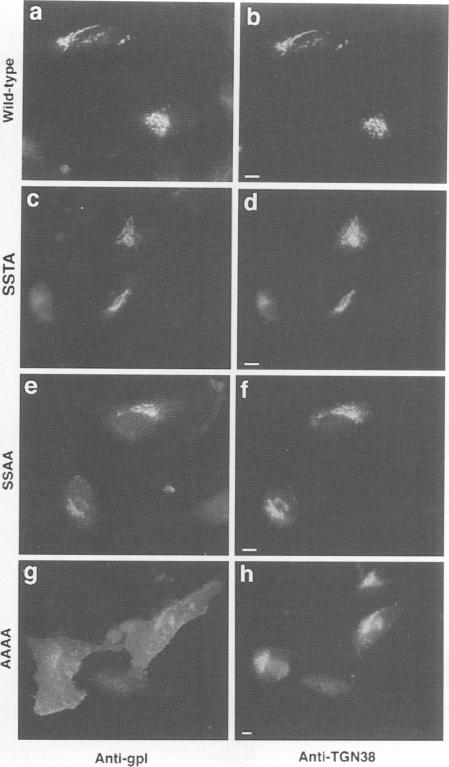
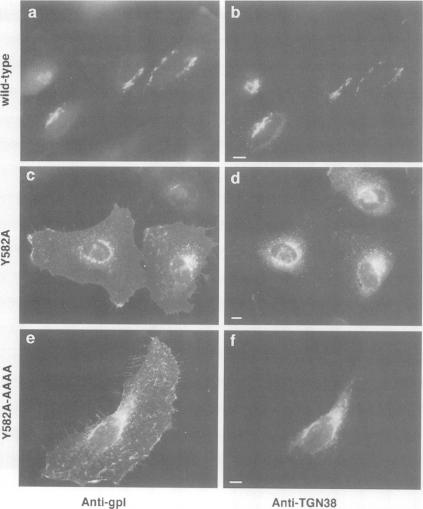
We have studied the intracellular trafficking of the envelope glycoprotein I (gpI) of the varicella-zoster virus, a human herpes virus whose assembly is believed to occur in the trans-Golgi network (TGN) and/or in endocytic compartments. When expressed in HeLa cells in the absence of additional virally encoded factors, this type-I membrane protein localizes to the TGN and cycles between this compartment and the cell surface. The expression of gpI promotes the recruitment of the AP-1 Golgi-specific assembly proteins onto TGN membranes, strongly suggesting that gpI, like the mannose 6-phosphate receptors, can leave the TGN in clathrin-coated vesicles for subsequent transport to endosomes. Its return from the cell surface to the TGN also occurs through endosomes. The transfer of the gpI cytoplasmic domain onto a reporter molecule shows that this domain is sufficient to confer TGN localization. Mutational analysis of this domain indicates that proper subcellular localization and cycling of gpI depend on two different determinants, a tyrosine-containing tetrapeptide related to endocytosis sorting signals and a cluster of acidic amino acids containing casein kinase II phosphorylatable residues. Thus, the VZV gpI and the mannose 6-phosphate receptors, albeit localized in different intracellular compartments at steady-state, follow similar trafficking pathways and share similar sorting mechanisms.
我们研究了水痘带状疱疹病毒包膜糖蛋白I(gpI)的细胞内运输情况,水痘带状疱疹病毒是一种人类疱疹病毒,其组装被认为发生在反式高尔基体网络(TGN)和/或内吞小室中。当在没有其他病毒编码因子的情况下在HeLa细胞中表达时,这种I型膜蛋白定位于TGN,并在该小室和细胞表面之间循环。gpI的表达促进了AP-1高尔基体特异性组装蛋白募集到TGN膜上,这强烈表明gpI与甘露糖6-磷酸受体一样,可以通过网格蛋白包被的囊泡离开TGN,随后运输到内体。它从细胞表面返回TGN也是通过内体进行的。将gpI胞质结构域转移到报告分子上表明,该结构域足以赋予TGN定位功能。对该结构域的突变分析表明,gpI正确的亚细胞定位和循环依赖于两个不同的决定因素,一个与内吞分选信号相关的含酪氨酸的四肽和一组含有酪蛋白激酶II可磷酸化残基的酸性氨基酸。因此,水痘带状疱疹病毒gpI和甘露糖6-磷酸受体尽管在稳态时定位于不同的细胞内小室,但遵循相似的运输途径并共享相似的分选机制。