Gong S, Sanchez M, Nussenzweig M C
Laboratory of Molecular Immunology, Howard Hughes Medical Institute, Rockefeller University, New York 10021, USA.
J Exp Med. 1996 Dec 1;184(6):2079-84. doi: 10.1084/jem.184.6.2079.
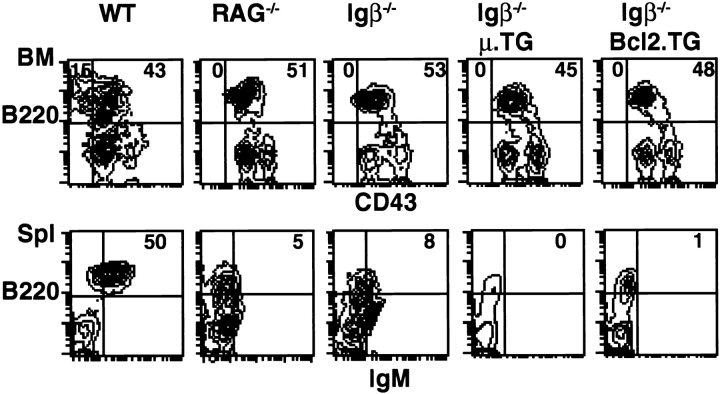
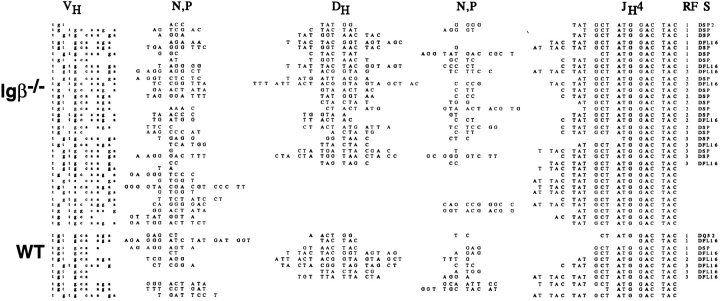
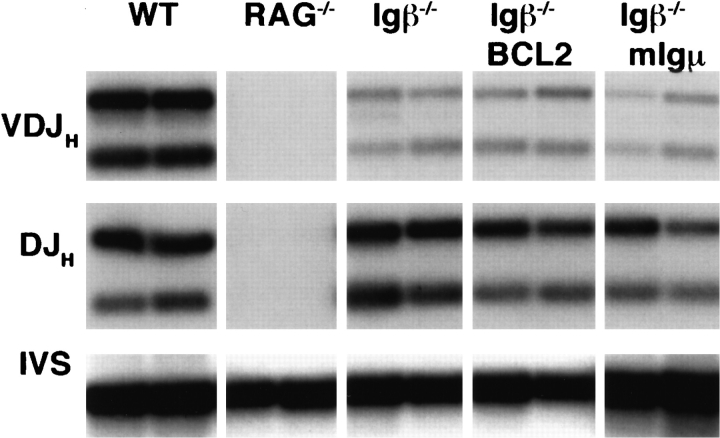
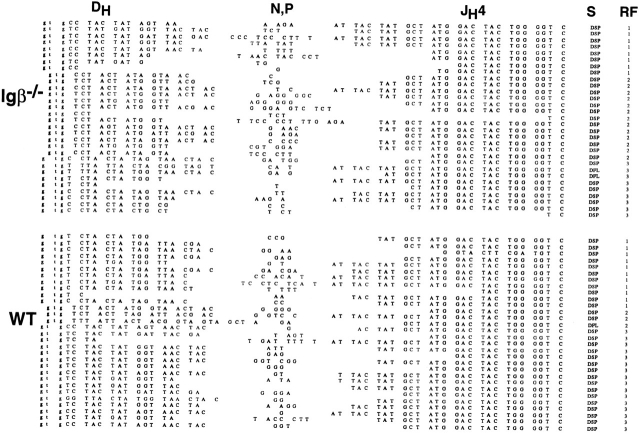
The pre-B cell receptor is a key checkpoint regulator in developing B cells. Early events that are controlled by the pre-B cell receptor include positive selection for cells express membrane immunoglobulin heavy chains and negative selection against cells expressing truncated immunoglobulins that lack a complete variable region (D mu). Positive selection is known to be mediated by membrane immunoglobulin heavy chains through Ig alpha-Ig beta, whereas the mechanism for counterselection against D mu has not been determined. We have examined the role of the Ig alpha-Ig beta signal transducers in counterselection against D mu using mice that lack Ig beta. We found that D mu expression is not selected against in developing B cells in Ig beta mutant mice. Thus, the molecular mechanism for counterselection against D mu in pre-B cells resembles positive selection in that it requires interaction between mD mu and Ig alpha-Ig beta.
前B细胞受体是发育中B细胞的关键检查点调节因子。由前B细胞受体控制的早期事件包括对表达膜免疫球蛋白重链的细胞进行阳性选择,以及对表达缺乏完整可变区(Dμ)的截短免疫球蛋白的细胞进行阴性选择。已知阳性选择是由膜免疫球蛋白重链通过Igα-Igβ介导的,而针对Dμ的反选择机制尚未确定。我们使用缺乏Igβ的小鼠研究了Igα-Igβ信号转导分子在针对Dμ的反选择中的作用。我们发现,在Igβ突变小鼠发育中的B细胞中,Dμ表达不会被反选择。因此,前B细胞中针对Dμ的反选择分子机制与阳性选择相似,因为它需要mDμ与Igα-Igβ之间的相互作用。