
同侧面部及葡萄膜动静脉和毛细血管血管瘤、小眼球、虹膜异色及低眼压:一种酷似斯特奇-韦伯综合征的眼皮肤综合征。
Ipsilateral facial and uveal arteriovenous and capillary angioma, microphthalmos, heterochromia of the iris, and hypotony: an oculocutaneous syndrome simulating Sturge-Weber syndrome.
作者信息
Gass J D
机构信息
Vanderbilt University Department of Ophthalmology, Nashville, Tennessee, USA.
出版信息
Trans Am Ophthalmol Soc. 1996;94:227-37; discussion 237-9.
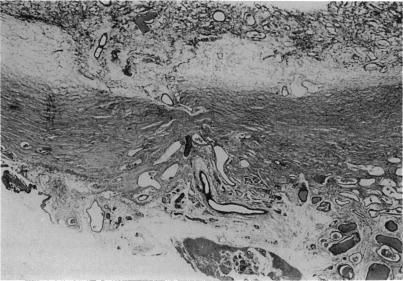
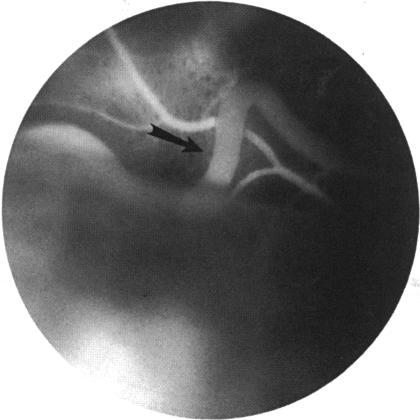
Sturge-Weber syndrome is a disorder characterized by ipsilateral cavernous hemangioma of the face, uvea, and brain in patients who may present with an enlarged eye, exudative retinal detachment, glaucoma, and seizures. This report presents the clinicopathologic findings of an otherwise healthy infant with ipsilateral arteriovenous and capillary hemangiomas of the face and uveal tract, microphthalmos, iris heterochromia, hypotony, and absence of central nervous system involvement. The association of an arteriovenous-capillary angioma of the ocular adnexa and ipsilateral uveal tract is a syndrome that is distinct from Sturge-Weber syndrome.
斯特奇-韦伯综合征是一种疾病,其特征为面部、葡萄膜和脑部同侧出现海绵状血管瘤,患者可能表现为眼球增大、渗出性视网膜脱离、青光眼和癫痫发作。本报告展示了一名原本健康的婴儿的临床病理结果,该婴儿面部和葡萄膜道存在同侧动静脉和毛细血管血管瘤、小眼球、虹膜异色、低眼压,且无中枢神经系统受累。眼附属器和同侧葡萄膜道的动静脉-毛细血管血管瘤的关联是一种与斯特奇-韦伯综合征不同的综合征。




 Zotero 插件