Buttitta F, Marchetti A, Gadducci A, Pellegrini S, Morganti M, Carnicelli V, Cosio S, Gagetti O, Genazzani A R, Bevilacqua G
Institute of Pathology, University of Pisa, Italy.
Br J Cancer. 1997;75(2):230-5. doi: 10.1038/bjc.1997.38.
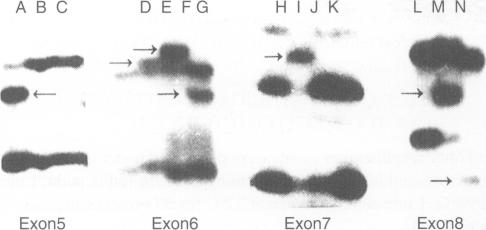
Chemotherapeutic management of ovarian cancers is a difficult task as these neoplasms show significant differences in chemosensitivity, even if they share identical clinicopathological features. The present study was undertaken to investigate the prognostic and predictive role of p53 alterations in ovarian cancer. To this end, using different technical approaches, i.e. genetic and immunohistochemical analyses, we analysed a series of 68 ovarian neoplasms including 15 low malignant potential (LMP) tumours and 53 invasive carcinomas. We never observed p53 abnormalities in LMP tumours. p53 alterations were present only in invasive ovarian carcinomas, and they were detected much more frequently in tumours characterized by high histological grade (P = 0.01) and advanced-stage disease (P = 0.006 and P = 0.05 for gene mutations and protein expression respectively). For 33 patients with invasive ovarian cancer, information was available concerning response to cisplatin-based chemotherapy. A strong correlation (P = 0.001) has emerged between p53 alterations and response to chemotherapy; only one (14%) of seven patients who had a pathological complete response to antiblastic drugs showed p53 aberrations, whereas 18 (82%) of 22 cases with partial response and all of the four non-responsive patients scored positive for p53 abnormalities. We also observed that patients with p53 mutations had a significantly shorter progression-free survival than patients with p53-negative tumours (P = 0.05). Taken together, our results strongly suggest that in epithelial ovarian malignancies tumours showing p53 aberrations are significantly less sensitive to chemotherapy and more aggressive than those with functional p53. Thus, a routine analysis of this gene could have profound implications for the treatment of ovarian cancer.
卵巢癌的化疗管理是一项艰巨的任务,因为这些肿瘤即使具有相同的临床病理特征,其化疗敏感性也存在显著差异。本研究旨在探讨p53改变在卵巢癌中的预后和预测作用。为此,我们采用了不同的技术方法,即基因分析和免疫组织化学分析,对一系列68例卵巢肿瘤进行了分析,其中包括15例低恶性潜能(LMP)肿瘤和53例浸润性癌。我们在LMP肿瘤中从未观察到p53异常。p53改变仅存在于浸润性卵巢癌中,并且在高组织学分级(P = 0.01)和晚期疾病(基因突变和蛋白表达的P值分别为0.006和0.05)的肿瘤中检测到的频率更高。对于33例浸润性卵巢癌患者,有关于对基于顺铂的化疗反应的信息。p53改变与化疗反应之间出现了强烈的相关性(P = 0.001);在对化疗药物有病理完全缓解的7例患者中,只有1例(14%)显示p53异常,而在部分缓解的22例患者中有18例(82%)以及所有4例无反应的患者p53异常检测呈阳性。我们还观察到,p53突变的患者无进展生存期明显短于p53阴性肿瘤的患者(P = 0.05)。综上所述,我们的结果强烈表明,在上皮性卵巢恶性肿瘤中,显示p53异常的肿瘤对化疗的敏感性明显低于具有功能性p53的肿瘤,并且更具侵袭性。因此,对该基因进行常规分析可能对卵巢癌的治疗具有深远意义。