Henry R, Carrigan M, McCaffrey M, Ma X, Cline K
Horticultural Sciences Department, University of Florida, Gainesville 32611, USA.
J Cell Biol. 1997 Feb 24;136(4):823-32. doi: 10.1083/jcb.136.4.823.
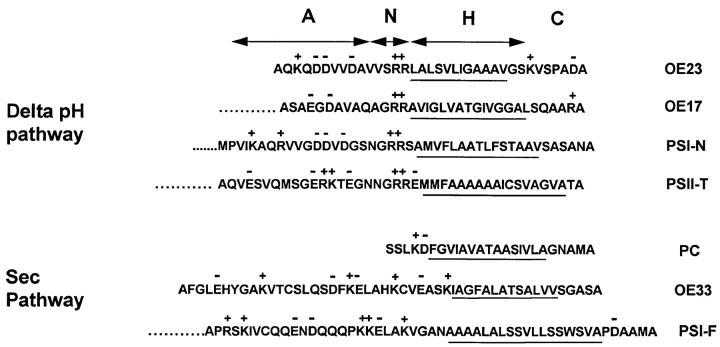
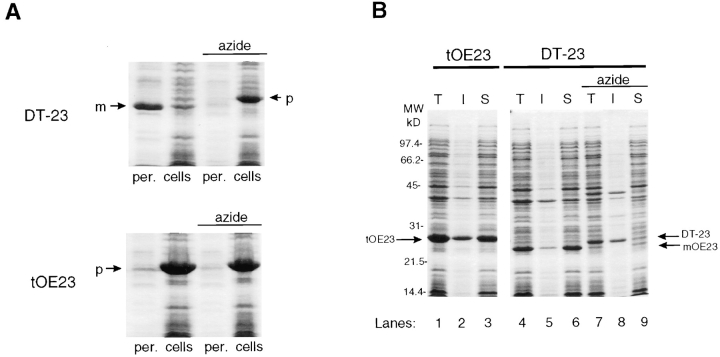
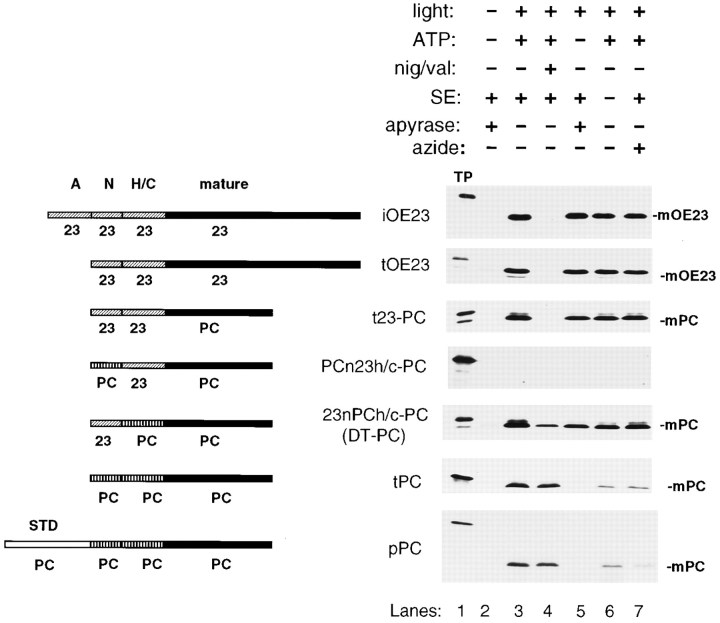
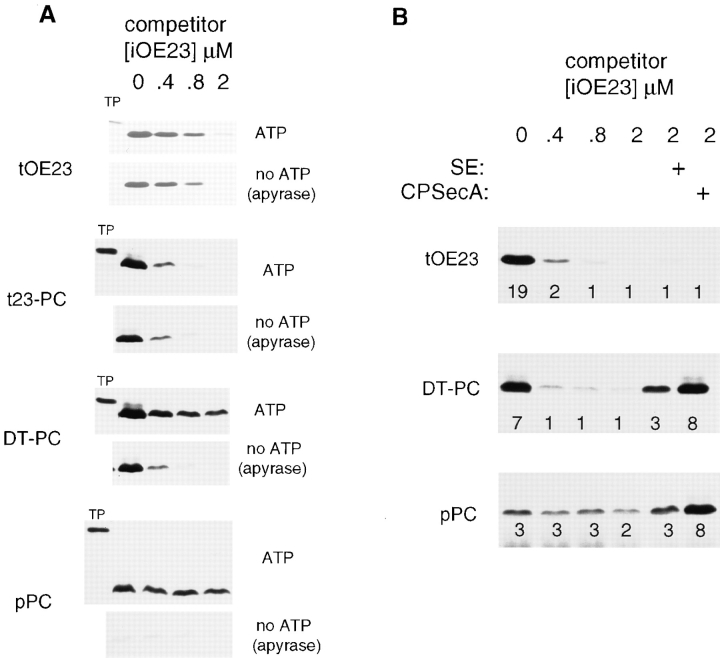
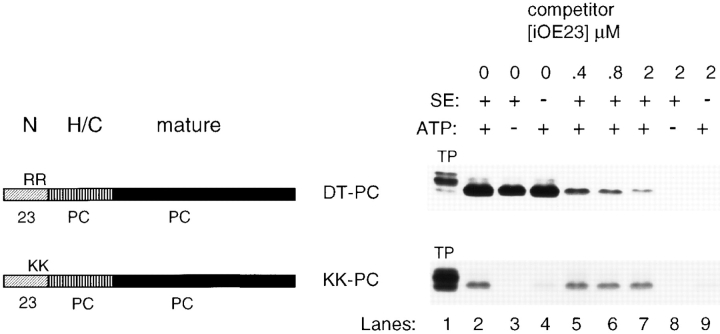
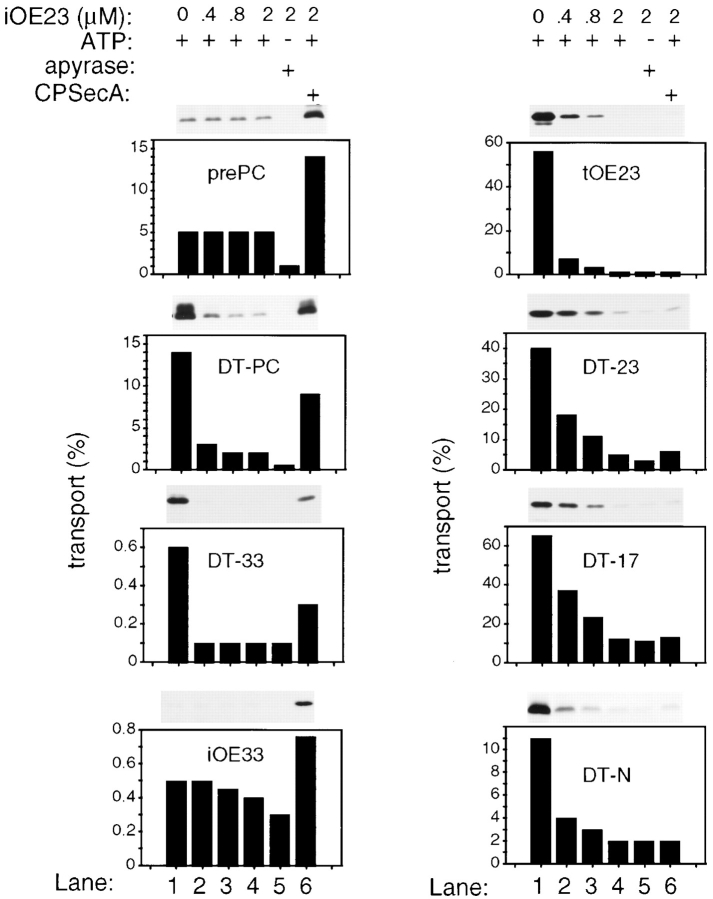
Transport of proteins to the thylakoid lumen is accomplished by two precursor-specific pathways, the Sec and the unique Delta pH transport systems. Pathway selection is specified by transient lumen-targeting domains (LTDs) on precursor proteins. Here, chimeric and mutant LTDs were used to identify elements responsible for targeting specificity. The results showed that: (a) minimal signal peptide motifs consisting of charged N, hydrophobic H, and cleavage C domains were both necessary and sufficient for pathway-specific targeting; (b) exclusive targeting to the Delta pH pathway requires a twin arginine in the N domain and an H domain that is incompatible with the Sec pathway; (c) exclusive targeting to the Sec pathway is achieved by an N domain that lacks the twin arginine, although the twin arginine was completely compatible with the Sec system. A dual-targeting signal peptide, constructed by combining Delta pH and Sec domains, was used to simultaneously compare the transport capability of both pathways when confronted with different passenger proteins. Whereas Sec passengers were efficiently transported by both pathways, Delta pH passengers were arrested in translocation on the Sec pathway. This finding suggests that the Delta pH mechanism evolved to accommodate transport of proteins incompatible with the thylakoid Sec machinery.
蛋白质向类囊体腔的转运是通过两条前体特异性途径完成的,即Sec途径和独特的ΔpH转运系统。途径的选择由前体蛋白上的瞬时腔靶向结构域(LTDs)决定。在这里,嵌合和突变的LTDs被用于鉴定负责靶向特异性的元件。结果表明:(a)由带电荷的N结构域、疏水的H结构域和切割C结构域组成的最小信号肽基序对于途径特异性靶向既是必要的也是充分的;(b)排他性地靶向ΔpH途径需要N结构域中有一个双精氨酸以及一个与Sec途径不相容的H结构域;(c)排他性地靶向Sec途径是通过缺乏双精氨酸的N结构域实现的,尽管双精氨酸与Sec系统完全兼容。通过组合ΔpH和Sec结构域构建的双靶向信号肽,用于在面对不同的乘客蛋白时同时比较两条途径的转运能力。虽然Sec乘客蛋白能被两条途径有效转运,但ΔpH乘客蛋白在Sec途径上的转运过程中被阻滞。这一发现表明,ΔpH机制的进化是为了适应与类囊体Sec机制不相容的蛋白质的转运。