Marinaro M, Boyaka P N, Finkelman F D, Kiyono H, Jackson R J, Jirillo E, McGhee J R
Department of Microbiology, University of Alabama at Birmingham 35294-2170, USA.
J Exp Med. 1997 Feb 3;185(3):415-27. doi: 10.1084/jem.185.3.415.
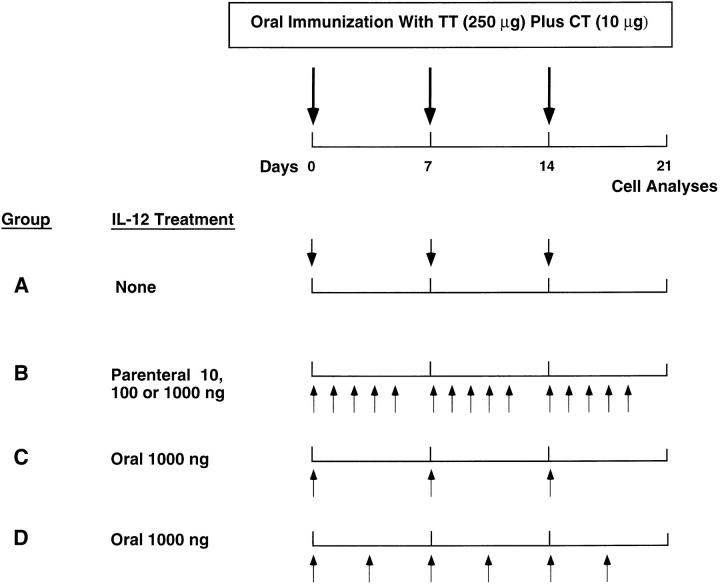
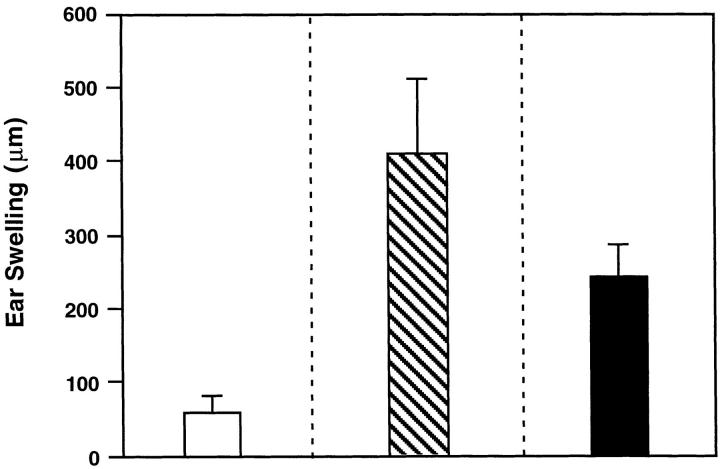
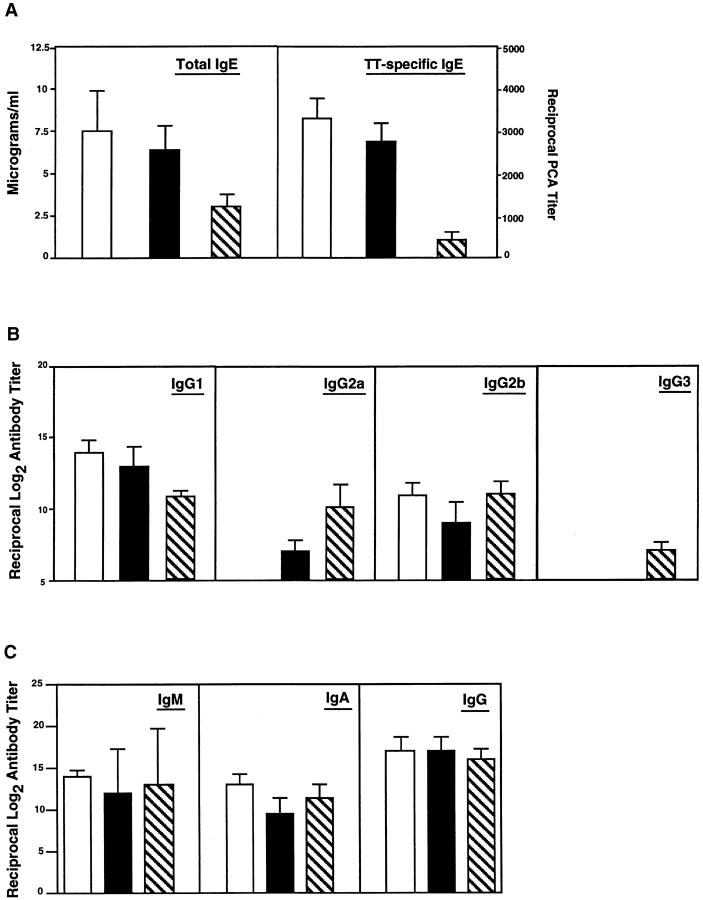
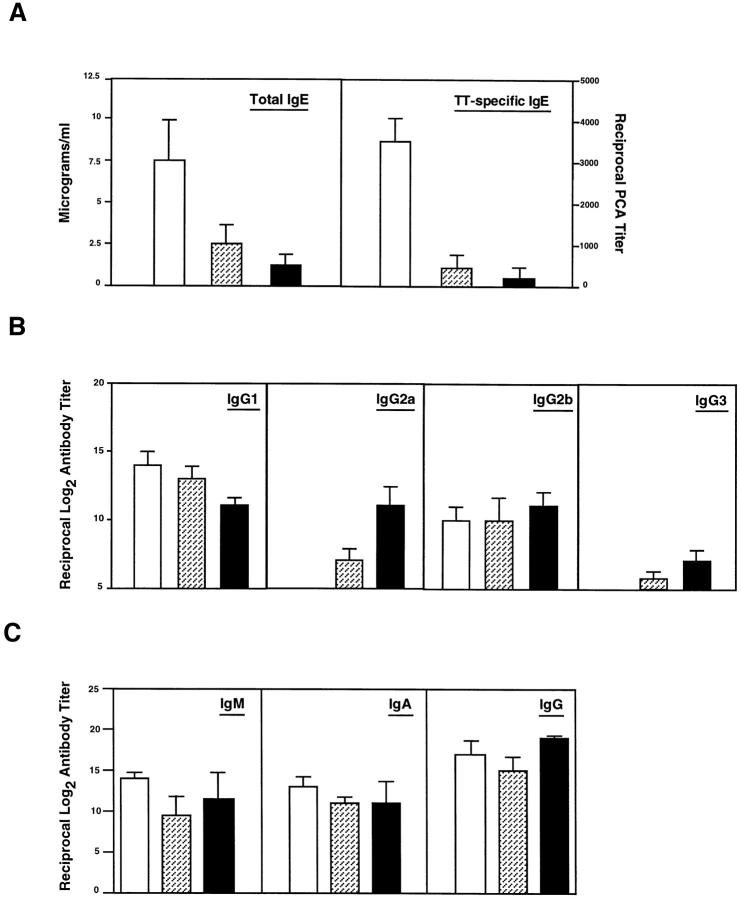
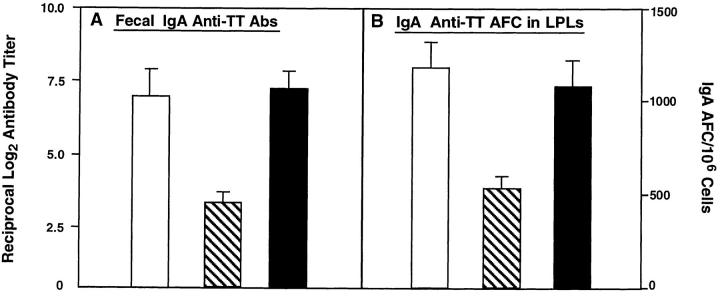
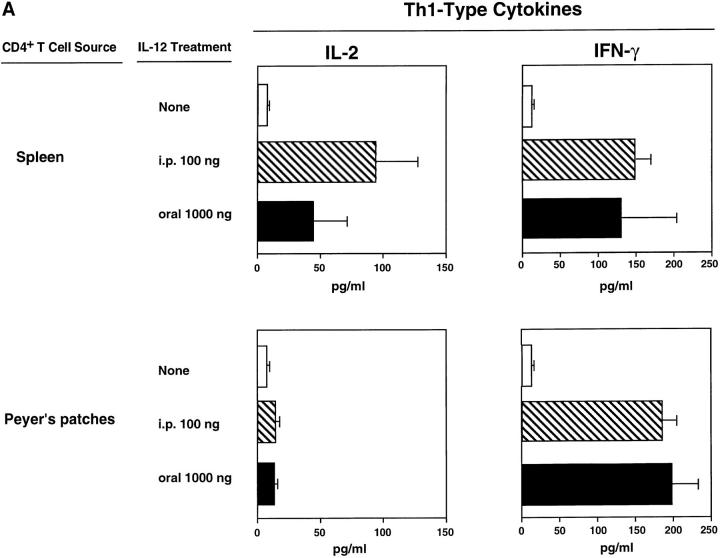
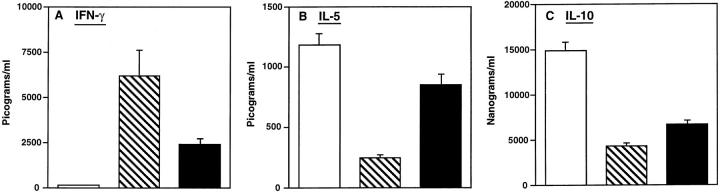
Our past studies have shown that the mucosal adjuvant cholera toxin (CT) induces T helper type 2 (Th2) responses with systemic IgG1, IgE and mucosal secretory IgA (S-IgA) antibodies (Abs). In this study, recombinant murine IL-12 (rmIL-12) was given either parenterally or orally to mice orally immunized with tetanus toxoid (TT) and CT to determine whether this cytokine could redirect the CT-induced Th2-type responses and what effect this shift would have on S-IgA Ab responses. Intraperitoneal administration of rmIL-12 shifted TT-specific responses toward Th1-type and resulted in CD4+ T cells producing IFN-gamma and IL-2 with markedly reduced levels of Th2-type cytokines. This cytokine profile was accompanied by increased delayed-type hypersensitivity (DTH) and shifts in serum IgG1 to IgG2a and IgG3 anti-TT Ab responses. Further, serum IgE and S-IgA Ab responses were markedly reduced by parenteral IL-12. When IL-12 complexed to liposomes was given orally both shifts to IgG2a and IgG3 and low IgE Abs again occurred concomitant with enhanced serum IFN-gamma and DTH responses. Interestingly, oral rmIL-12 did not result in significant levels of serum IL-12 nor altered S-IgA Ab responses and resulted in higher levels of some Th2-type cytokines both in vitro and in vivo when compared with parenteral IL-12. Our results show that the shifts in systemic immune responses with intact S-IgA Abs which occur after oral delivery of IL-12-liposomes are due to cytokine effects in the Peyer's patches and suggest new strategies for the targeted manipulation of Th1- and Th2-type responses to mucosal vaccines.
我们过去的研究表明,黏膜佐剂霍乱毒素(CT)可诱导产生T辅助2型(Th2)应答,并伴有全身性IgG1、IgE抗体以及黏膜分泌型IgA(S-IgA)抗体。在本研究中,对经破伤风类毒素(TT)和CT口服免疫的小鼠,分别通过腹腔注射或口服给予重组鼠白细胞介素12(rmIL-12),以确定该细胞因子是否能改变CT诱导的Th2型应答,以及这种转变对S-IgA抗体应答会产生何种影响。腹腔注射rmIL-12使TT特异性应答向Th1型转变,导致CD4+T细胞产生干扰素-γ和白细胞介素-2,同时Th2型细胞因子水平显著降低。这种细胞因子谱伴随着迟发型超敏反应(DTH)增强以及血清IgG1向IgG2a和IgG3抗TT抗体应答的转变。此外,腹腔注射IL-12使血清IgE和S-IgA抗体应答显著降低。当将与脂质体复合的IL-12口服给药时,又出现了向IgG2a和IgG3的转变以及低水平的IgE抗体,同时血清干扰素-γ和DTH应答增强。有趣的是,口服rmIL-12并未导致血清IL-12达到显著水平,也未改变S-IgA抗体应答,并且与腹腔注射IL-12相比,在体外和体内均导致某些Th2型细胞因子水平升高。我们的结果表明,口服IL-12脂质体后出现的全身性免疫应答转变以及完整的S-IgA抗体是由于派尔集合淋巴结中的细胞因子作用所致,并为靶向调控黏膜疫苗的Th1型和Th2型应答提出了新策略。