Polo-Parada L, Korn S J
Department of Physiology and Neurobiology, University of Connecticut, Storrs 06269, USA.
J Gen Physiol. 1997 Jun;109(6):693-702. doi: 10.1085/jgp.109.6.693.
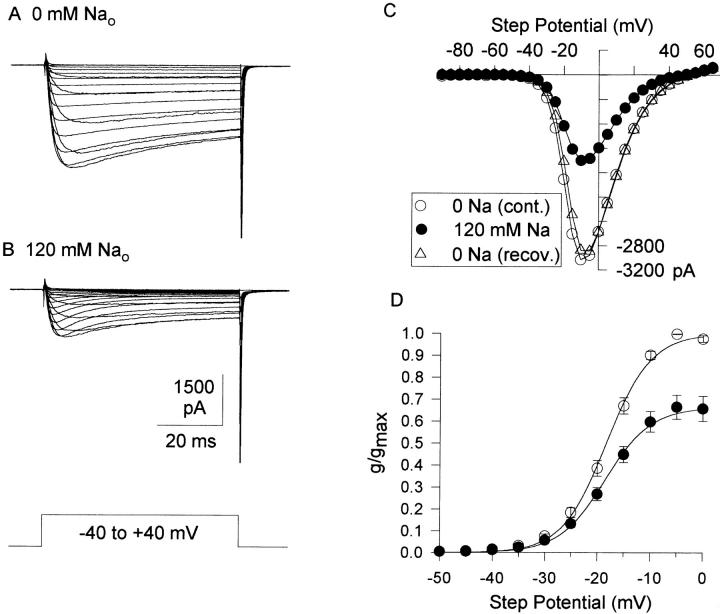
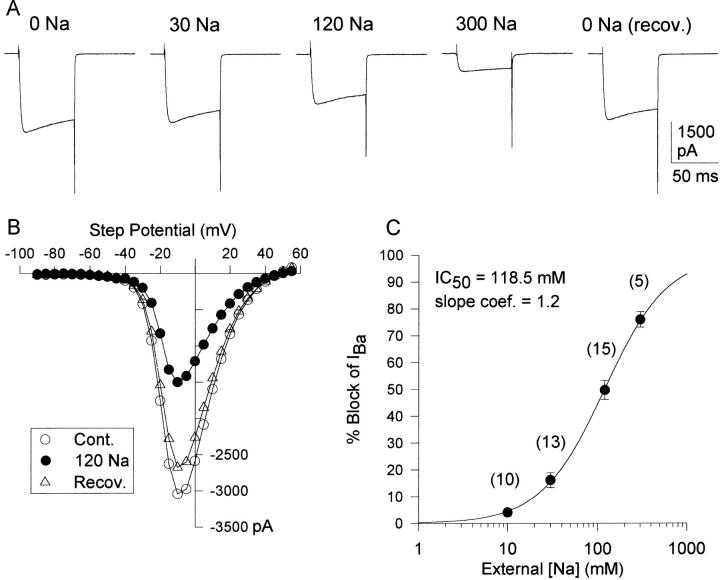
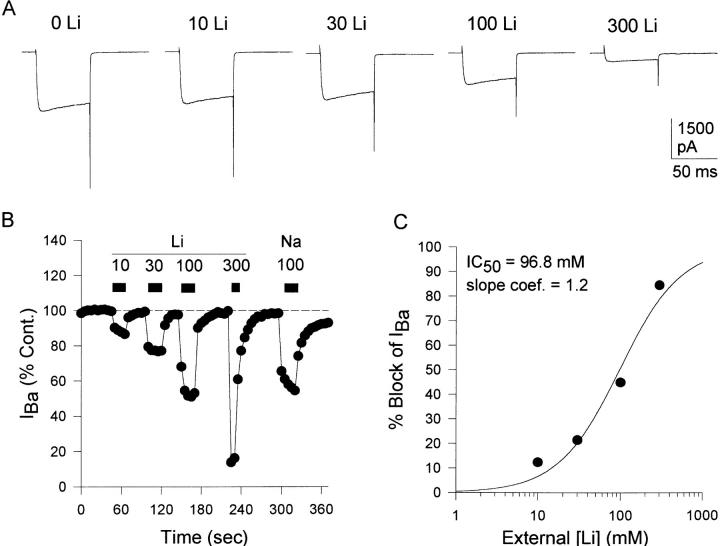
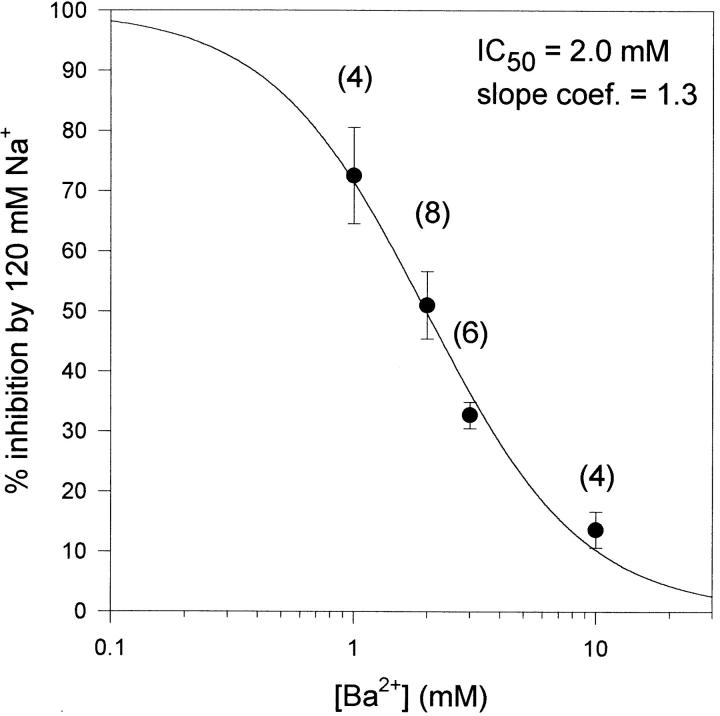
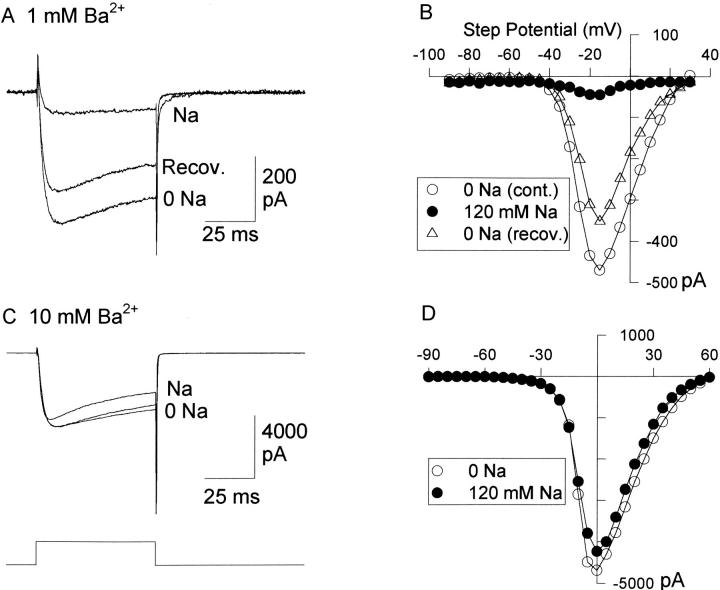
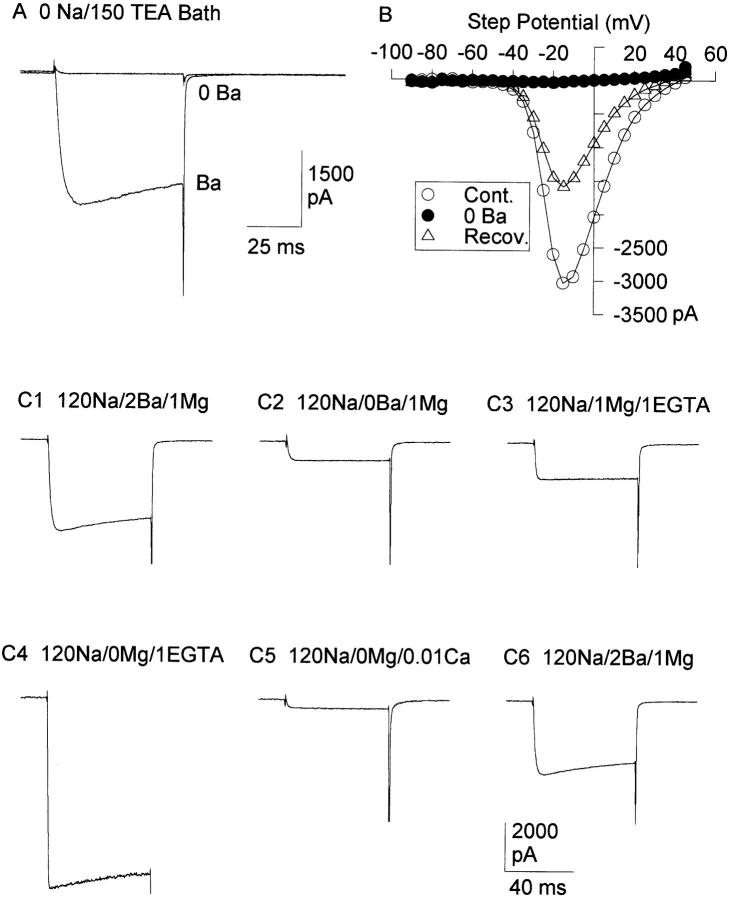
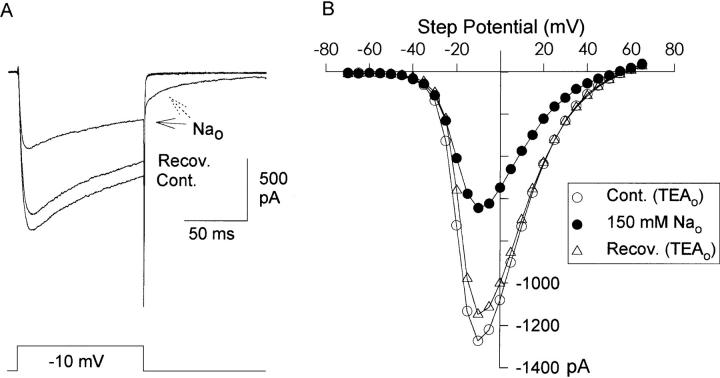
L-type Ca2+ channels select for Ca2+ over sodium Na+ by an affinity-based mechanism. The prevailing model of Ca2+ channel permeation describes a multi-ion pore that requires pore occupancy by at least two Ca2+ ions to generate a Ca2+ current. At [Ca2+] < 1 microM, Ca2+ channels conduct Na+. Due to the high affinity of the intrapore binding sites for Ca2+ relative to Na+, addition of microM concentrations of Ca2+ block Na+ conductance through the channel. There is little information, however, about the potential for interaction between Na+ and Ca2+ for the second binding site in a Ca2+ channel already occupied by one Ca2+. The two simplest possibilities, (a) that Na+ and Ca2+ compete for the second binding site or (b) that full time occupancy by one Ca2+ excludes Na+ from the pore altogether, would imply considerably different mechanisms of channel permeation. We are studying permeation mechanisms in N-type Ca2+ channels. Similar to L-type Ca2+ channels, N-type channels conduct Na+ well in the absence of external Ca2+. Addition of 10 microM Ca2+ inhibited Na+ conductance by 95%; and addition of 1 mM Mg2+ inhibited Na+ conductance by 80%. At divalent ion concentrations of 2 mM, 120 mM Na+ blocked both Ca2+ and Ba2+ currents. With 2 mM Ba2+, the IC50 for block of Ba2+ currents by Na+ was 119 mM. External Li+ also blocked Ba2+ currents in a concentration-dependent manner, with an IC50 of 97 mM. Na+ block of Ba2+ currents was dependent on [Ba2+]; increasing [Ba2+] progressively reduced block with an IC50 of 2 mM. External Na+ had no effect on voltage-dependent activation or inactivation of the channel. These data suggest that at physiological concentrations, Na+ and Ca2+ compete for occupancy in a pore already occupied by a single Ca2+. Occupancy of the pore by Na+ reduced Ca2+ channel conductance, such that in physiological solutions, Ca2+ channel currents are between 50 and 70% of maximal.
L型钙离子通道通过基于亲和力的机制对钙离子的选择优于钠离子。当前的钙离子通道通透模型描述了一个多离子孔,该孔需要至少两个钙离子占据孔才能产生钙离子电流。在[钙离子]<1微摩尔时,钙离子通道传导钠离子。由于孔内结合位点对钙离子的亲和力高于钠离子,加入微摩尔浓度的钙离子会阻断通过该通道的钠离子电导。然而,关于钠离子和钙离子在已经被一个钙离子占据的钙离子通道的第二个结合位点之间相互作用的可能性,几乎没有相关信息。两种最简单的可能性,(a)钠离子和钙离子竞争第二个结合位点,或者(b)一个钙离子的完全占据完全排除了钠离子进入孔道,这意味着通道通透机制有很大不同。我们正在研究N型钙离子通道的通透机制。与L型钙离子通道类似,N型通道在没有外部钙离子时能很好地传导钠离子。加入10微摩尔钙离子可使钠离子电导抑制95%;加入1毫摩尔镁离子可使钠离子电导抑制80%。在二价离子浓度为2毫摩尔时,120毫摩尔钠离子阻断了钙离子和钡离子电流。对于2毫摩尔钡离子,钠离子阻断钡离子电流的半数抑制浓度(IC50)为119毫摩尔。外部锂离子也以浓度依赖的方式阻断钡离子电流,IC50为97毫摩尔。钠离子对钡离子电流的阻断依赖于[钡离子];增加[钡离子]会逐渐减少阻断,IC50为2毫摩尔。外部钠离子对通道的电压依赖性激活或失活没有影响。这些数据表明,在生理浓度下,钠离子和钙离子竞争占据已经被单个钙离子占据的孔道。钠离子占据孔道会降低钙离子通道电导,因此在生理溶液中,钙离子通道电流为最大值的50%至70%。