Kopreski M S, Benko F A, Kwee C, Leitzel K E, Eskander E, Lipton A, Gocke C D
Department of Medicine, The Pennsylvania College University School of Medicine, Milton S Hershey Medical Center, Hershey, PA 17033, USA.
Br J Cancer. 1997;76(10):1293-9. doi: 10.1038/bjc.1997.551.
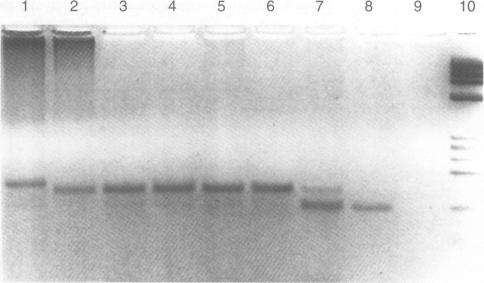
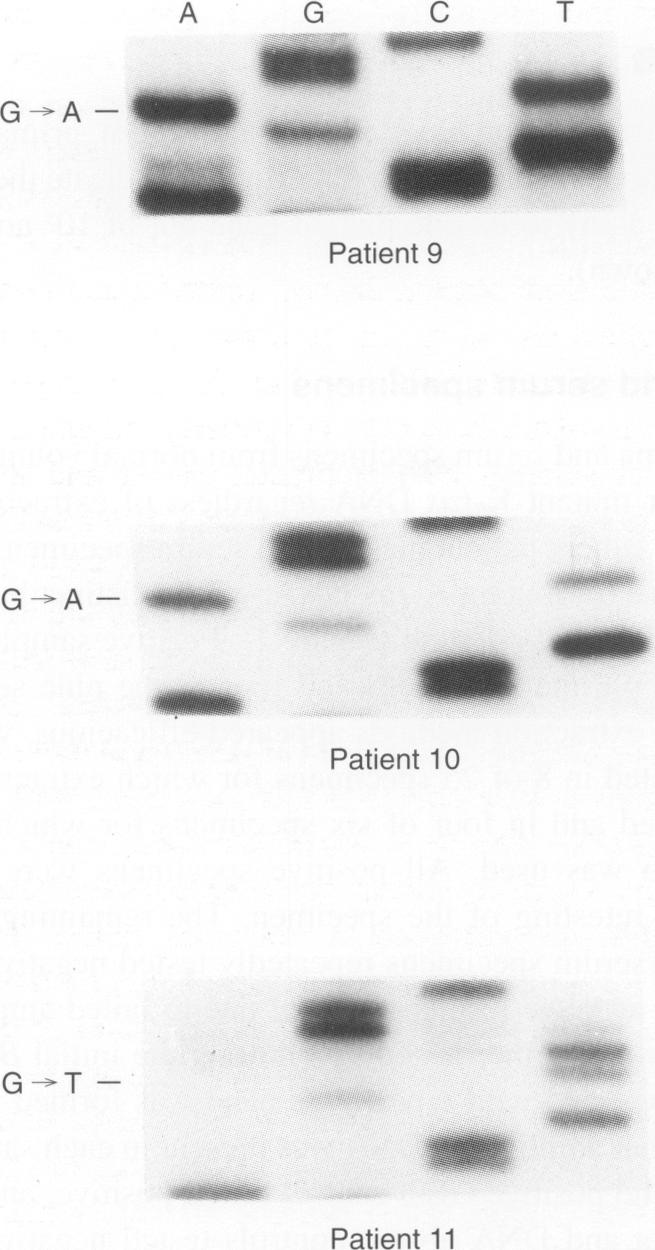
Increased understanding of the molecular basis of colorectal cancer and recognition that extracellular DNA circulates in the plasma and serum of cancer patients enables new approaches to detection and monitoring. We used a polymerase chain reaction (PCR) assay to demonstrate mutant K-ras DNA in the plasma or serum of patients with colorectal cancer. Plasma or serum was fractionated from the blood of 31 patients with metastatic or unresected colorectal cancer and from 28 normal volunteers. DNA was extracted using either a sodium chloride or a gelatin precipitation method and then amplified in a two-stage PCR assay using selective restriction enzyme digestion to enrich for mutant K-ras DNA. Mutant K-ras DNA was detected in the plasma or serum of 12 (39%) patients, all confirmed by sequencing, but was not detected in any of the normal volunteers. K-ras mutations were detected in plasma or serum regardless of sex, primary tumour location, principal site of metastasis or proximity of chemotherapy and surgery to blood sampling. Tumour specimens available for 19 of the patients were additionally assayed for ras mutations and compared with blood specimens. Our results indicate mutant K-ras DNA is readily detectable by PCR in the plasma or serum of patients with advanced colorectal cancer. Thus, plasma- or serum-based nucleic acid amplification assays may provide a valuable method of monitoring and potentially detecting colorectal cancer.
对结直肠癌分子基础的深入了解以及认识到细胞外DNA在癌症患者的血浆和血清中循环,为检测和监测提供了新方法。我们使用聚合酶链反应(PCR)检测法在结直肠癌患者的血浆或血清中证实了突变型K-ras DNA。从31例转移性或未切除的结直肠癌患者以及28名正常志愿者的血液中分离出血浆或血清。使用氯化钠或明胶沉淀法提取DNA,然后在两阶段PCR检测中进行扩增,采用选择性限制性内切酶消化以富集突变型K-ras DNA。在12例(39%)患者的血浆或血清中检测到突变型K-ras DNA,均经测序证实,但在任何正常志愿者中均未检测到。无论性别、原发肿瘤位置、主要转移部位或化疗及手术与采血的时间间隔如何,均可在血浆或血清中检测到K-ras突变。另外对19例患者可获得的肿瘤标本进行ras突变检测,并与血液标本进行比较。我们的结果表明,在晚期结直肠癌患者的血浆或血清中,通过PCR很容易检测到突变型K-ras DNA。因此,基于血浆或血清的核酸扩增检测可能为监测和潜在检测结直肠癌提供一种有价值的方法。