Einheber S, Zanazzi G, Ching W, Scherer S, Milner T A, Peles E, Salzer J L
Department of Cell Biology, New York University Medical School, New York 10016, USA.
J Cell Biol. 1997 Dec 15;139(6):1495-506. doi: 10.1083/jcb.139.6.1495.
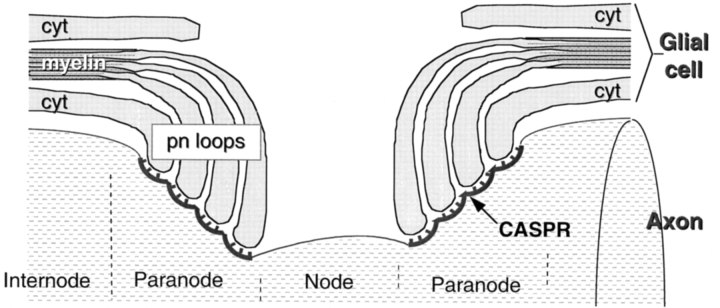
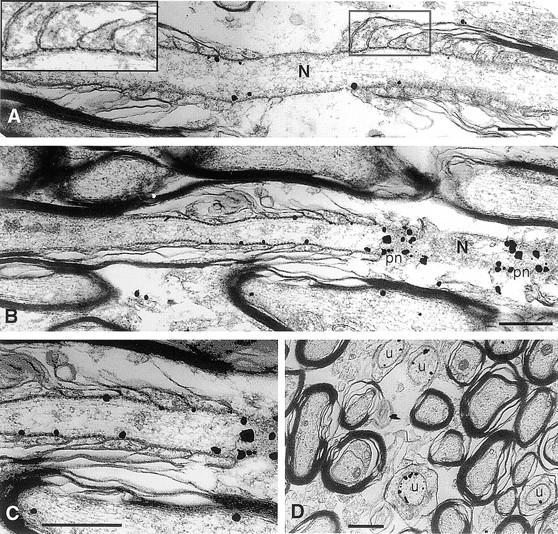
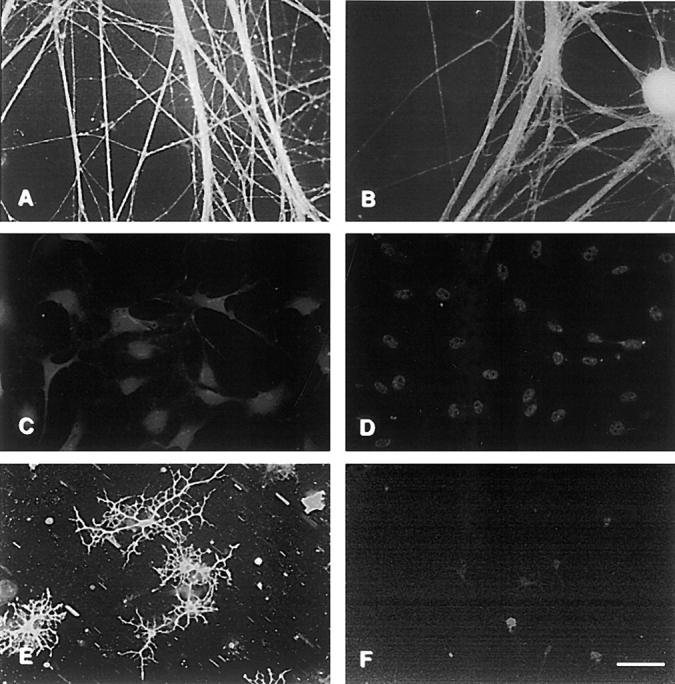
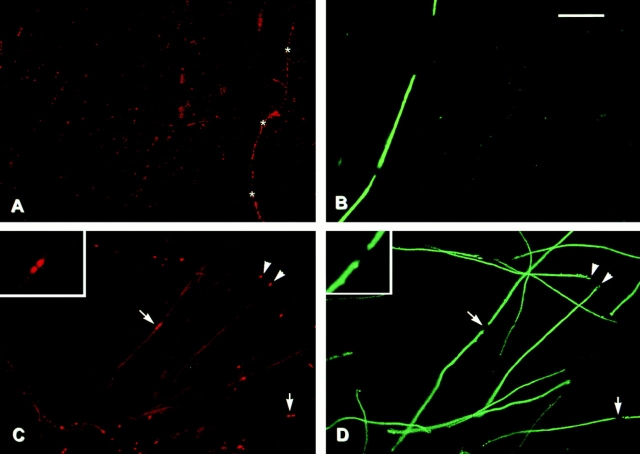
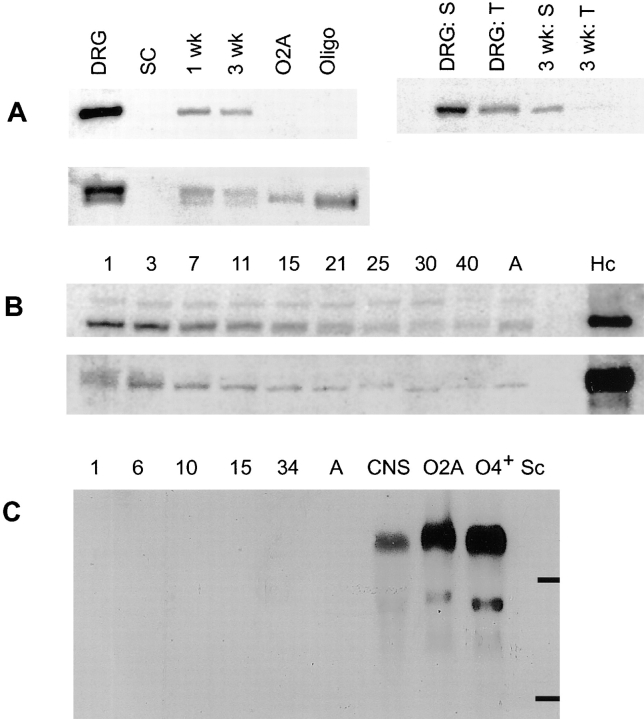
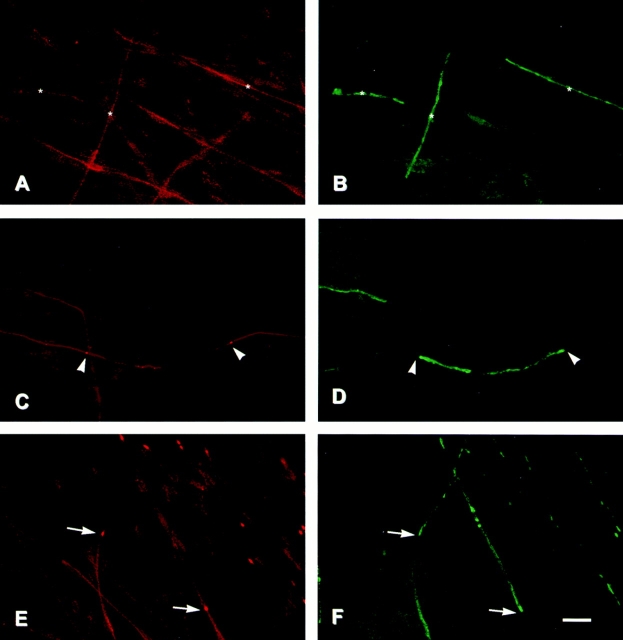
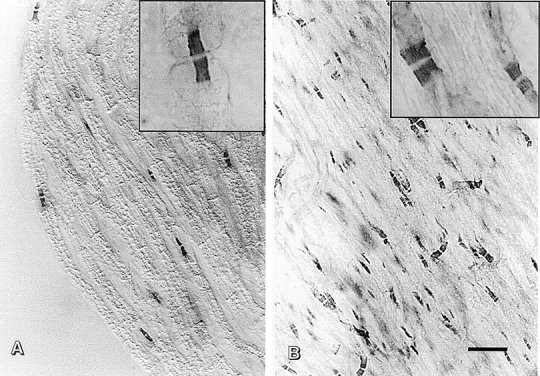
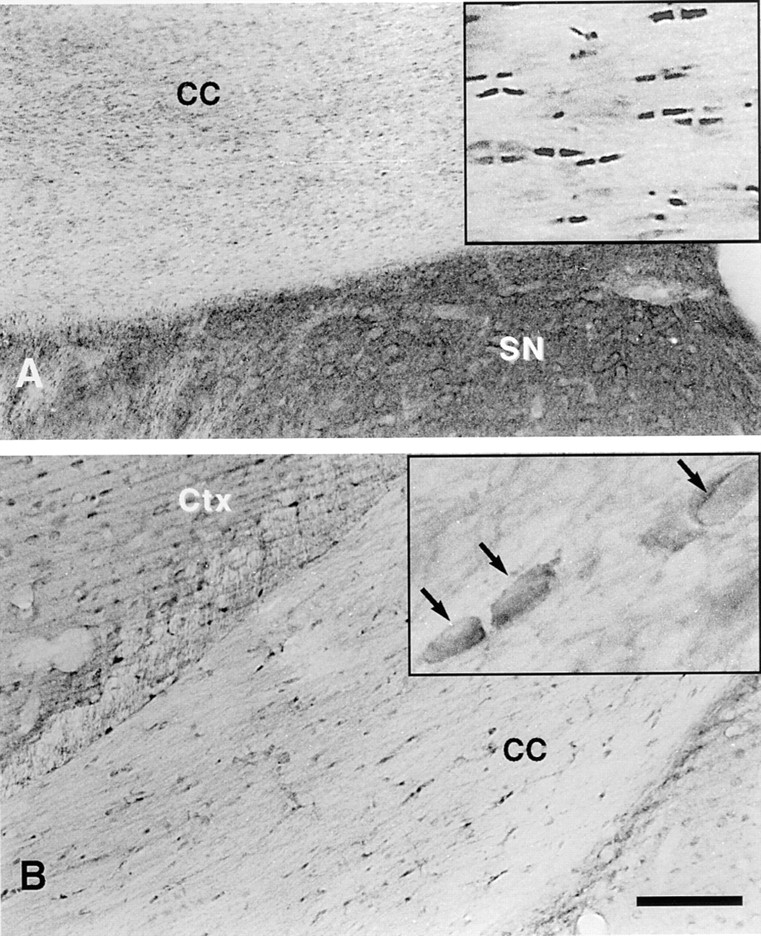
We have investigated the potential role of contactin and contactin-associated protein (Caspr) in the axonal-glial interactions of myelination. In the nervous system, contactin is expressed by neurons, oligodendrocytes, and their progenitors, but not by Schwann cells. Expression of Caspr, a homologue of Neurexin IV, is restricted to neurons. Both contactin and Caspr are uniformly expressed at high levels on the surface of unensheathed neurites and are downregulated during myelination in vitro and in vivo. Contactin is downregulated along the entire myelinated nerve fiber. In contrast, Caspr expression initially remains elevated along segments of neurites associated with nascent myelin sheaths. With further maturation, Caspr is downregulated in the internode and becomes strikingly concentrated in the paranodal regions of the axon, suggesting that it redistributes from the internode to these sites. Caspr expression is similarly restricted to the paranodes of mature myelinated axons in the peripheral and central nervous systems; it is more diffusely and persistently expressed in gray matter and on unmyelinated axons. Immunoelectron microscopy demonstrated that Caspr is localized to the septate-like junctions that form between axons and the paranodal loops of myelinating cells. Caspr is poorly extracted by nonionic detergents, suggesting that it is associated with the axon cytoskeleton at these junctions. These results indicate that contactin and Caspr function independently during myelination and that their expression is regulated by glial ensheathment. They strongly implicate Caspr as a major transmembrane component of the paranodal junctions, whose molecular composition has previously been unknown, and suggest its role in the reciprocal signaling between axons and glia.
我们研究了接触蛋白(contactin)和接触蛋白相关蛋白(Caspr)在髓鞘形成的轴突-胶质细胞相互作用中的潜在作用。在神经系统中,接触蛋白由神经元、少突胶质细胞及其前体细胞表达,但施万细胞不表达。神经纤连蛋白IV的同源物Caspr的表达仅限于神经元。接触蛋白和Caspr在无髓鞘神经突表面均高水平均匀表达,在体外和体内髓鞘形成过程中表达下调。接触蛋白在整个有髓神经纤维上表达下调。相比之下,Caspr的表达最初在与新生髓鞘相关的神经突节段中保持升高。随着进一步成熟,Caspr在结间段下调,并在轴突的结旁区域显著聚集,表明它从结间段重新分布到这些部位。Caspr的表达同样仅限于外周和中枢神经系统中成熟有髓轴突的结旁区;它在灰质和无髓轴突上更广泛且持续地表达。免疫电子显微镜显示,Caspr定位于轴突与髓鞘形成细胞的结旁环之间形成的类紧密连接。Caspr不易被非离子去污剂提取,表明它在这些连接处与轴突细胞骨架相关。这些结果表明,接触蛋白和Caspr在髓鞘形成过程中独立发挥作用,且它们的表达受胶质细胞包裹调节。它们有力地表明Caspr是结旁连接的主要跨膜成分,其分子组成此前未知,并提示了其在轴突与胶质细胞之间相互信号传导中的作用。