Isenring P, Jacoby S C, Chang J, Forbush B
Department of Cellular and Molecular Physiology, Yale University, New Haven, Connecticut 06510, USA.
J Gen Physiol. 1998 Nov;112(5):549-58. doi: 10.1085/jgp.112.5.549.
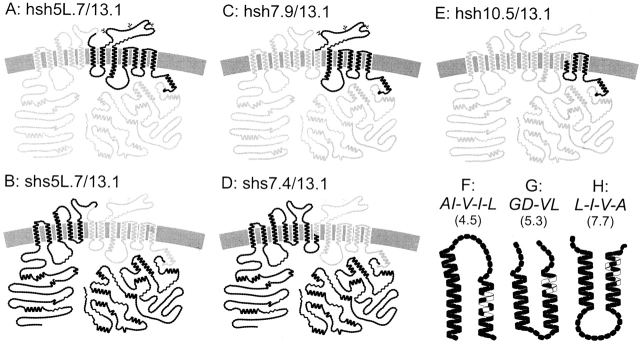
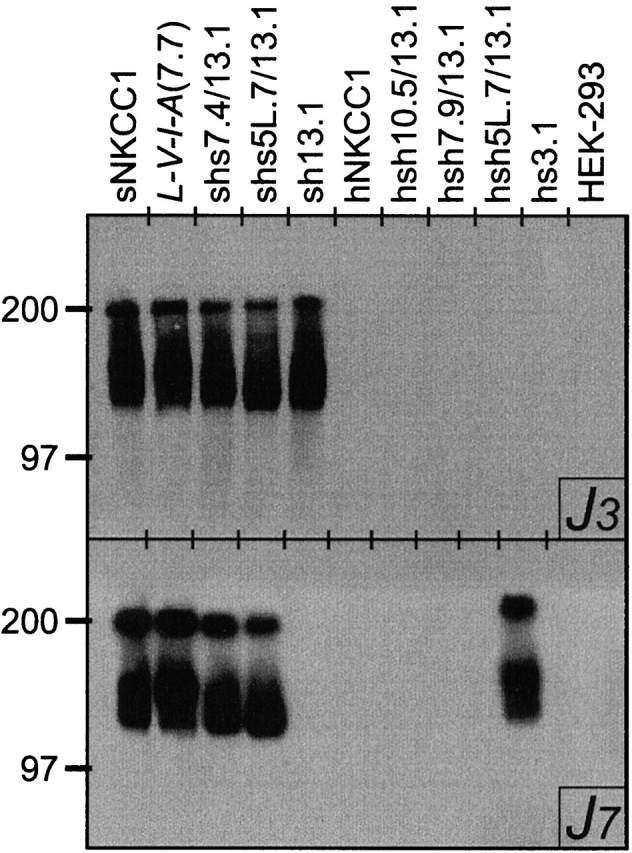
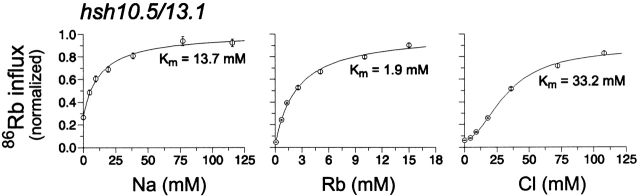
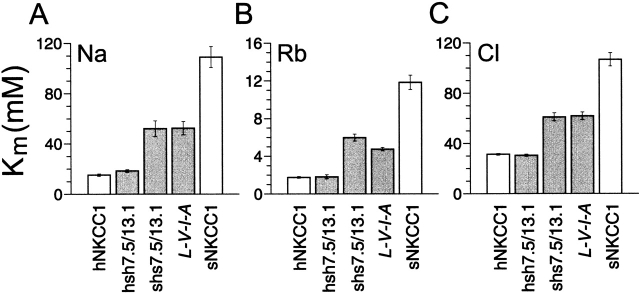
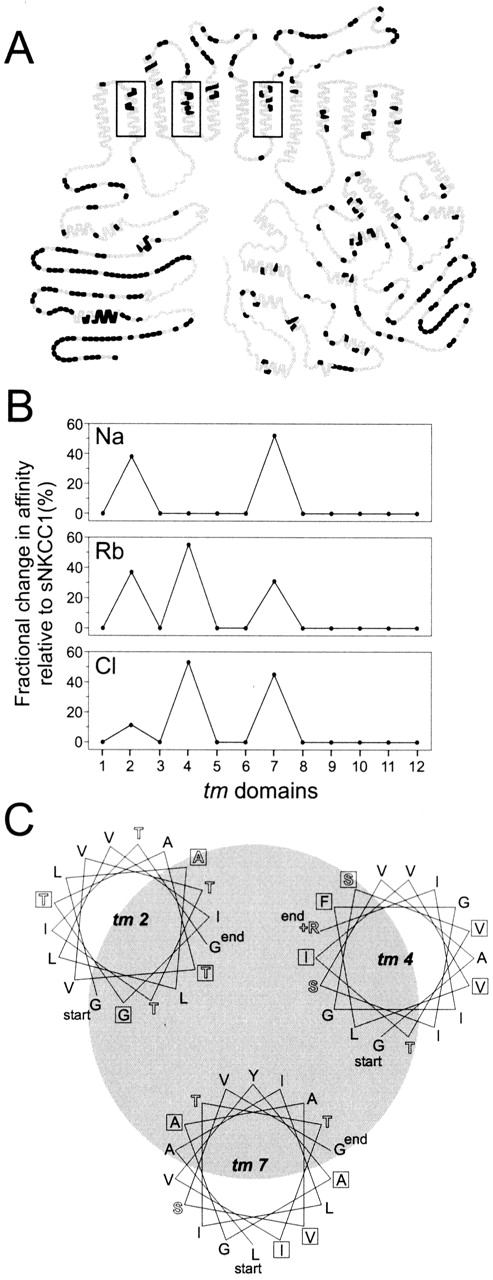
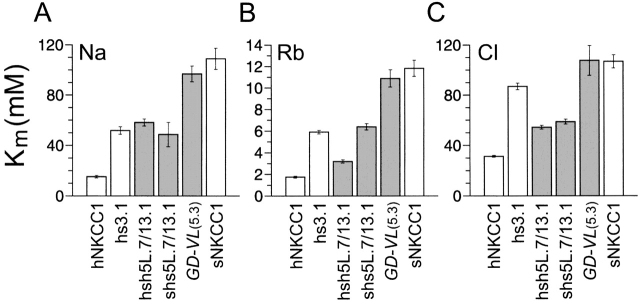
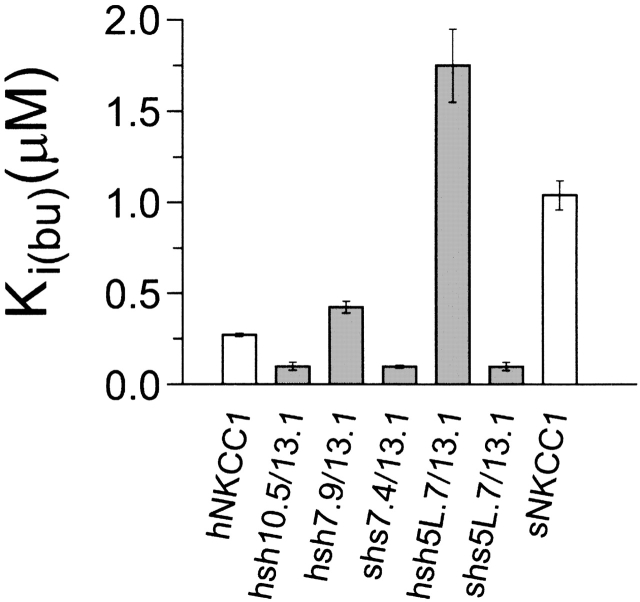
The human and shark Na-K-Cl cotransporters (NKCCs) are 74% identical in amino acid sequence yet they display marked differences in apparent affinities for the ions and bumetanide. In this study, we have used chimeras and point mutations to determine which transmembrane domains (tm's) are responsible for the differences in ion transport and in inhibitor binding kinetics. When expressed in HEK-293 cells, all the mutants carry out bumetanide-sensitive 86Rb influx. The kinetic behavior of these constructs demonstrates that the first seven tm's contain all of the residues conferring affinity differences. In conjunction with our previous finding that tm 2 plays an important role in cation transport, the present observations implicate the fourth and seventh tm helices in anion transport. Thus, it appears that tm's 2, 4, and 7 contain the essential affinity-modifying residues accounting for the human-shark differences with regard to cation and anion transport. Point mutations have narrowed the list of candidates to 13 residues within the three tm's. The affinity for bumetanide was found to be affected by residues in the same tm 2-7 region, and also by residues in tm's 11 and 12. Unlike for the ions, changes in bumetanide affinity were nonlinear and difficult to interpret: the Ki(bumetanide) of a number of the constructs was outside the range of sNKCC1 and hNKCC1 Kis.
人类和鲨鱼的钠-钾-氯协同转运蛋白(NKCCs)氨基酸序列的同源性为74%,但它们对离子和布美他尼的表观亲和力却存在显著差异。在本研究中,我们利用嵌合体和点突变来确定哪些跨膜结构域(tm's)导致了离子转运和抑制剂结合动力学的差异。当在HEK-293细胞中表达时,所有突变体都能进行布美他尼敏感的86Rb内流。这些构建体的动力学行为表明,前七个tm's包含了所有赋予亲和力差异的残基。结合我们之前发现tm 2在阳离子转运中起重要作用,目前的观察结果表明第四和第七个tm螺旋参与阴离子转运。因此,似乎tm's 2、4和7包含了关键的亲和力修饰残基,这些残基导致了人类和鲨鱼在阳离子和阴离子转运方面的差异。点突变已将候选残基范围缩小到这三个tm's内的13个残基。发现对布美他尼的亲和力受相同的tm 2-7区域内的残基影响,也受tm's 11和12中的残基影响。与离子不同,布美他尼亲和力的变化是非线性的且难以解释:许多构建体的Ki(布美他尼)不在sNKCC1和hNKCC1 Kis的范围内。