Zhu Y, Oganesian A, Keene D R, Sandell L J
Washington University School of Medicine, Department of Orthopedic Surgery, St. Louis, Missouri 63110, USA.
J Cell Biol. 1999 Mar 8;144(5):1069-80. doi: 10.1083/jcb.144.5.1069.
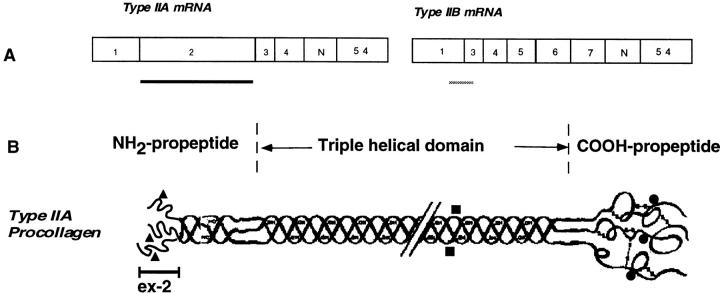
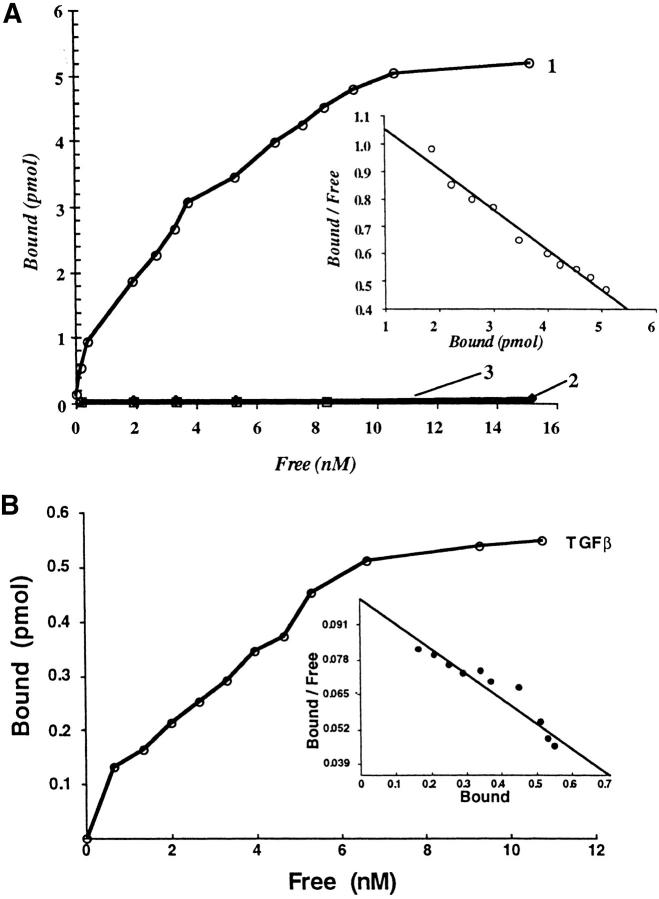
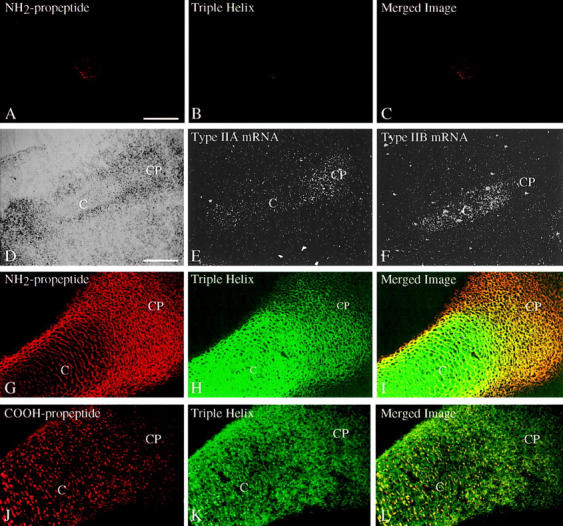
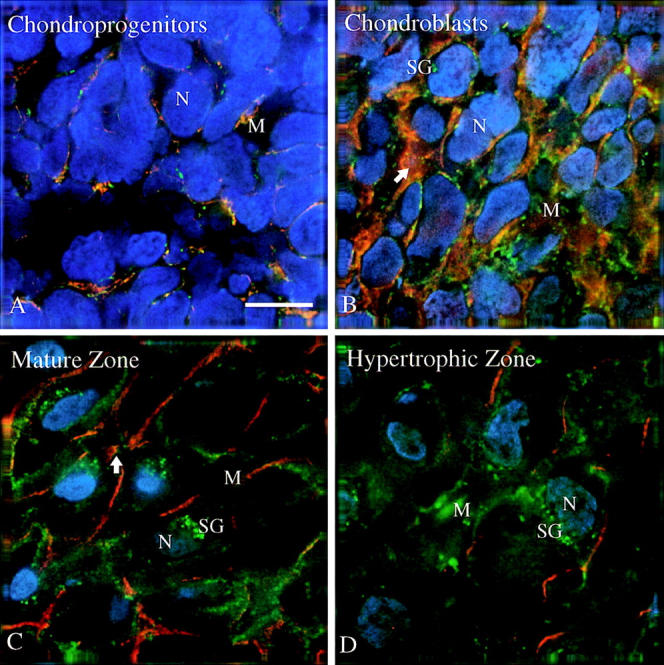
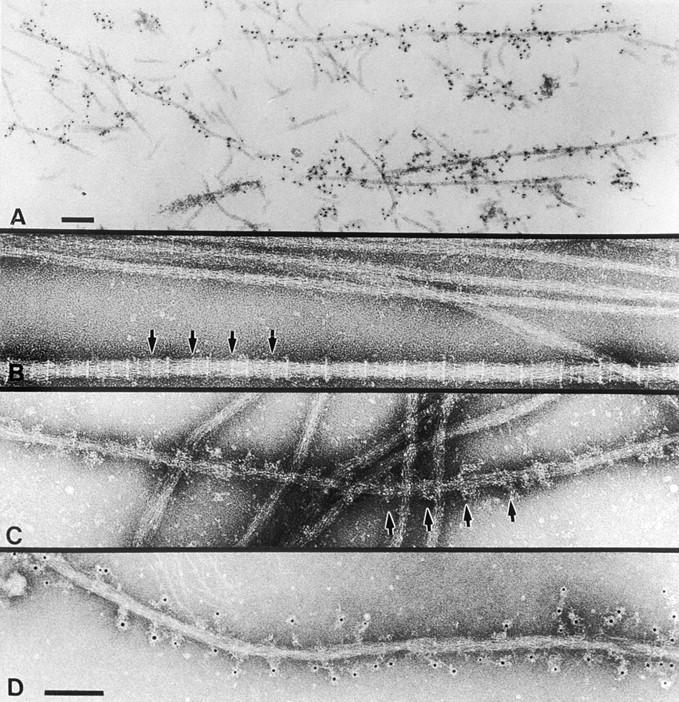
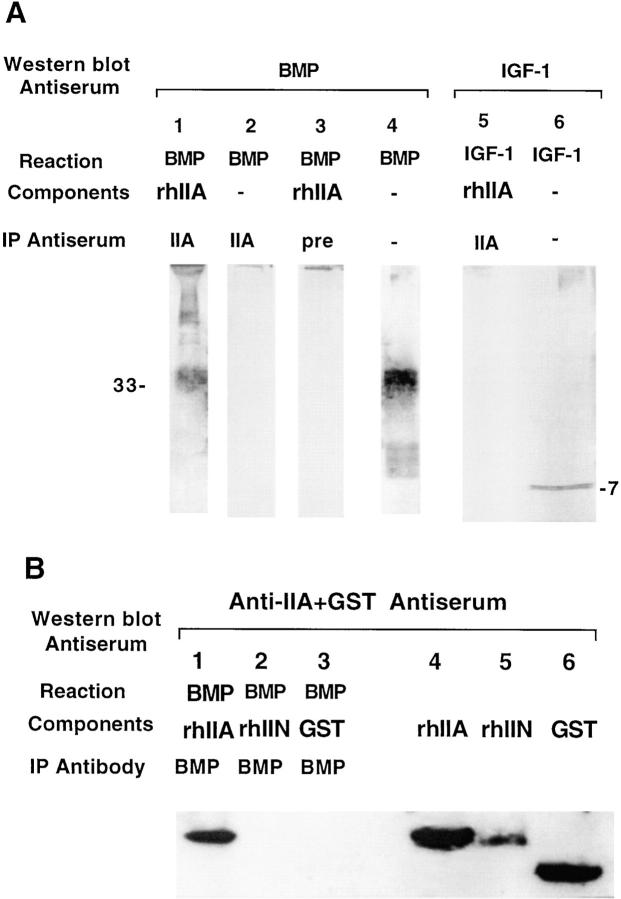
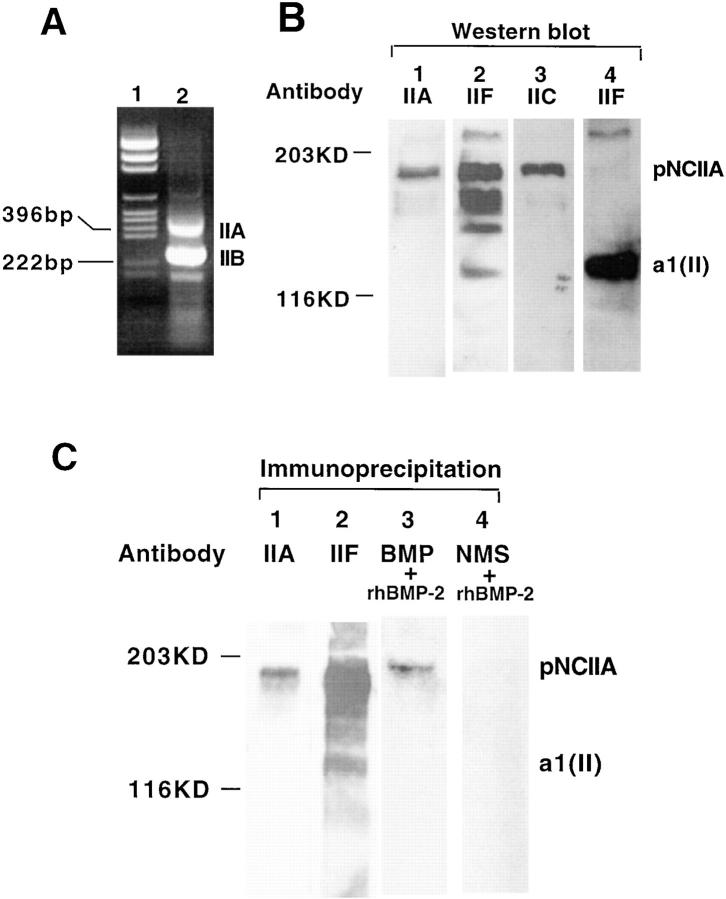
Type II procollagen is expressed as two splice forms. One form, type IIB, is synthesized by chondrocytes and is the major extracellular matrix component of cartilage. The other form, type IIA, contains an additional 69 amino acid cysteine-rich domain in the NH2-propeptide and is synthesized by chondrogenic mesenchyme and perichondrium. We have hypothesized that the additional protein domain of type IIA procollagen plays a role in chondrogenesis. The present study was designed to determine the localization of the type IIA NH2-propeptide and its function during chondrogenesis. Immunofluorescence histochemistry using antibodies to three domains of the type IIA procollagen molecule was used to localize the NH2-propeptide, fibrillar domain, and COOH-propeptides of the type IIA procollagen molecule during chondrogenesis in a developing human long bone (stage XXI). Before chondrogenesis, type IIA procollagen was synthesized by chondroprogenitor cells and deposited in the extracellular matrix. Immunoelectron microscopy revealed type IIA procollagen fibrils labeled with antibodies to NH2-propeptide at approximately 70 nm interval suggesting that the NH2-propeptide remains attached to the collagen molecule in the extracellular matrix. As differentiation proceeds, the cells switch synthesis from type IIA to IIB procollagen, and the newly synthesized type IIB collagen displaces the type IIA procollagen into the interterritorial matrix. To initiate studies on the function of type IIA procollagen, binding was tested between recombinant NH2-propeptide and various growth factors known to be involved in chondrogenesis. A solid phase binding assay showed no reaction with bFGF or IGF-1, however, binding was observed with TGF-beta1 and BMP-2, both known to induce endochondral bone formation. BMP-2, but not IGF-1, coimmunoprecipitated with type IIA NH2-propeptide. Recombinant type IIA NH2-propeptide and type IIA procollagen from media coimmunoprecipitated with BMP-2 while recombinant type IIB NH2-propeptide and all other forms of type II procollagens and mature collagen did not react with BMP-2. Taken together, these results suggest that the NH2-propeptide of type IIA procollagen could function in the extracellular matrix distribution of bone morphogenetic proteins in chondrogenic tissue.
II型前胶原以两种剪接形式表达。一种形式是IIB型,由软骨细胞合成,是软骨的主要细胞外基质成分。另一种形式是IIA型,在NH2-前肽中含有一个额外的富含69个氨基酸的半胱氨酸结构域,由软骨形成间充质和软骨膜合成。我们推测IIA型前胶原的额外蛋白质结构域在软骨形成中起作用。本研究旨在确定IIA型NH2-前肽在软骨形成过程中的定位及其功能。在人发育中的长骨(XXI期)软骨形成过程中,使用针对IIA型前胶原分子三个结构域的抗体进行免疫荧光组织化学,以定位IIA型前胶原分子的NH2-前肽、原纤维结构域和COOH-前肽。在软骨形成之前,IIA型前胶原由软骨祖细胞合成并沉积在细胞外基质中。免疫电子显微镜显示,用针对NH2-前肽的抗体标记的IIA型前胶原纤维间隔约70nm,这表明NH2-前肽在细胞外基质中仍附着于胶原分子。随着分化的进行,细胞将合成从IIA型转换为IIB型前胶原,新合成的IIB型胶原将IIA型前胶原取代到细胞间基质中。为了启动对IIA型前胶原功能的研究,测试了重组NH2-前肽与已知参与软骨形成的各种生长因子之间的结合。固相结合试验显示与bFGF或IGF-1无反应,然而,观察到与TGF-β1和BMP-2有结合,这两种因子都已知可诱导软骨内骨形成。BMP-2,但不是IGF-1,与IIA型NH2-前肽共免疫沉淀。来自培养基的重组IIA型NH2-前肽和IIA型前胶原与BMP-2共免疫沉淀,而重组IIB型NH2-前肽以及II型前胶原的所有其他形式和成熟胶原均不与BMP-2反应。综上所述,这些结果表明IIA型前胶原的NH2-前肽可能在软骨形成组织中骨形态发生蛋白的细胞外基质分布中发挥作用。