Maeda T, Yamada Y, Moriuchi R, Sugahara K, Tsuruda K, Joh T, Atogami S, Tsukasaki K, Tomonaga M, Kamihira S
Department of Hematology and Molecular Medicine Unit, Atomic Bomb Disease Institute, Aichi 464-0221, Japan.
J Exp Med. 1999 Apr 5;189(7):1063-71. doi: 10.1084/jem.189.7.1063.
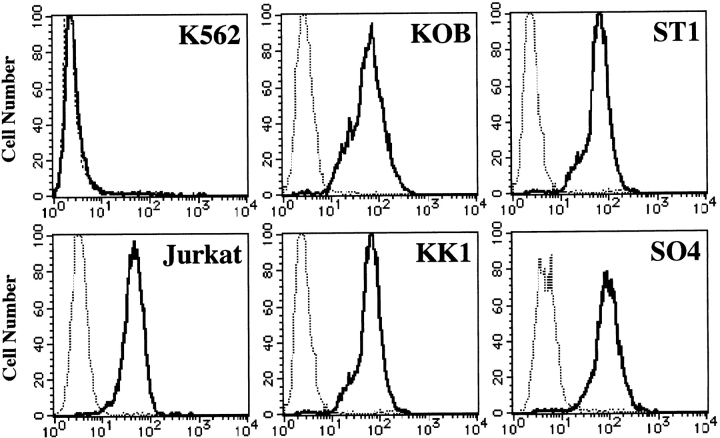
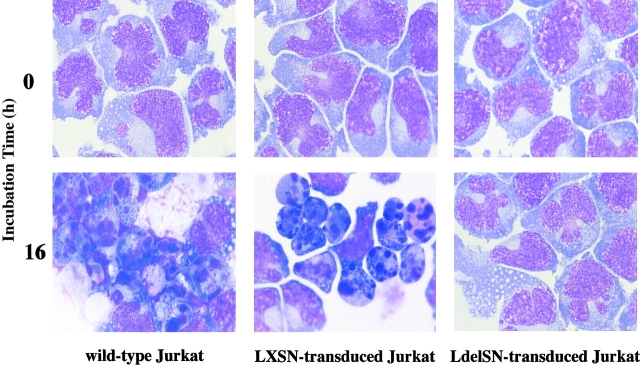
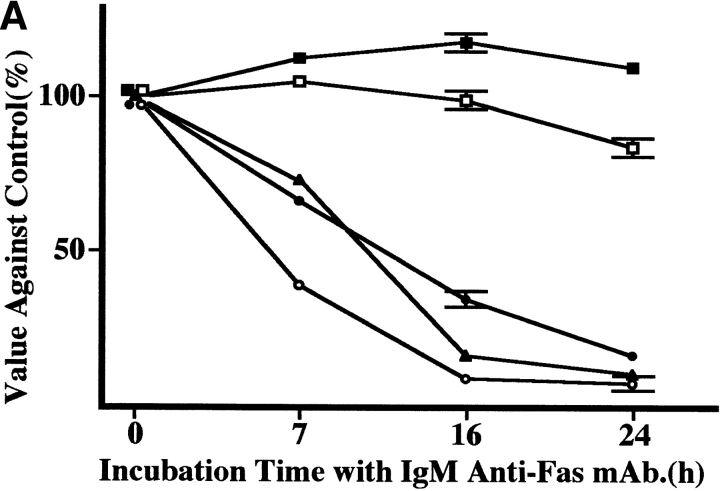
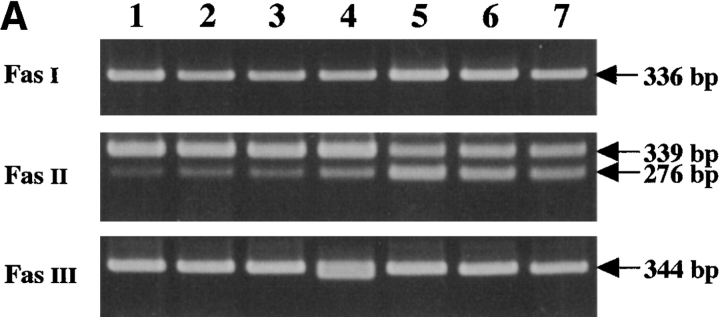
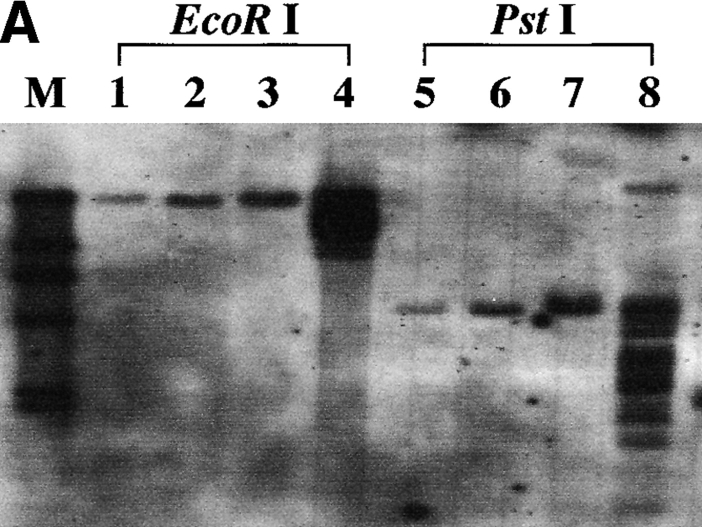
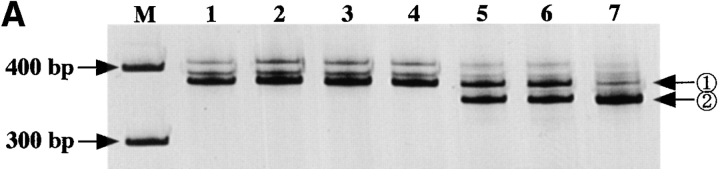
Fas antigen (Apo-1/CD95) is an apoptosis-signaling cell surface receptor belonging to the tumor necrosis factor receptor superfamily. Adult T cell leukemia (ATL) cells express Fas antigen and show apoptosis after treatment with an anti-Fas monoclonal antibody. We established the ATL cell line KOB, which showed resistance to Fas-mediated apoptosis, and found that KOB expressed two forms of Fas mRNA, the normal form and a truncated form. The truncated transcript lacked 20 base pairs at exon 9, resulting in a frame shift and the generation of a premature stop codon at amino acid 239. The same mutation was detected in primary ascitic cells and peripheral blood cells. The mutation was not detected in lymph node cells, however, although all of the primary ATL cells were of the same clonal origin. A retroviral-mediated gene transfer of the truncated Fas to Jurkat cells rendered the cells resistant to Fas-mediated apoptosis, suggesting a dominant negative interference mechanism. These results indicate that an ATL subclone acquires a Fas mutation in the lymph nodes, enabling the subclone to escape from apoptosis mediated by the Fas/Fas ligand system and proliferate in the body. Mutation of the Fas gene may be one of the mechanisms underlying the progression of ATL.
Fas抗原(Apo-1/CD95)是一种属于肿瘤坏死因子受体超家族的凋亡信号传导细胞表面受体。成人T细胞白血病(ATL)细胞表达Fas抗原,并在用抗Fas单克隆抗体处理后显示凋亡。我们建立了对Fas介导的凋亡具有抗性的ATL细胞系KOB,并发现KOB表达两种形式的Fas mRNA,即正常形式和截短形式。截短的转录本在第9外显子处缺少20个碱基对,导致移码并在氨基酸239处产生提前终止密码子。在原发性腹水细胞和外周血细胞中检测到相同的突变。然而,尽管所有原发性ATL细胞具有相同的克隆起源,但在淋巴结细胞中未检测到该突变。将截短的Fas通过逆转录病毒介导的基因转移至Jurkat细胞,使细胞对Fas介导的凋亡产生抗性,提示存在显性负性干扰机制。这些结果表明,一个ATL亚克隆在淋巴结中获得Fas突变,使该亚克隆能够逃避Fas/Fas配体系统介导的凋亡并在体内增殖。Fas基因的突变可能是ATL进展的潜在机制之一。