Pekny M, Johansson C B, Eliasson C, Stakeberg J, Wallén A, Perlmann T, Lendahl U, Betsholtz C, Berthold C H, Frisén J
Department of Medical Biochemistry, Gothenburg University, SE-405 30 Gothenburg, Sweden.
J Cell Biol. 1999 May 3;145(3):503-14. doi: 10.1083/jcb.145.3.503.
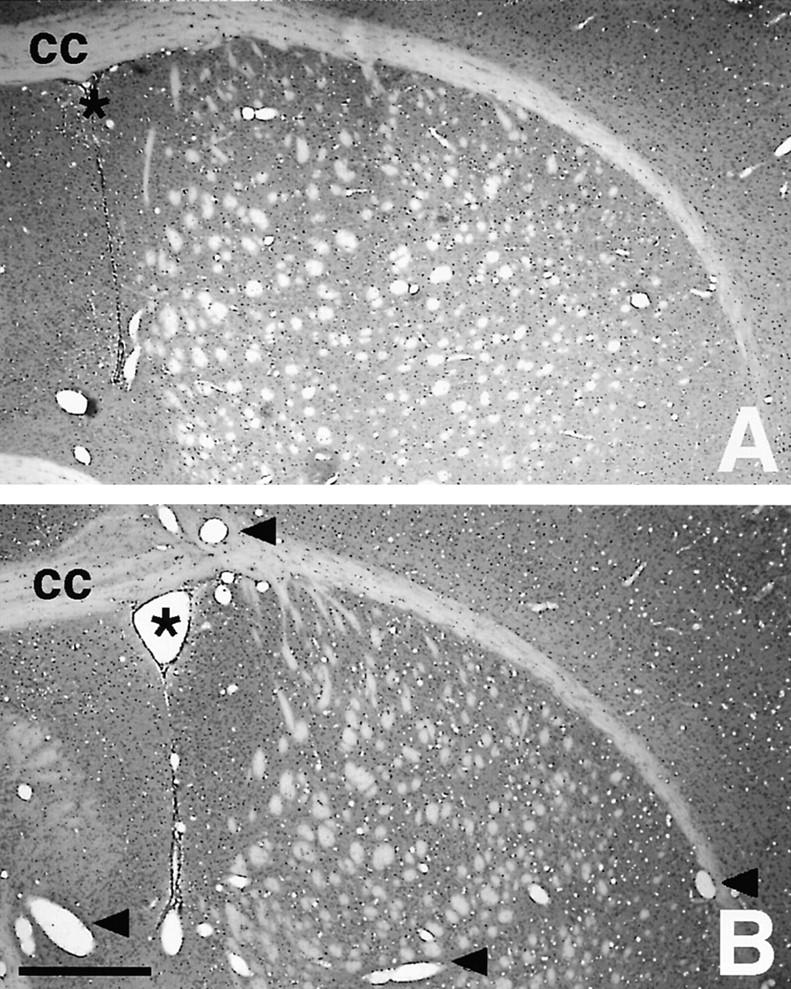
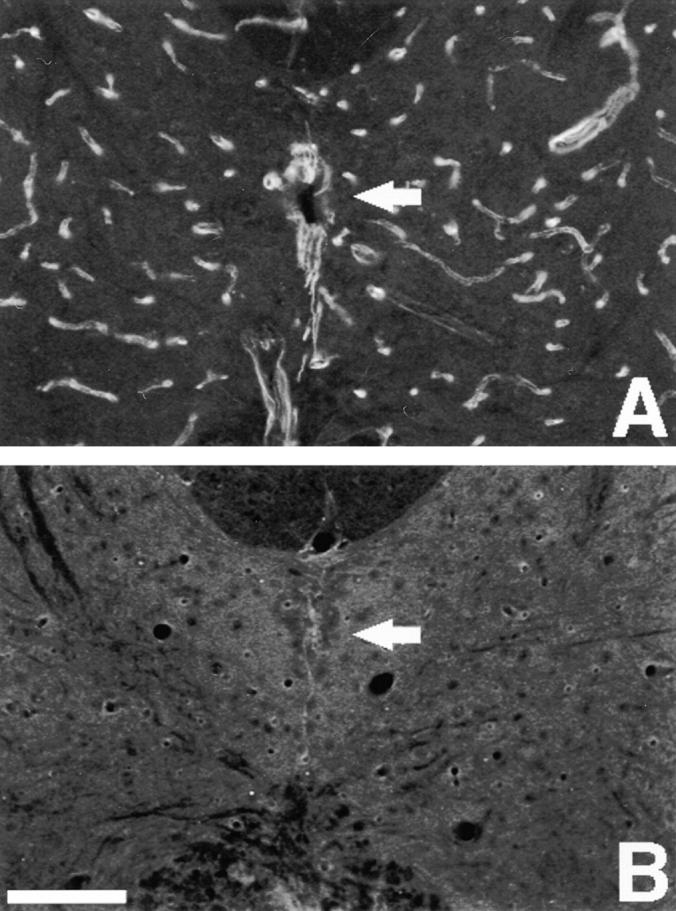
In response to injury of the central nervous system, astrocytes become reactive and express high levels of the intermediate filament (IF) proteins glial fibrillary acidic protein (GFAP), vimentin, and nestin. We have shown that astrocytes in mice deficient for both GFAP and vimentin (GFAP-/-vim-/-) cannot form IFs even when nestin is expressed and are thus devoid of IFs in their reactive state. Here, we have studied the reaction to injury in the central nervous system in GFAP-/-, vimentin-/-, or GFAP-/-vim-/- mice. Glial scar formation appeared normal after spinal cord or brain lesions in GFAP-/- or vimentin-/- mice, but was impaired in GFAP-/-vim-/- mice that developed less dense scars frequently accompanied by bleeding. These results show that GFAP and vimentin are required for proper glial scar formation in the injured central nervous system and that some degree of functional overlap exists between these IF proteins.
针对中枢神经系统损伤,星形胶质细胞会发生反应并高水平表达中间丝(IF)蛋白,如胶质纤维酸性蛋白(GFAP)、波形蛋白和巢蛋白。我们已经表明,在同时缺乏GFAP和波形蛋白(GFAP-/-vim-/-)的小鼠中,即使表达巢蛋白,星形胶质细胞也无法形成中间丝,因此其反应性状态下缺乏中间丝。在此,我们研究了GFAP-/-、波形蛋白-/-或GFAP-/-vim-/-小鼠中枢神经系统对损伤的反应。在GFAP-/-或波形蛋白-/-小鼠的脊髓或脑损伤后,胶质瘢痕形成看起来正常,但在GFAP-/-vim-/-小鼠中受到损害,这些小鼠形成的瘢痕密度较低,且经常伴有出血。这些结果表明,GFAP和波形蛋白是损伤的中枢神经系统中正常胶质瘢痕形成所必需的,并且这些中间丝蛋白之间存在一定程度的功能重叠。