Oohashi T, Zhou X H, Feng K, Richter B, Mörgelin M, Perez M T, Su W D, Chiquet-Ehrismann R, Rauch U, Fässler R
Max Planck Institute for Biochemistry, 82152 Martinsried, Germany.
J Cell Biol. 1999 May 3;145(3):563-77. doi: 10.1083/jcb.145.3.563.
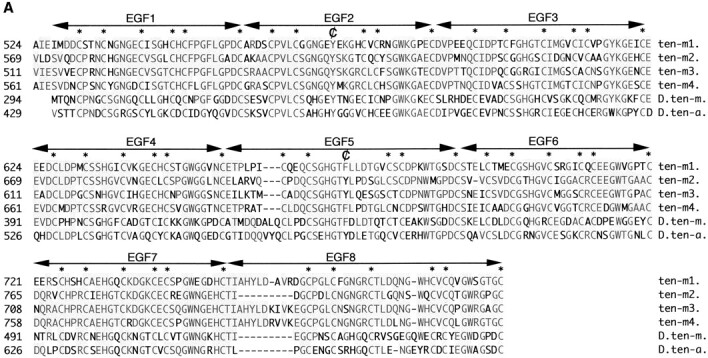
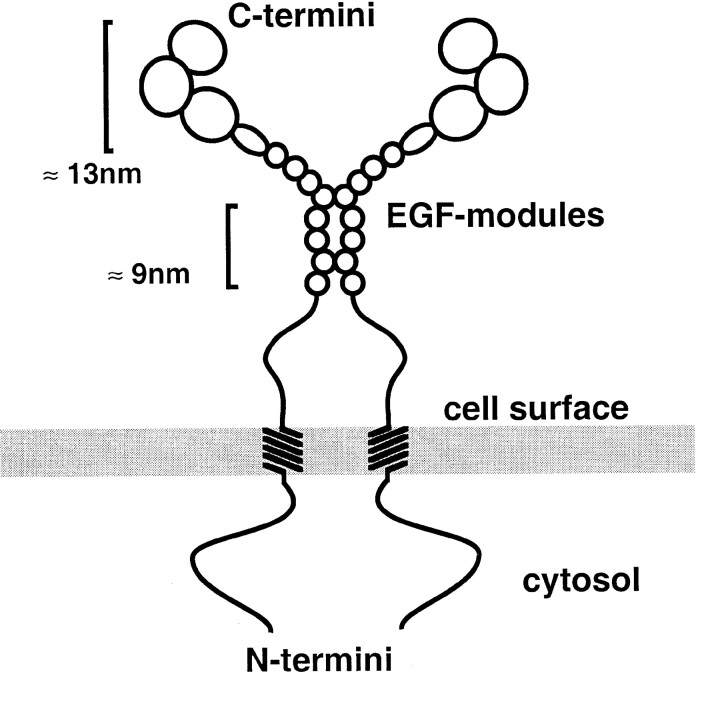
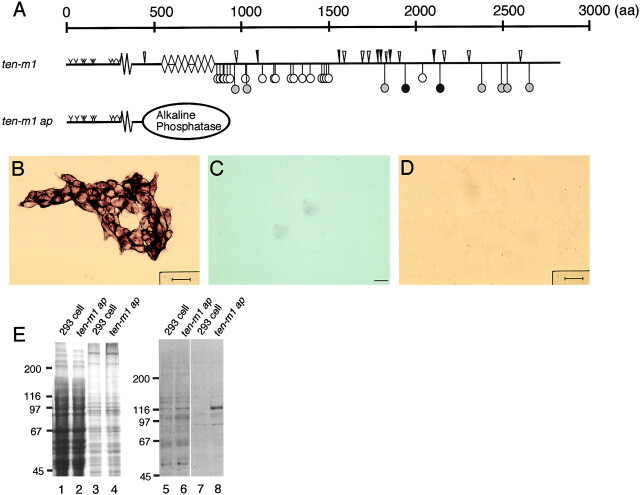
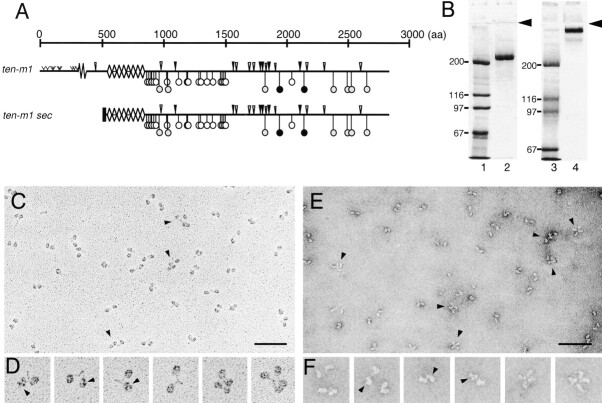
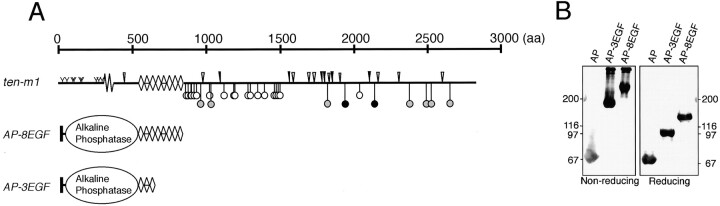
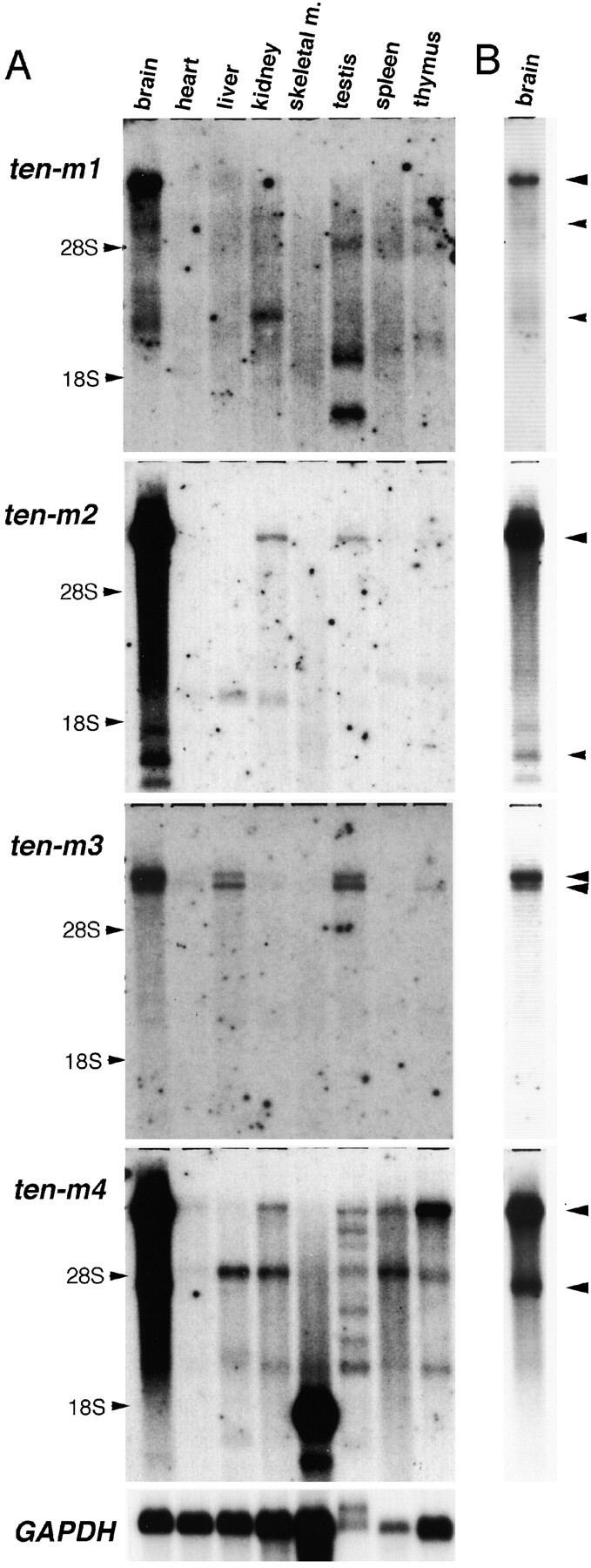
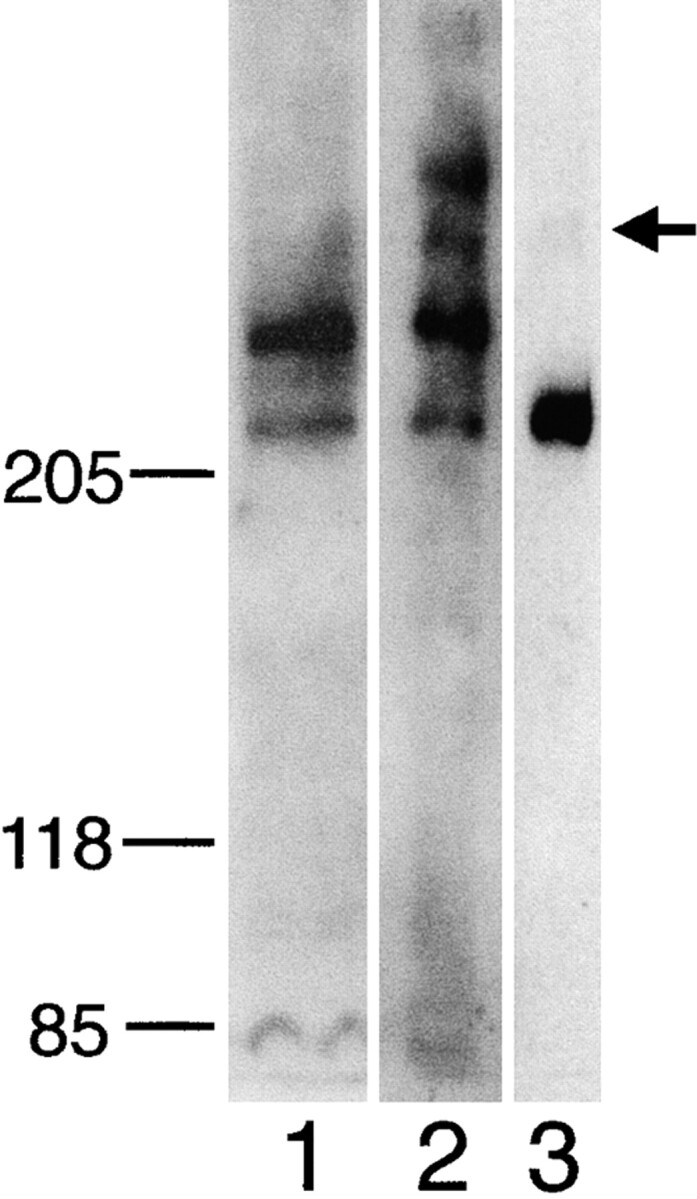
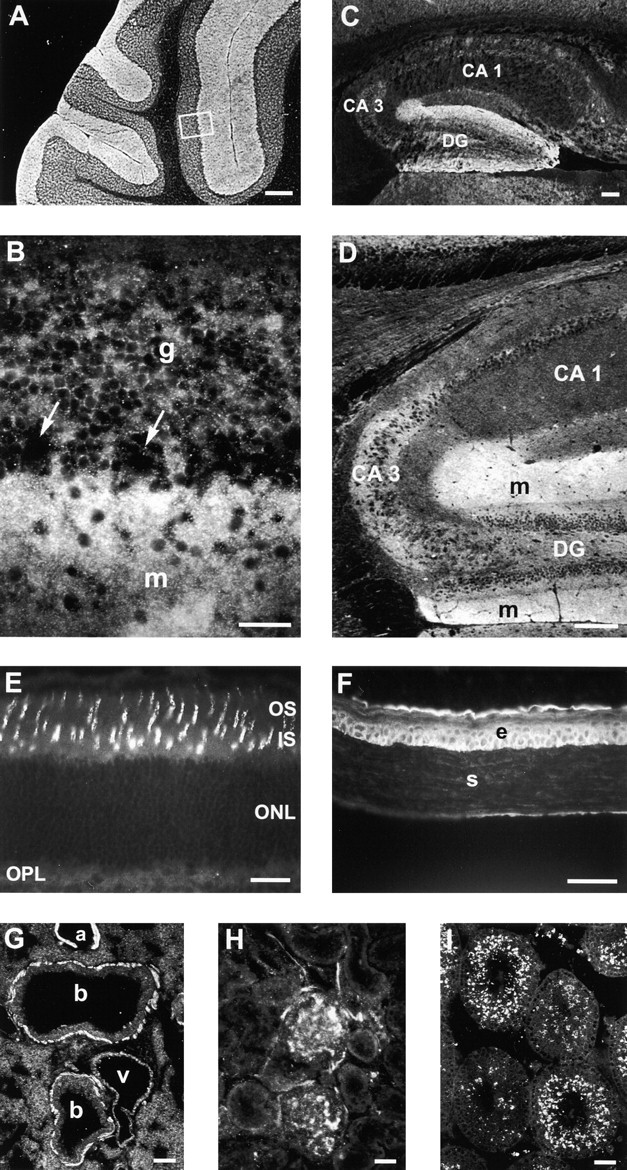
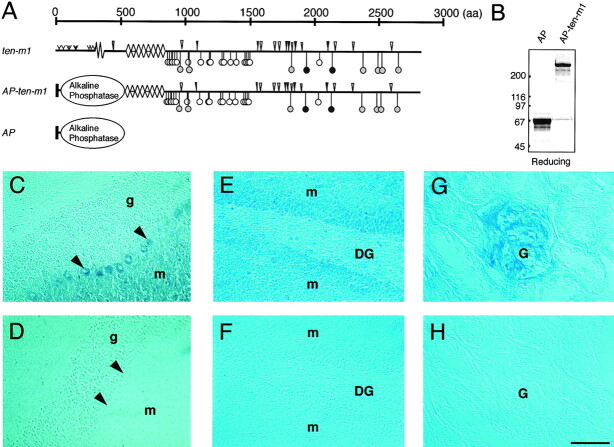
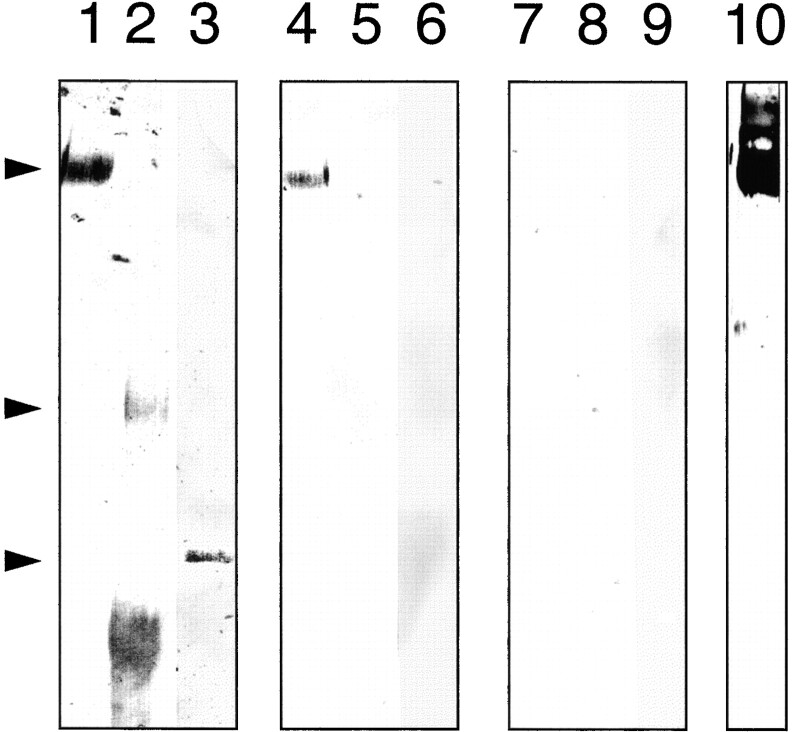
The Drosophila gene ten-m/odz is the only pair rule gene identified to date which is not a transcription factor. In an attempt to analyze the structure and the function of ten-m/odz in mouse, we isolated four murine ten-m cDNAs which code for proteins of 2,700-2, 800 amino acids. All four proteins (Ten-m1-4) lack signal peptides at the NH2 terminus, but contain a short hydrophobic domain characteristic of transmembrane proteins, 300-400 amino acids after the NH2 terminus. About 200 amino acids COOH-terminal to this hydrophobic region are eight consecutive EGF-like domains. Cell transfection, biochemical, and electronmicroscopic studies suggest that Ten-m1 is a dimeric type II transmembrane protein. Expression of fusion proteins composed of the NH2-terminal and hydrophobic domain of ten-m1 attached to the alkaline phosphatase reporter gene resulted in membrane-associated staining of the alkaline phosphatase. Electronmicroscopic and electrophoretic analysis of a secreted form of the extracellular domain of Ten-m1 showed that Ten-m1 is a disulfide-linked dimer and that the dimerization is mediated by EGF-like modules 2 and 5 which contain an odd number of cysteines. Northern blot and immunohistochemical analyses revealed widespread expression of mouse ten-m genes, with most prominent expression in brain. All four ten-m genes can be expressed in variously spliced mRNA isoforms. The extracellular domain of Ten-m1 fused to an alkaline phosphatase reporter bound to specific regions in many tissues which were partially overlapping with the Ten-m1 immunostaining. Far Western assays and electronmicroscopy demonstrated that Ten-m1 can bind to itself.
果蝇基因ten-m/odz是迄今为止鉴定出的唯一一对非转录因子的成对规则基因。为了分析ten-m/odz在小鼠中的结构和功能,我们分离出了四个小鼠ten-m cDNA,它们编码2700 - 2800个氨基酸的蛋白质。所有这四种蛋白质(Ten-m1 - 4)在NH2末端均缺乏信号肽,但在NH2末端后300 - 400个氨基酸处含有一个跨膜蛋白特有的短疏水结构域。在这个疏水区域的COOH末端约200个氨基酸处是八个连续的EGF样结构域。细胞转染、生化和电子显微镜研究表明,Ten-m1是一种二聚体II型跨膜蛋白。由ten-m1的NH2末端和疏水结构域与碱性磷酸酶报告基因组成的融合蛋白的表达导致碱性磷酸酶的膜相关染色。对Ten-m1细胞外结构域的分泌形式进行电子显微镜和电泳分析表明,Ten-m1是一种二硫键连接的二聚体,并且二聚化是由含有奇数个半胱氨酸的EGF样模块2和5介导的。Northern印迹和免疫组织化学分析显示小鼠ten-m基因广泛表达,在脑中表达最为显著。所有四个ten-m基因都可以以各种剪接的mRNA异构体形式表达。与碱性磷酸酶报告基因融合的Ten-m1细胞外结构域与许多组织中的特定区域结合,这些区域与Ten-m1免疫染色部分重叠。Far Western分析和电子显微镜表明Ten-m1可以与自身结合。