Giedroc D P, Theimer C A, Nixon P L
Department of Biochemistry and Biophysics, Center for Macromolecular Design, Texas A&M University, TX 77843-2128, USA.
J Mol Biol. 2000 Apr 28;298(2):167-85. doi: 10.1006/jmbi.2000.3668.
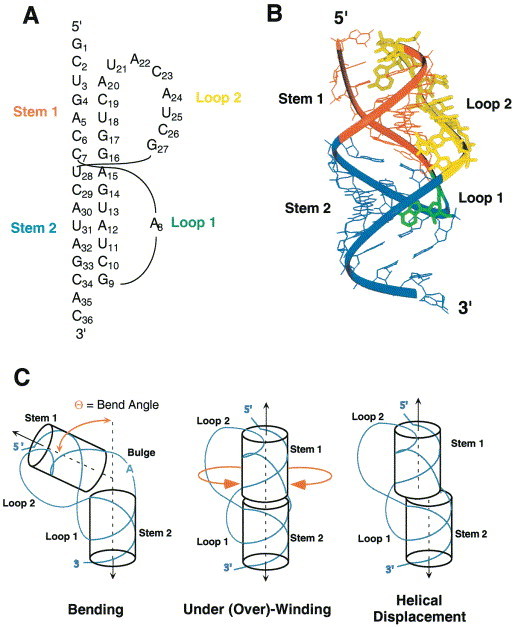
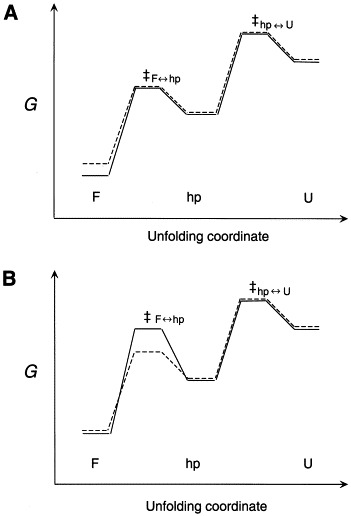
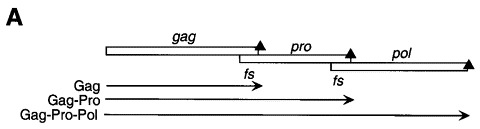
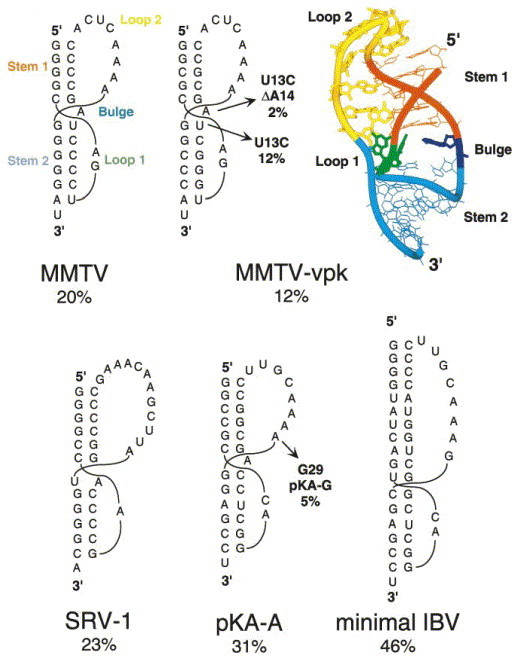
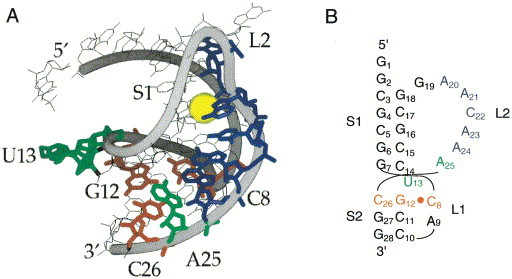
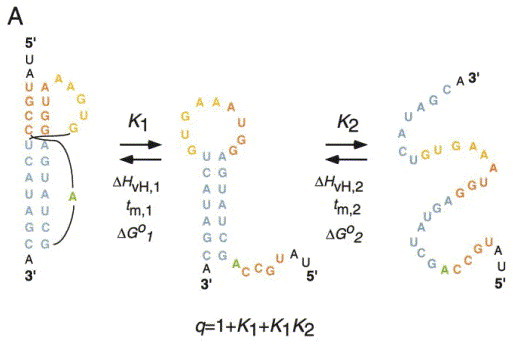
Programmed -1 ribosomal frameshifting has become the subject of increasing interest over the last several years, due in part to the ubiquitous nature of this translational recoding mechanism in pathogenic animal and plant viruses. All cis-acting frameshift signals encoded in mRNAs are minimally composed of two functional elements: a heptanucleotide "slippery sequence" conforming to the general form X XXY YYZ, followed by an RNA structural element, usually an H-type RNA pseudoknot, positioned an optimal number of nucleotides (5 to 9) downstream. The slippery sequence itself promotes a low level ( approximately 1 %) of frameshifting; however, downstream pseudoknots stimulate this process significantly, in some cases up to 30 to 50 %. Although the precise molecular mechanism of stimulation of frameshifting remains poorly understood, significant advances have been made in our knowledge of the three-dimensional structures, thermodynamics of folding, and functional determinants of stimulatory RNA pseudoknots derived from the study of several well-characterized frameshift signals. These studies are summarized here and provide new insights into the structural requirements and mechanism of programmed -1 ribosomal frameshifting.
在过去几年中,程序性-1核糖体移码已成为越来越受关注的主题,部分原因是这种翻译重编码机制在致病性动植物病毒中普遍存在。mRNA中编码的所有顺式作用移码信号最少由两个功能元件组成:一个符合一般形式X XXY YYZ的七核苷酸“滑序列”,后面跟着一个RNA结构元件,通常是一个H型RNA假结,位于下游最佳数量(5至9个)的核苷酸处。滑序列本身会促进低水平(约1%)的移码;然而,下游假结会显著刺激这一过程,在某些情况下高达30%至50%。尽管刺激移码的确切分子机制仍知之甚少,但通过对几个特征明确的移码信号的研究,我们在刺激RNA假结的三维结构、折叠热力学和功能决定因素方面取得了重大进展。本文总结了这些研究,并为程序性-1核糖体移码的结构要求和机制提供了新的见解。