Becker M, Martin E, Schneikert J, Krug H F, Cato A C
Forschungszentrum Karlsruhe, Institute of Toxicology and Genetics, D-76021 Karlsruhe, Germany.
J Cell Biol. 2000 Apr 17;149(2):255-62. doi: 10.1083/jcb.149.2.255.
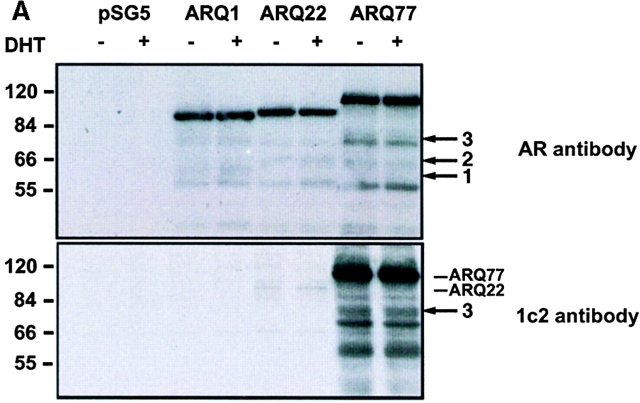
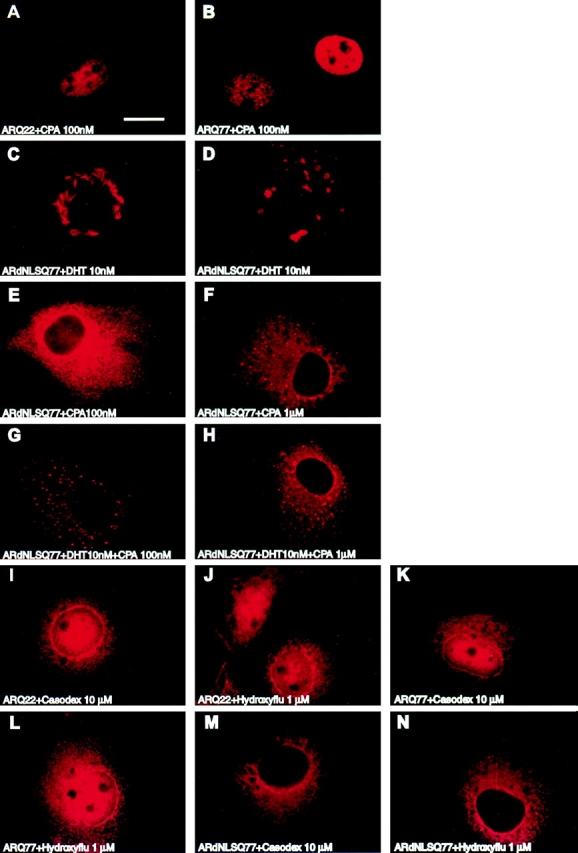
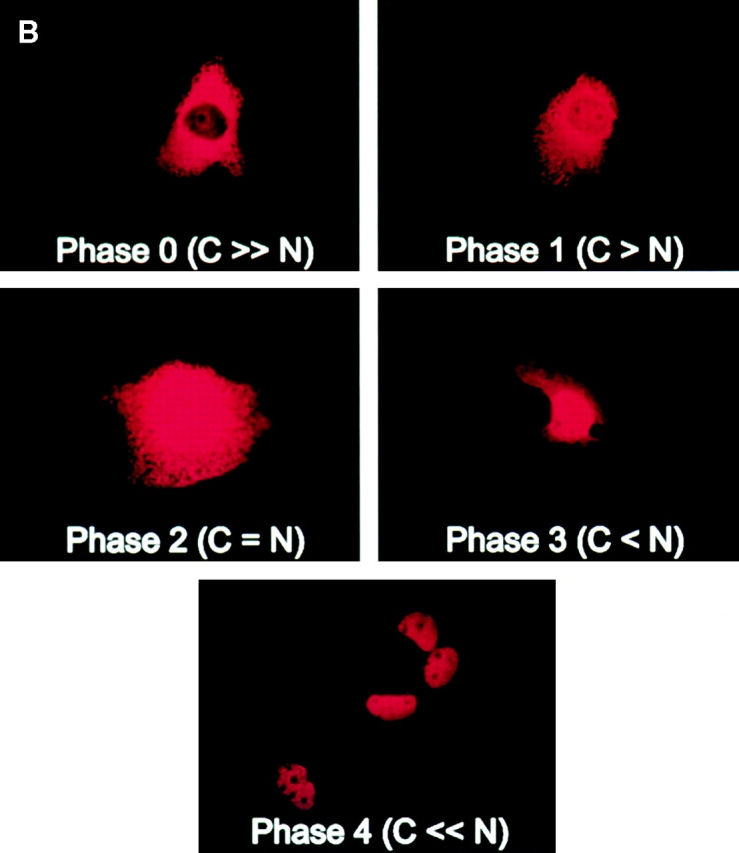
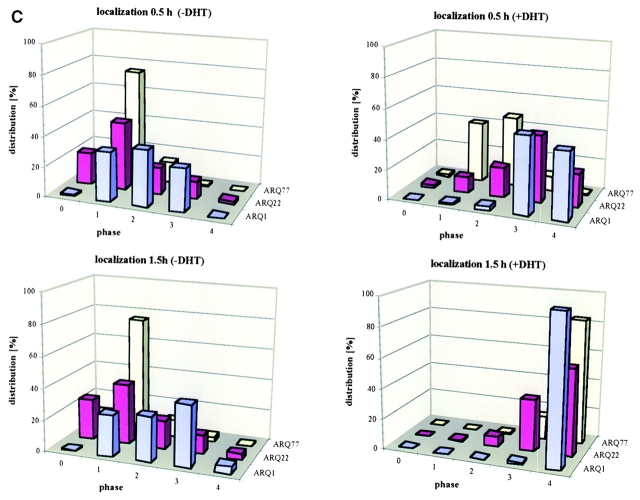
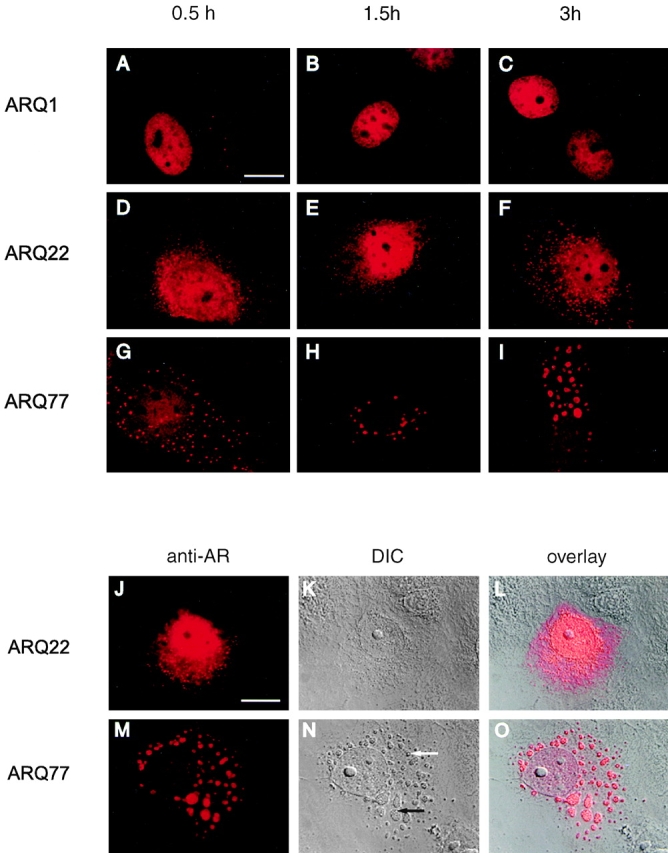
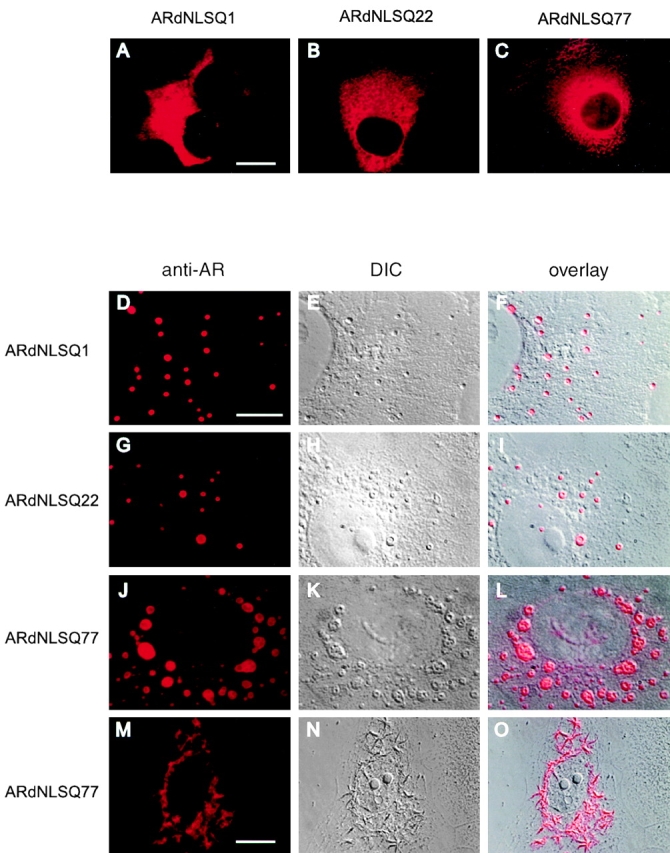
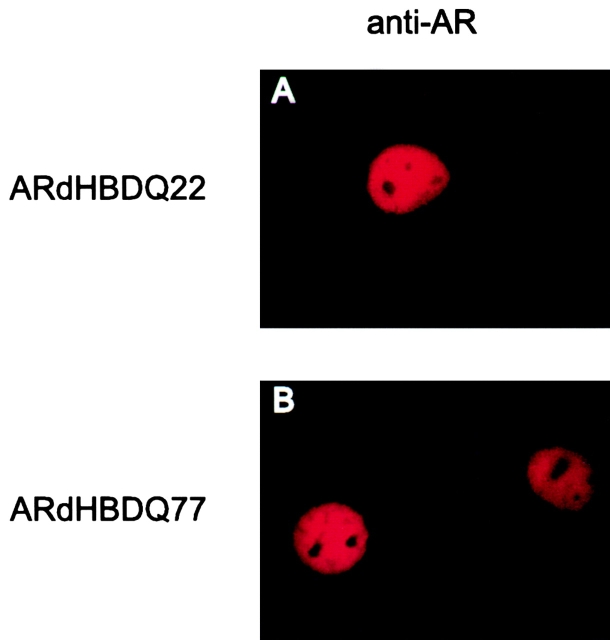
Polyglutamine tract expansion in androgen receptor is a recognized cause of spinal and bulbar muscular atrophy (SBMA), an X-linked motor neuronopathy. Similar mutations have been identified in proteins associated with other neurodegenerative diseases. Recent studies have shown that amplified polyglutamine repeat stretches form cellular aggregates that may be markers for these neurodegenerative diseases. Here we describe conditions that lead to aggregate formation by androgen receptor with polyglutamine stretch amplification. In transfection experiments, the mutant, compared with the wild-type receptor, was delayed in its cytoplasmic-nuclear translocation and formed large cytoplasmic aggregates in the presence of androgen. The cytoplasmic environment appears crucial for this aggregation, since retention of both the wild-type and mutant receptors in this cellular compartment by the deletion of their nuclear localization signals resulted in massive aggregation. Conversely, rapid nuclear transport of both receptors brought about by deletion of their ligand binding domains did not result in aggregate formation. However, androgen antagonists that altered the conformation of the ligand binding domain and promoted varying rates of cytoplasmic-nuclear translocation all inhibited aggregate formation. This demonstrates that in addition to the cytoplasmic localization, a distinct contribution of the ligand binding domain of the receptor is necessary for the aggregation. The finding that antiandrogens inhibit aggregate formation may provide the basis for in vivo determination of the role of these structures in SBMA.
雄激素受体中的聚谷氨酰胺序列扩增是脊髓延髓肌肉萎缩症(SBMA)的一个公认病因,SBMA是一种X连锁运动神经元病。在与其他神经退行性疾病相关的蛋白质中也发现了类似的突变。最近的研究表明,扩增的聚谷氨酰胺重复序列会形成细胞聚集体,这些聚集体可能是这些神经退行性疾病的标志物。在此,我们描述了导致聚谷氨酰胺序列扩增的雄激素受体形成聚集体的条件。在转染实验中,与野生型受体相比,突变体在细胞质-细胞核转运方面延迟,并在雄激素存在的情况下形成大的细胞质聚集体。细胞质环境似乎对这种聚集至关重要,因为通过缺失其核定位信号将野生型和突变型受体都保留在这个细胞区室中会导致大量聚集。相反,通过缺失其配体结合域使两种受体快速核转运并不会导致聚集体形成。然而,改变配体结合域构象并促进不同速率的细胞质-细胞核转运的雄激素拮抗剂均抑制聚集体形成。这表明除了细胞质定位外,受体配体结合域的独特作用对于聚集也是必要的。抗雄激素抑制聚集体形成这一发现可能为体内确定这些结构在SBMA中的作用提供基础。