Magin T M, Jorcano J L, Franke W W
Division of Membrane Biology and Biochemistry, German Cancer Research Center, Heidelberg, FRG.
EMBO J. 1983;2(8):1387-92. doi: 10.1002/j.1460-2075.1983.tb01596.x.
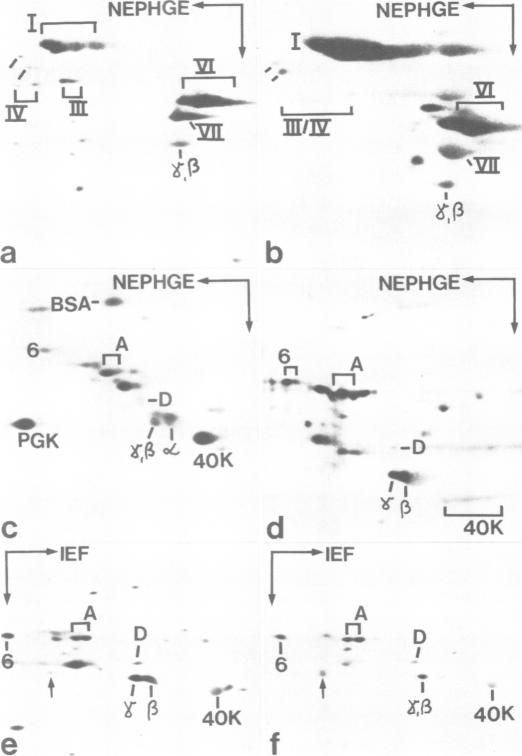
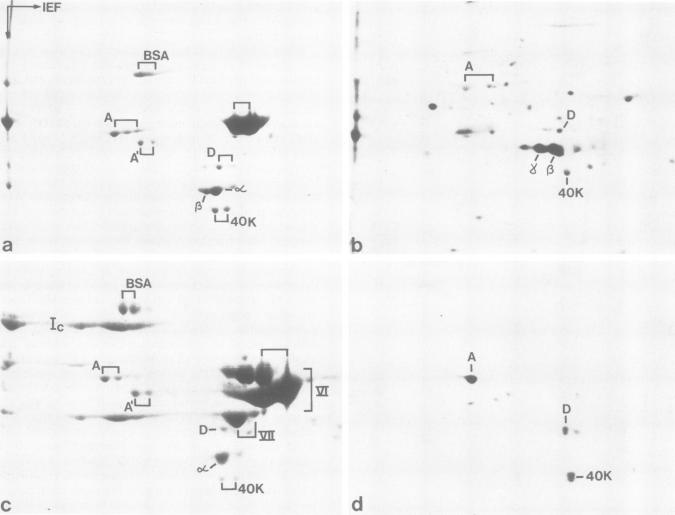
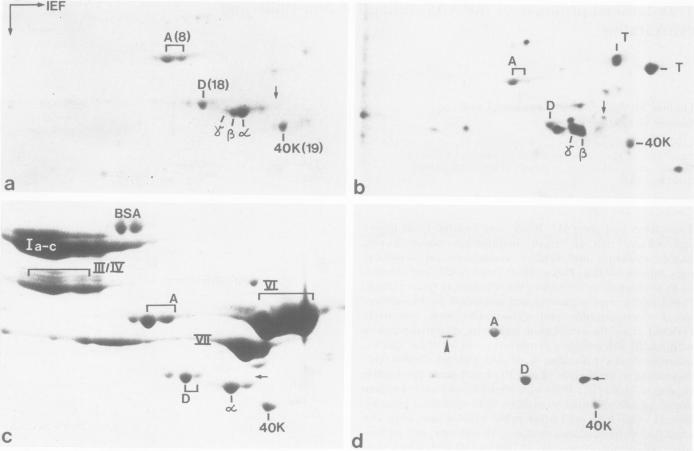
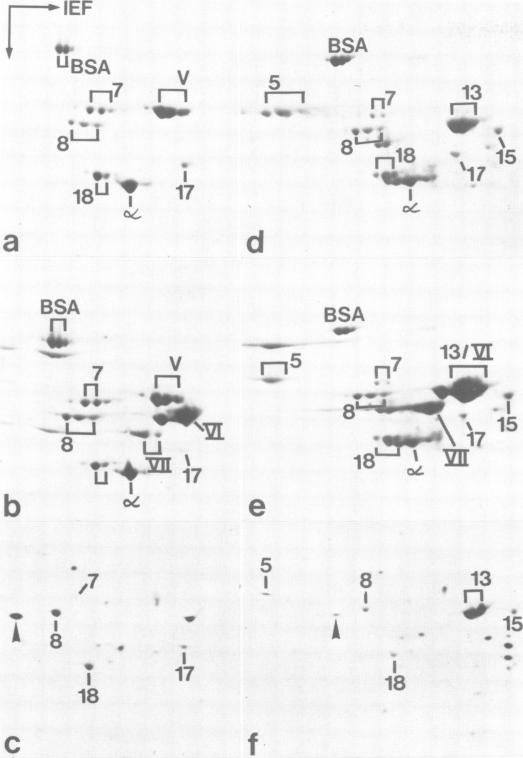
Total RNA and poly(A)+ RNA were isolated from tissues and cultured cells of various mammalian species (bovine muzzle epidermis and bladder urothelium; rat hepatoma cells; human cell lines HeLa, MCF-7 and A-431) and examined by translation in vitro using the reticulocyte lysate system. Polypeptides were separated and identified by two-dimensional electrophoresis and cytokeratins were selectively enriched from the translation assays by co-polymerization with added heterologous cytokeratins. In all three species, non-epidermal cytokeratins A, D and mol. wt. 40,000 (corresponding to numbers 8, 18 and 19 of the human cytokeratin catalog of Moll et al., 1982) were identified as translation products capable of co-polymerization with epidermal keratins. Several other basic and other acidic cytokeratins were also identified as translational products. In addition, two unidentified polypeptides (mol. wt. 52,000 and 43,000) which were minor polypeptides in cytoskeletons and translation assays were found to be specifically enriched in co-polymers with bovine epidermal keratins. The results indicate that many, perhaps all, non-epidermal cytokeratins characteristic of simple epithelia are genuine products of translation and that their diversity is not due to post-translational modification or processing. These findings, taken together with observations of in vitro translation of epidermal mRNAs, suggest that the diversity of cell type-specific expression of the different members of the cytokeratin polypeptide family is largely due to the cell type-specific synthesis of diverse mRNAs.
从多种哺乳动物的组织和培养细胞(牛口鼻部表皮和膀胱尿路上皮;大鼠肝癌细胞;人细胞系HeLa、MCF - 7和A - 431)中分离出总RNA和聚腺苷酸加尾RNA(poly(A)+ RNA),并使用网织红细胞裂解物系统通过体外翻译进行检测。通过二维电泳分离和鉴定多肽,并通过与添加的异源细胞角蛋白共聚,从翻译试验中选择性富集细胞角蛋白。在所有这三个物种中,非表皮细胞角蛋白A、D和分子量40,000(对应于Moll等人1982年人类细胞角蛋白目录中的8、18和19号)被鉴定为能够与表皮角蛋白共聚的翻译产物。还鉴定出了其他几种碱性和酸性细胞角蛋白作为翻译产物。此外,发现两种未鉴定的多肽(分子量52,000和43,000),它们在细胞骨架和翻译试验中是次要多肽,在与牛表皮角蛋白的共聚物中特异性富集。结果表明,许多(可能是所有)简单上皮细胞特有的非表皮细胞角蛋白是真正的翻译产物,其多样性并非由于翻译后修饰或加工。这些发现与表皮mRNA体外翻译的观察结果相结合,表明细胞角蛋白多肽家族不同成员的细胞类型特异性表达的多样性很大程度上是由于不同mRNA的细胞类型特异性合成。