Izikson L, Klein R S, Charo I F, Weiner H L, Luster A D
Center for Neurologic Diseases, Brigham and Women's Hospital, Harvard Medical School, Boston, Massachusetts 02115, USA.
J Exp Med. 2000 Oct 2;192(7):1075-80. doi: 10.1084/jem.192.7.1075.
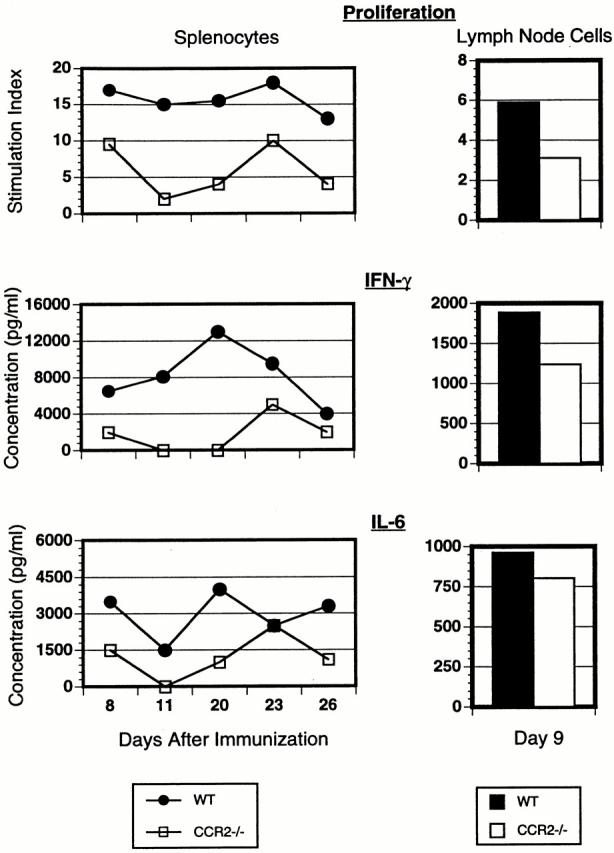
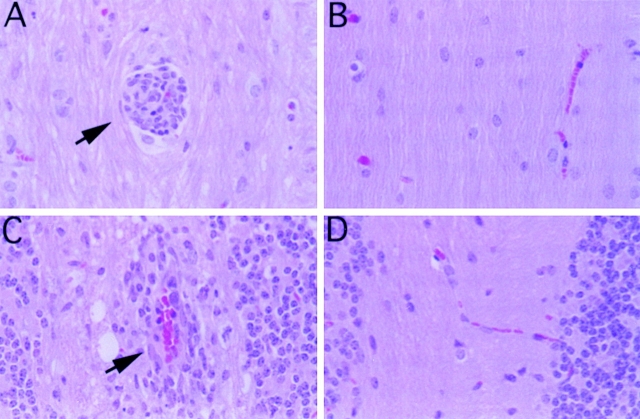
Monocyte recruitment to the central nervous system (CNS) is a necessary step in the development of pathologic inflammatory lesions in experimental autoimmune encephalomyelitis (EAE), a murine model of multiple sclerosis. Monocyte chemoattractant protein (MCP)-1, a potent agonist for directed monocyte migration, has been implicated in the pathogenesis of EAE. Here we report that deficiency in CC chemokine receptor (CCR)2, the receptor for MCP-1, confers resistance to EAE induced with a peptide derived from myelin oligodendrocyte glycoprotein peptide 35-55 (MOGp35-55). CCR2(-/)- mice immunized with MOGp35-55 failed to develop mononuclear cell inflammatory infiltrates in the CNS and failed to increase CNS levels of the chemokines RANTES (regulated on activation, normal T cell expressed and secreted), MCP-1, and interferon (IFN)-inducible protein 10 (IP-10) as well the chemokine receptors CCR1, CCR2, and CCR5. Additionally, T cells from CCR2(-/)- immunized mice showed decreased antigen-induced proliferation and production of IFN-gamma compared with wild-type immunized controls, suggesting that CCR2 enhances the T helper cell type 1 immune response in EAE. These data indicate that CCR2 plays a necessary and nonredundant role in the pathogenesis of EAE.
单核细胞募集至中枢神经系统(CNS)是实验性自身免疫性脑脊髓炎(EAE,一种多发性硬化症的小鼠模型)中病理性炎性病变发展的必要步骤。单核细胞趋化蛋白(MCP)-1是一种有效的单核细胞定向迁移激动剂,与EAE的发病机制有关。在此我们报告,CC趋化因子受体(CCR)2(MCP-1的受体)缺陷使小鼠对髓鞘少突胶质细胞糖蛋白肽35-55(MOGp35-55)衍生肽诱导的EAE具有抗性。用MOGp35-55免疫的CCR2(-/-)小鼠在中枢神经系统中未出现单核细胞炎性浸润,且中枢神经系统中趋化因子RANTES(活化调节、正常T细胞表达和分泌)、MCP-1和干扰素(IFN)诱导蛋白10(IP-10)以及趋化因子受体CCR1、CCR2和CCR5的水平未升高。此外,与野生型免疫对照相比,来自CCR2(-/-)免疫小鼠的T细胞显示出抗原诱导的增殖和IFN-γ产生减少,这表明CCR2增强了EAE中1型辅助性T细胞免疫反应。这些数据表明CCR2在EAE的发病机制中起必要且非冗余的作用。