Wittchen E S, Haskins J, Stevenson B R
Department of Cell Biology, University of Alberta, Edmonton, Alberta, Canada T6G 2H7.
J Cell Biol. 2000 Nov 13;151(4):825-36. doi: 10.1083/jcb.151.4.825.
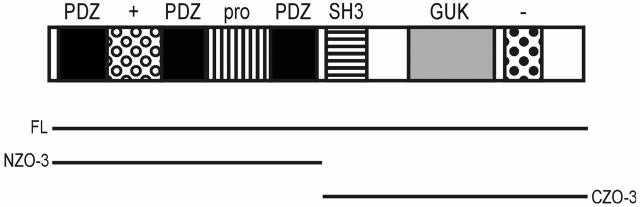
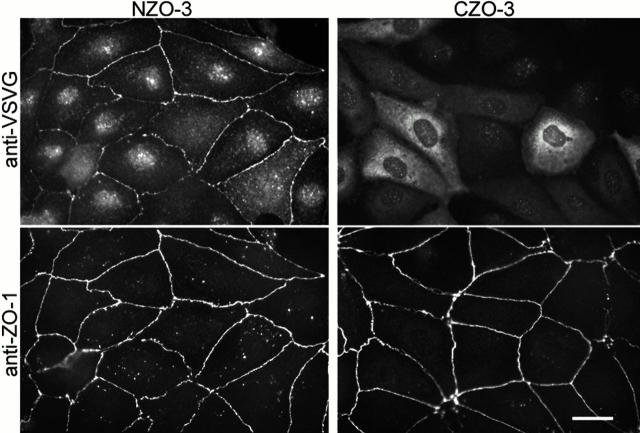
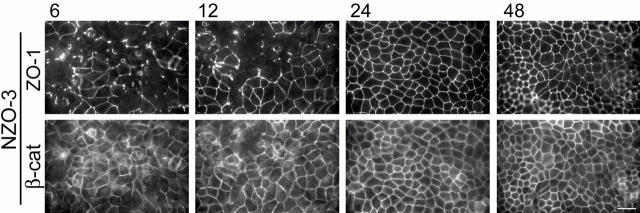
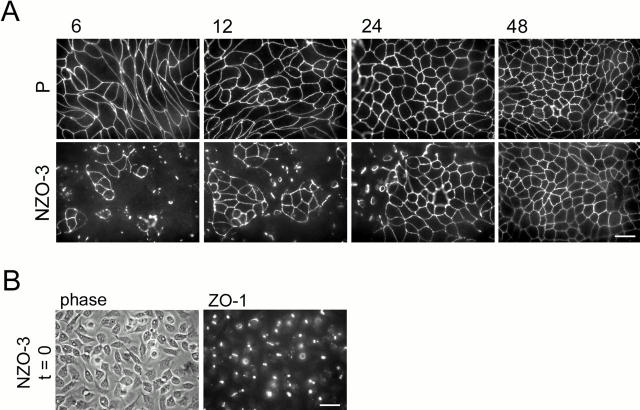
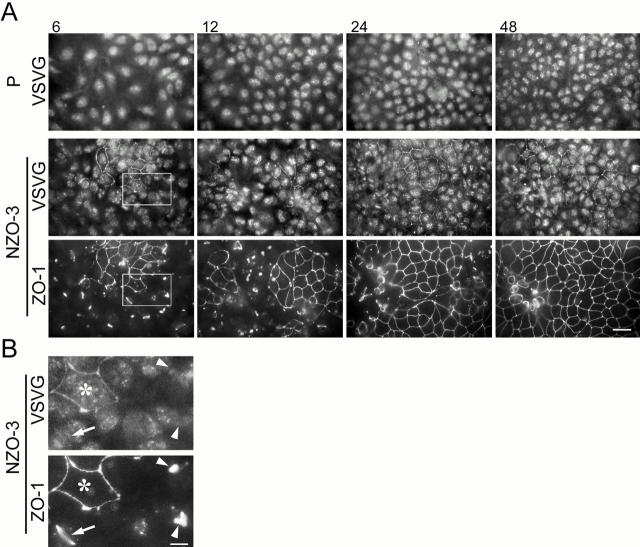
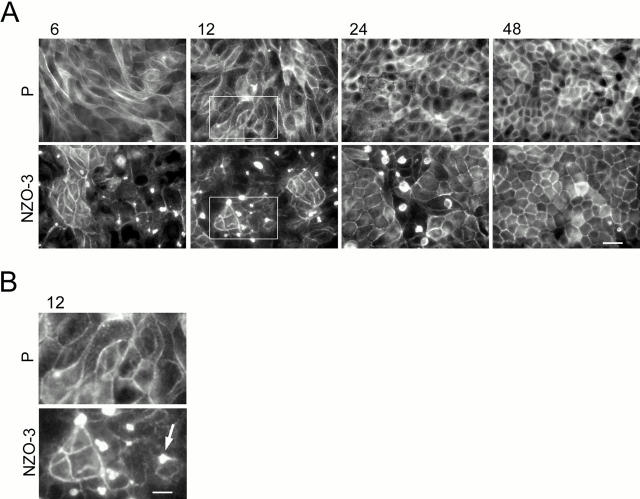
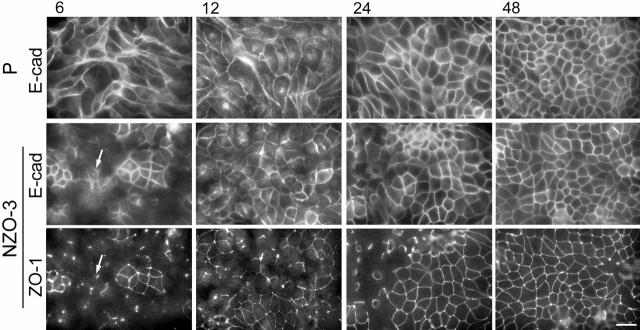
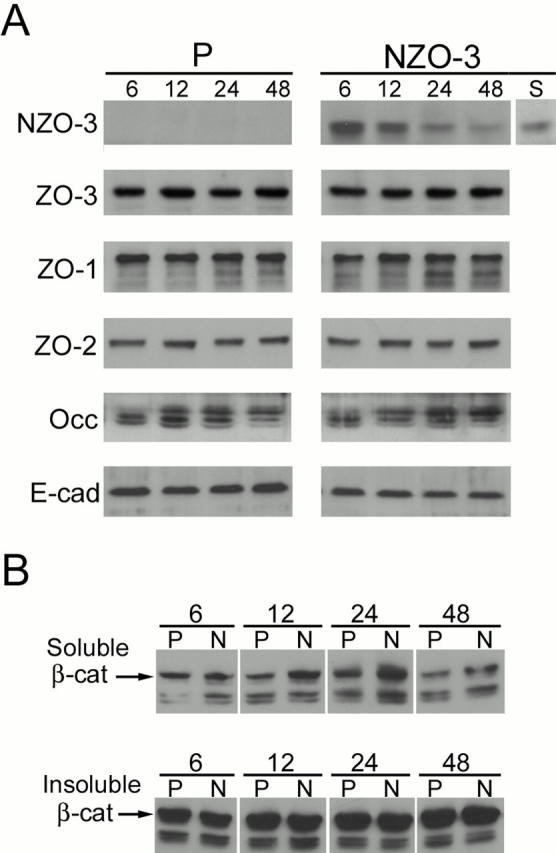
The functional characteristics of the tight junction protein ZO-3 were explored through exogenous expression of mutant protein constructs in MDCK cells. Expression of the amino-terminal, PSD95/dlg/ZO-1 domain-containing half of the molecule (NZO-3) delayed the assembly of both tight and adherens junctions induced by calcium switch treatment or brief exposure to the actin-disrupting drug cytochalasin D. Junction formation was monitored by transepithelial resistance measurements and localization of junction-specific proteins by immunofluorescence. The tight junction components ZO-1, ZO-2, endogenous ZO-3, and occludin were mislocalized during the early stages of tight junction assembly. Similarly, the adherens junction proteins E-cadherin and beta-catenin were also delayed in their recruitment to the cell membrane, and NZO-3 expression had striking effects on actin cytoskeleton dynamics. NZO-3 expression did not alter expression levels of ZO-1, ZO-2, endogenous ZO-3, occludin, or E-cadherin; however, the amount of Triton X-100-soluble, signaling-active beta-catenin was increased in NZO-3-expressing cells during junction assembly. In vitro binding experiments showed that ZO-1 and actin preferentially bind to NZO-3, whereas both NZO-3 and the carboxy-terminal half of the molecule (CZO-3) contain binding sites for occludin and cingulin. We hypothesize that NZO-3 exerts its dominant-negative effects via a mechanism involving the actin cytoskeleton, ZO-1, and/or beta-catenin.
通过在MDCK细胞中外源表达突变蛋白构建体,探索紧密连接蛋白ZO-3的功能特性。分子中含氨基末端、PSD95/dlg/ZO-1结构域的一半(NZO-3)的表达延迟了钙转换处理或短暂暴露于肌动蛋白破坏药物细胞松弛素D诱导的紧密连接和黏附连接的组装。通过跨上皮电阻测量和免疫荧光法检测连接特异性蛋白的定位来监测连接形成。在紧密连接组装的早期阶段,紧密连接成分ZO-1、ZO-2、内源性ZO-3和闭合蛋白发生了错误定位。同样,黏附连接蛋白E-钙黏蛋白和β-连环蛋白募集到细胞膜的过程也延迟了,并且NZO-3的表达对肌动蛋白细胞骨架动力学有显著影响。NZO-3的表达并未改变ZO-1、ZO-2、内源性ZO-3、闭合蛋白或E-钙黏蛋白的表达水平;然而,在连接组装过程中,表达NZO-3的细胞中Triton X-100可溶性、具有信号活性的β-连环蛋白的量增加了。体外结合实验表明,ZO-1和肌动蛋白优先与NZO-3结合,而NZO-3和分子的羧基末端一半(CZO-3)都含有闭合蛋白和cingulin的结合位点。我们假设NZO-3通过涉及肌动蛋白细胞骨架、ZO-1和/或β-连环蛋白的机制发挥其显性负效应。