Bemark M, Sale J E, Kim H J, Berek C, Cosgrove R A, Neuberger M S
Medical Research Council Laboratory of Molecular Biology, Cambridge CB2 2QH, United Kingdom.
J Exp Med. 2000 Nov 20;192(10):1509-14. doi: 10.1084/jem.192.10.1509.
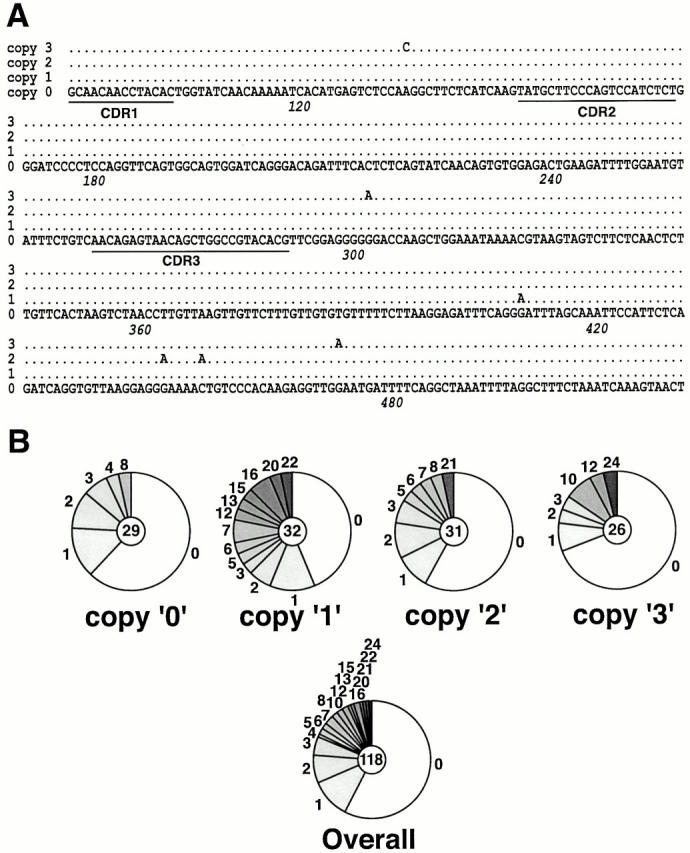
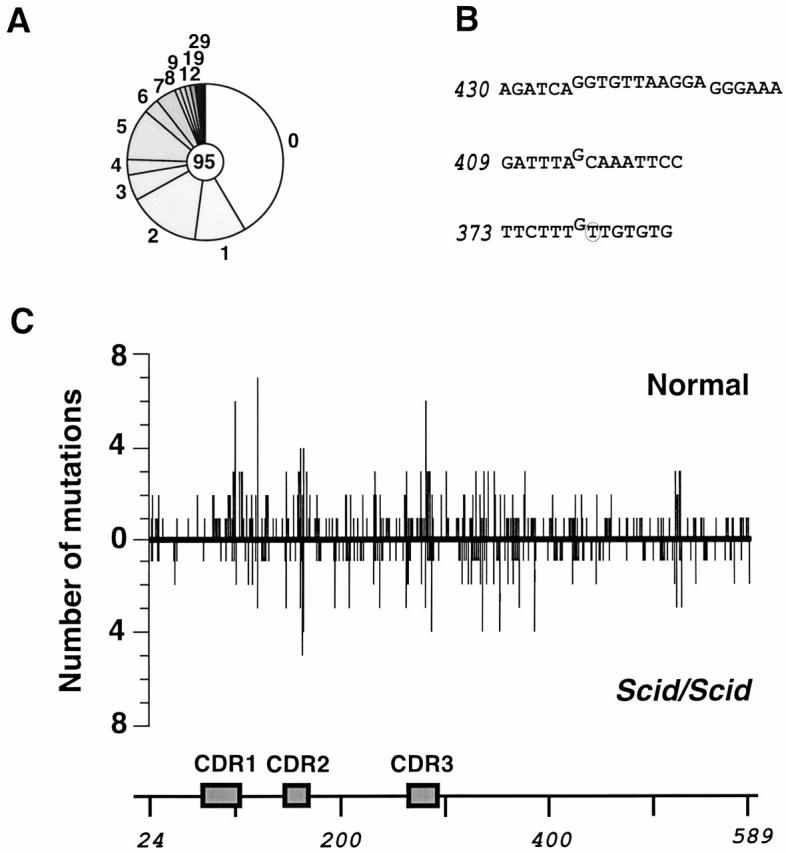
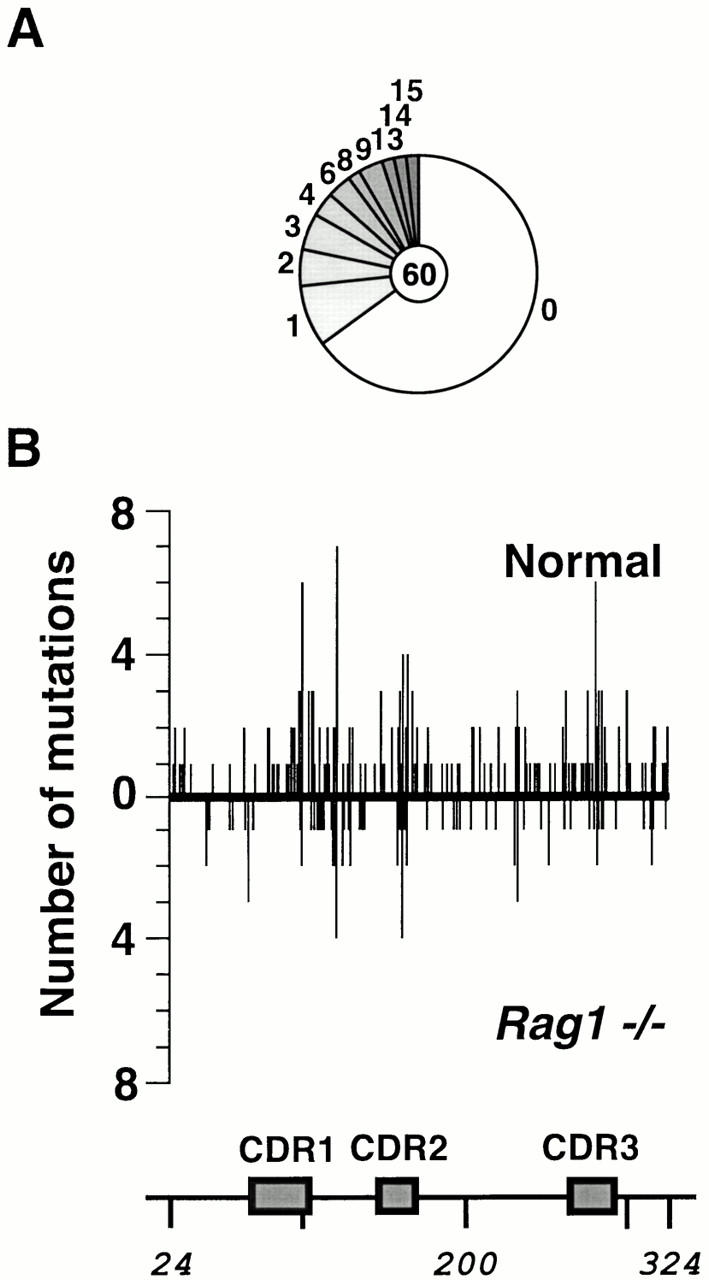
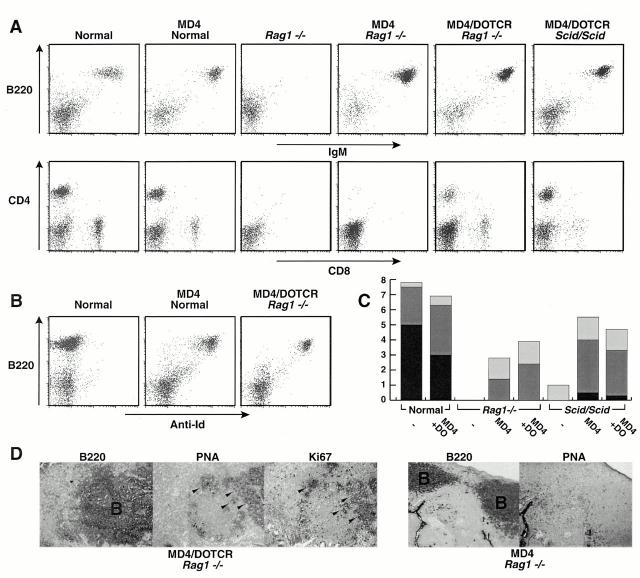
Somatic hypermutation and isotype switch recombination occur in germinal center B cells, are linked to transcription, and are similarly affected by deficiency in MutS homologue (MSH)2. Class-switch recombination is abrogated by disruption of genes encoding components of the catalytic subunit of DNA-dependent protein kinase (DNA-PK(cs))/Ku complex and likely involves nonhomologous end joining (NHEJ). That somatic hypermutation might also be associated with end joining is suggested by its association with the creation of deletions, duplications, and sites accessible to terminal transferase. However, a requirement for NHEJ in the mutation process has not been demonstrated. Here we show that somatic mutation in mice deficient in NHEJ can be tested by introduction of rearranged immunoglobulin and T cell receptor transgenes: the transgene combination not only permits reconstitution of peripheral lymphoid compartments but also allows formation of germinal centers, despite the wholly monoclonal nature of the lymphocyte antigen receptors in these animals. Using this strategy, we confirm that somatic hypermutation like class-switching can occur in the absence of recombination-activating gene (RAG)1 but show that the two processes differ in that hypermutation can proceed essentially unaffected by deficiency in DNA-PK(cs) activity.
体细胞高频突变和同种型转换重组发生在生发中心B细胞中,与转录相关联,并且同样受到错配修复蛋白同源物(MSH)2缺陷的影响。通过破坏编码DNA依赖性蛋白激酶(DNA-PK(cs))/Ku复合物催化亚基成分的基因,可消除类别转换重组,且其可能涉及非同源末端连接(NHEJ)。体细胞高频突变与缺失、重复以及末端转移酶可作用位点的产生相关,这表明其可能也与末端连接有关。然而,尚未证实突变过程中需要NHEJ。在此,我们表明可通过导入重排的免疫球蛋白和T细胞受体转基因来检测NHEJ缺陷小鼠中的体细胞突变:尽管这些动物中淋巴细胞抗原受体完全是单克隆性质的,但该转基因组合不仅能重建外周淋巴区室,还能形成生发中心。利用这一策略,我们证实,与类别转换一样,体细胞高频突变可在重组激活基因(RAG)1缺失的情况下发生,但表明这两个过程的不同之处在于,高频突变基本上不受DNA-PK(cs)活性缺陷的影响。