Fitzsimons D P, Patel J R, Campbell K S, Moss R L
Department of Physiology, University of Wisconsin School of Medicine, Madison, Wisconsin 53706, USA.
J Gen Physiol. 2001 Feb;117(2):133-48. doi: 10.1085/jgp.117.2.133.
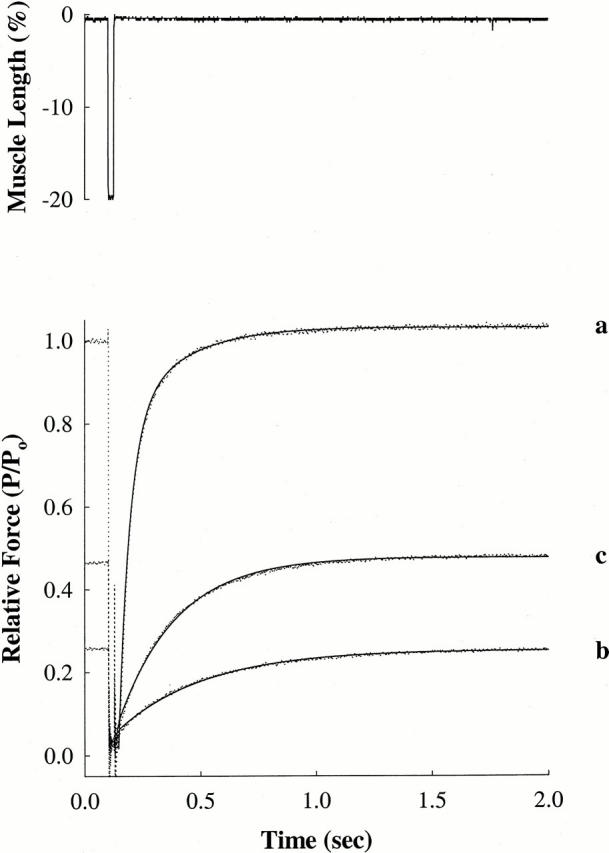
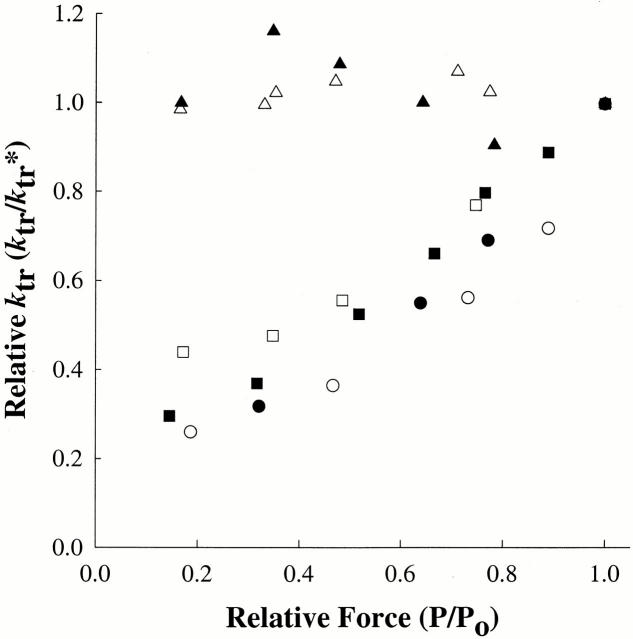
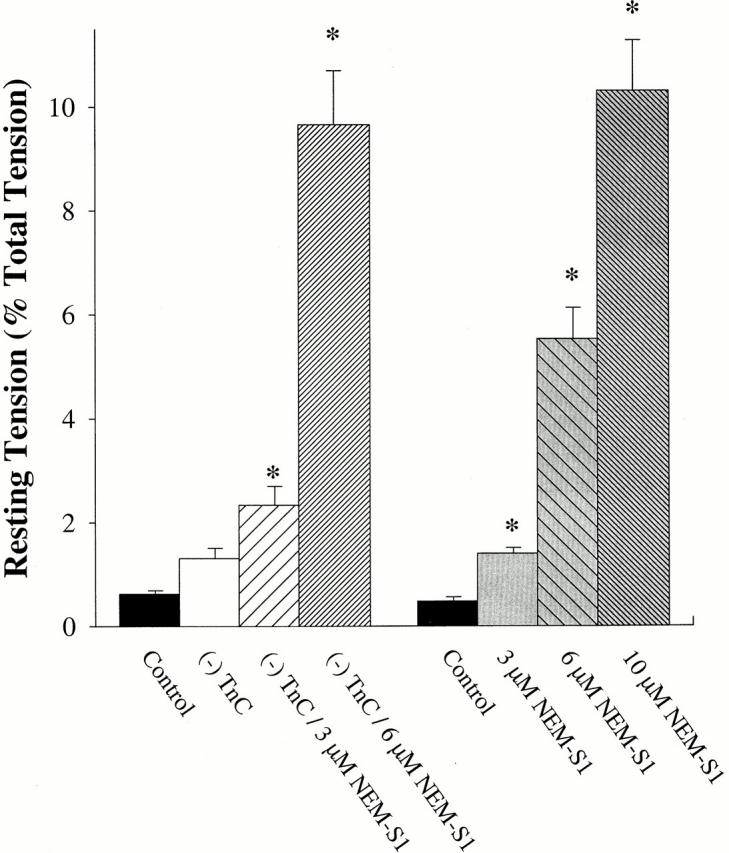
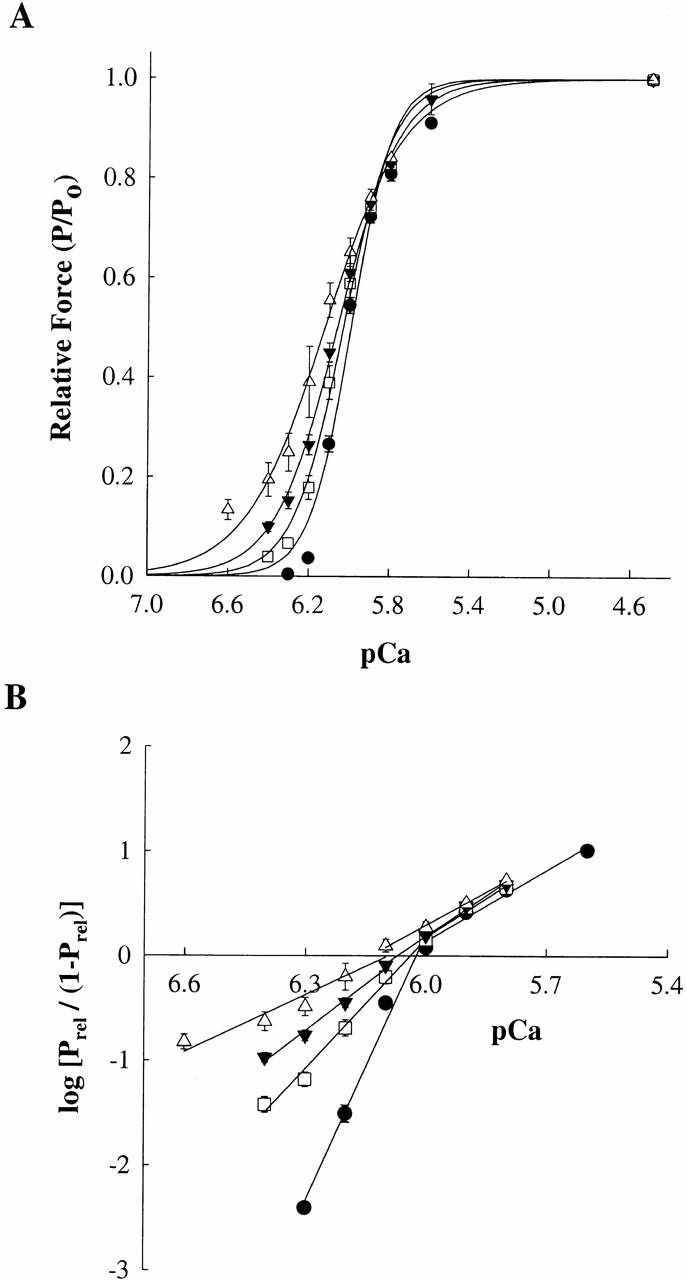
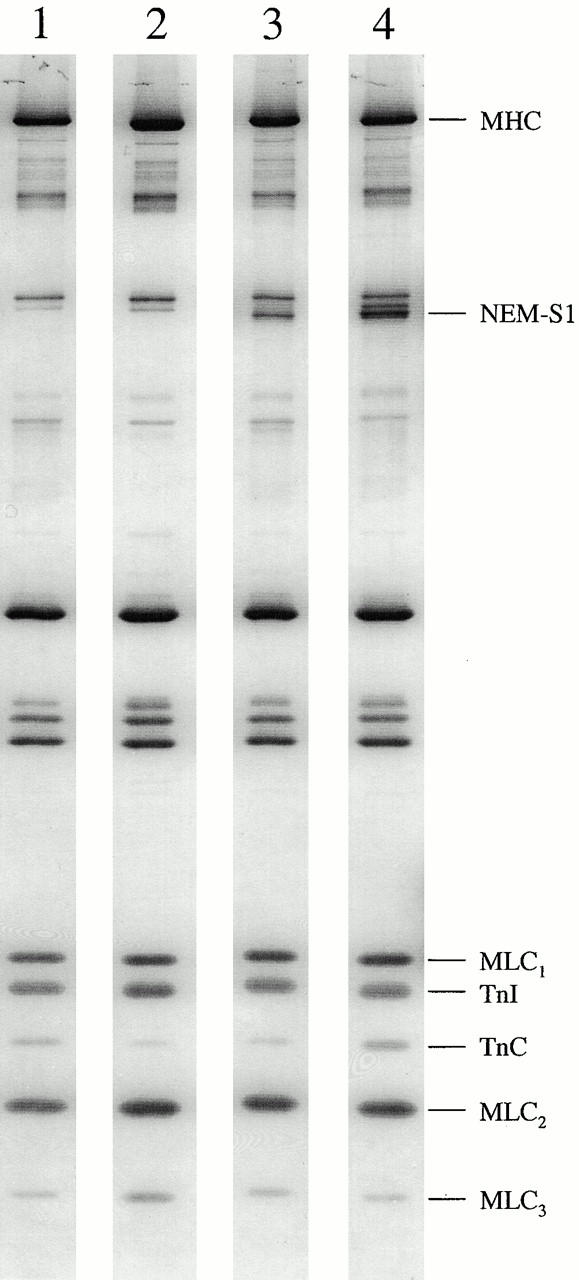
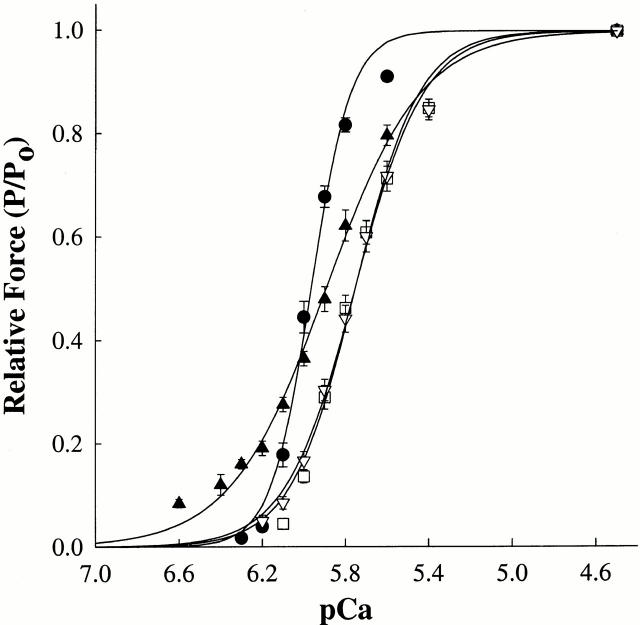
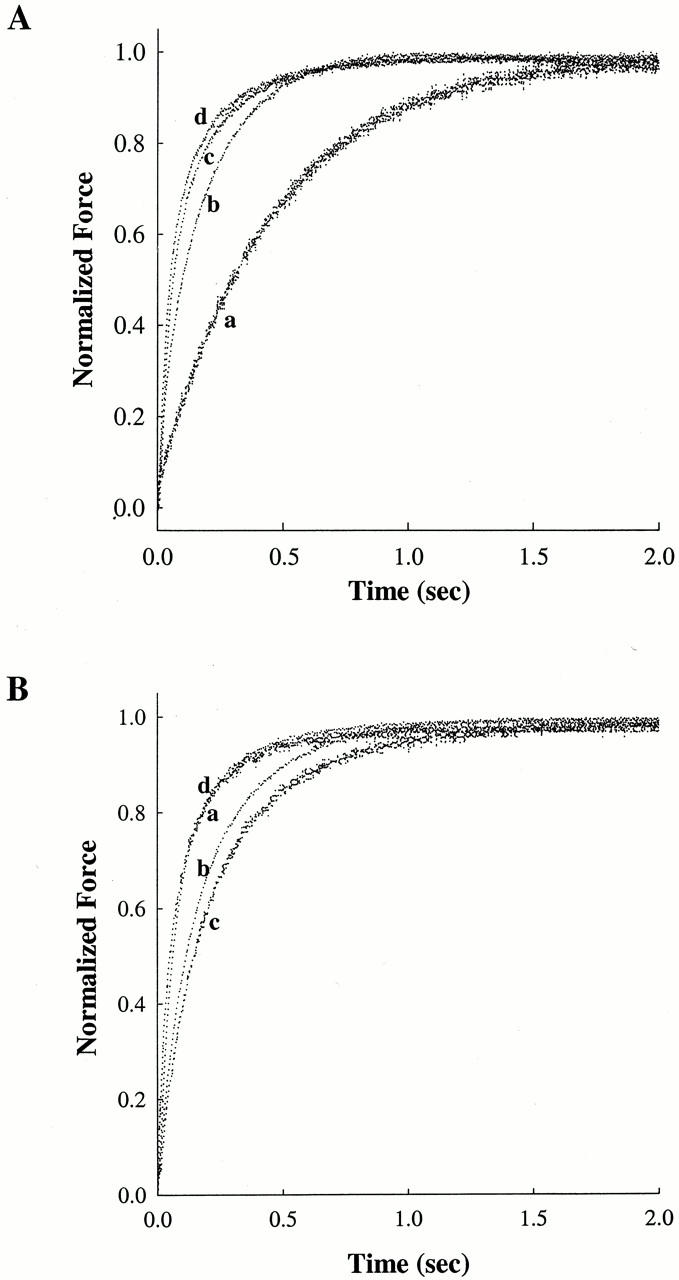
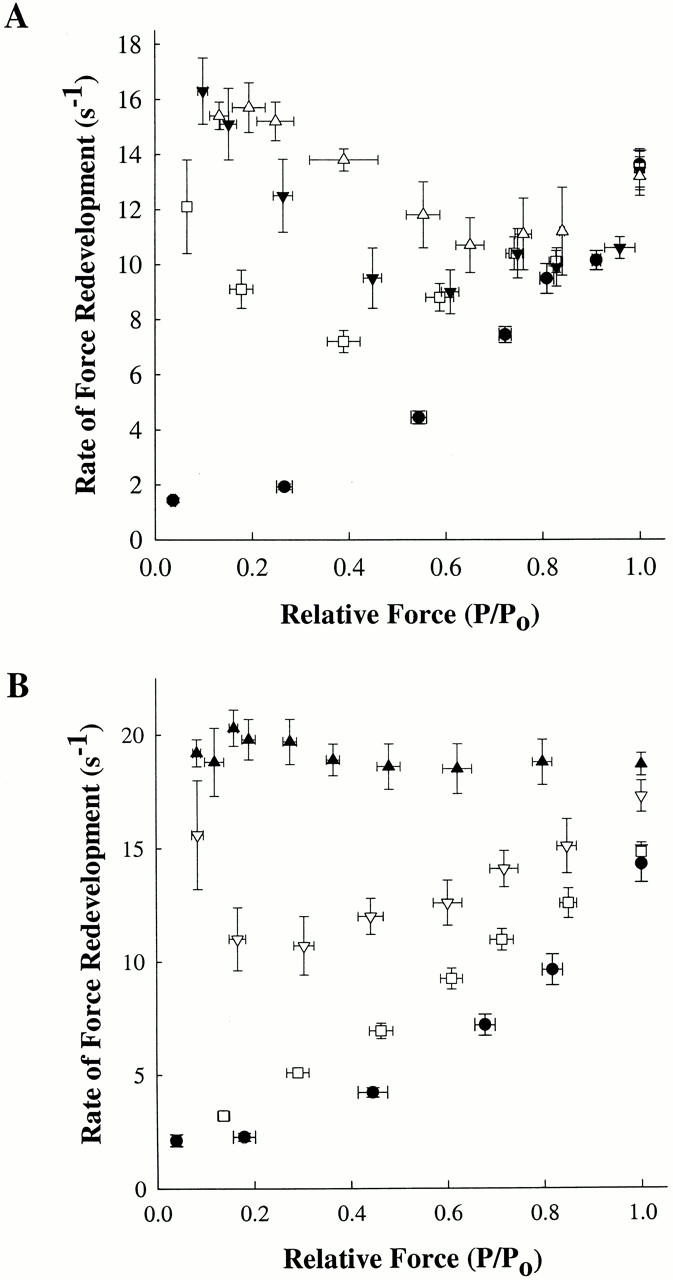
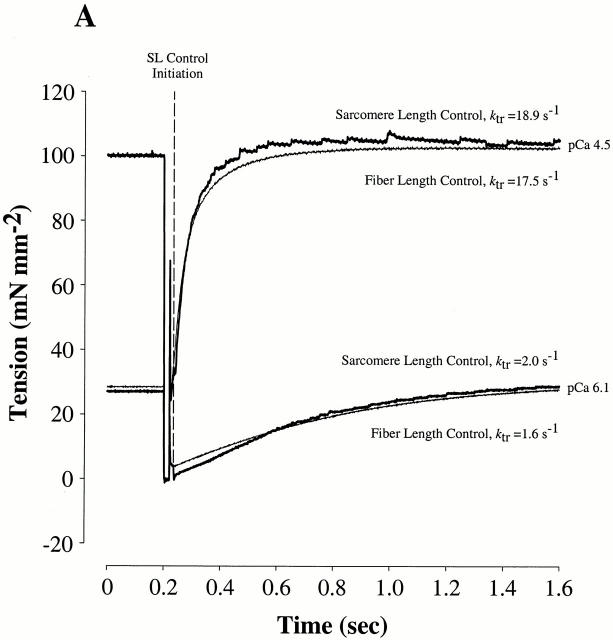
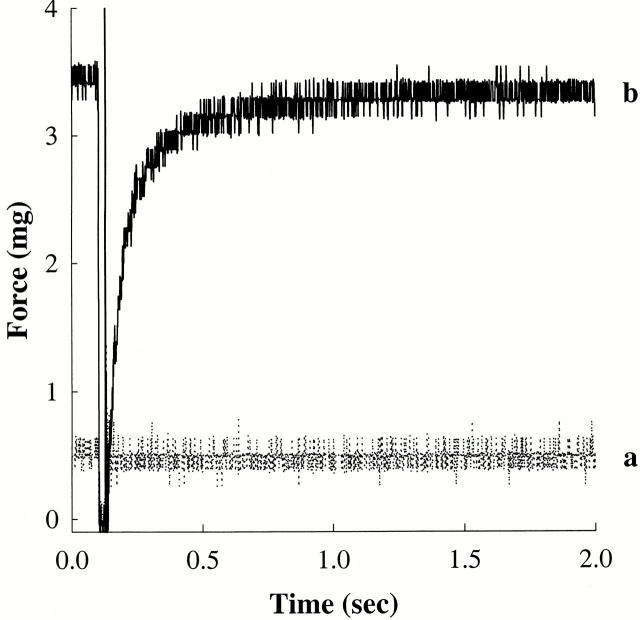
Regulation of contraction in skeletal muscle is a highly cooperative process involving Ca(2+) binding to troponin C (TnC) and strong binding of myosin cross-bridges to actin. To further investigate the role(s) of cooperation in activating the kinetics of cross-bridge cycling, we measured the Ca(2+) dependence of the rate constant of force redevelopment (k(tr)) in skinned single fibers in which cross-bridge and Ca(2+) binding were also perturbed. Ca(2+) sensitivity of tension, the steepness of the force-pCa relationship, and Ca(2+) dependence of k(tr) were measured in skinned fibers that were (1) treated with NEM-S1, a strong-binding, non-force-generating derivative of myosin subfragment 1, to promote cooperative strong binding of endogenous cross-bridges to actin; (2) subjected to partial extraction of TnC to disrupt the spread of activation along the thin filament; or (3) both, partial extraction of TnC and treatment with NEM-S1. The steepness of the force-pCa relationship was consistently reduced by treatment with NEM-S1, by partial extraction of TnC, or by a combination of TnC extraction and NEM-S1, indicating a decrease in the apparent cooperativity of activation. Partial extraction of TnC or NEM-S1 treatment accelerated the rate of force redevelopment at each submaximal force, but had no effect on kinetics of force development in maximally activated preparations. At low levels of Ca(2+), 3 microM NEM-S1 increased k(tr) to maximal values, and higher concentrations of NEM-S1 (6 or 10 microM) increased k(tr) to greater than maximal values. NEM-S1 also accelerated k(tr) at intermediate levels of activation, but to values that were submaximal. However, the combination of partial TnC extraction and 6 microM NEM-S1 increased k(tr) to virtually identical supramaximal values at all levels of activation, thus, completely eliminating the activation dependence of k(tr). These results show that k(tr) is not maximal in control fibers, even at saturating [Ca(2+)], and suggest that activation dependence of k(tr) is due to the combined activating effects of Ca(2+) binding to TnC and cross-bridge binding to actin.
骨骼肌收缩的调节是一个高度协同的过程,涉及钙离子(Ca(2+))与肌钙蛋白C(TnC)的结合以及肌球蛋白横桥与肌动蛋白的强结合。为了进一步研究协同作用在激活横桥循环动力学中的作用,我们测量了在横桥和Ca(2+)结合也受到干扰的去皮肤单纤维中力重新发展速率常数(k(tr))对Ca(2+)的依赖性。在以下去皮肤纤维中测量了张力的Ca(2+)敏感性、力-pCa关系的陡度以及k(tr)对Ca(2+)的依赖性:(1)用NEM-S1处理,NEM-S1是肌球蛋白亚片段1的一种强结合、不产生力的衍生物,以促进内源性横桥与肌动蛋白的协同强结合;(2)进行TnC的部分提取以破坏激活沿细肌丝的传播;或(3)同时进行TnC的部分提取和用NEM-S1处理。用NEM-S1处理、TnC的部分提取或TnC提取与NEM-S1的组合均使力-pCa关系的陡度持续降低,表明激活的表观协同性降低。TnC的部分提取或NEM-S1处理在每个次最大力水平上加速了力重新发展的速率,但对最大激活制剂中的力发展动力学没有影响。在低Ca(2+)水平下,3 microM NEM-S1将k(tr)增加到最大值,而更高浓度的NEM-S1(6或10 microM)将k(tr)增加到大于最大值。NEM-S1在中间激活水平也加速了k(tr),但达到次最大的值。然而,TnC部分提取与6 microM NEM-S1的组合在所有激活水平下将k(tr)增加到几乎相同的超最大值,从而完全消除了k(tr)对激活的依赖性。这些结果表明,即使在饱和[Ca(2+)]时,对照纤维中的k(tr)也不是最大的,并表明k(tr)对激活的依赖性是由于Ca(2+)与TnC结合以及横桥与肌动蛋白结合的联合激活作用。