Matsushima A, Kaisho T, Rennert P D, Nakano H, Kurosawa K, Uchida D, Takeda K, Akira S, Matsumoto M
Division of Informative Cytology, Institute for Enzyme Research, University of Tokushima, 3-18-15 Kuramoto, Tokushima 770-8503, Japan.
J Exp Med. 2001 Mar 5;193(5):631-6. doi: 10.1084/jem.193.5.631.
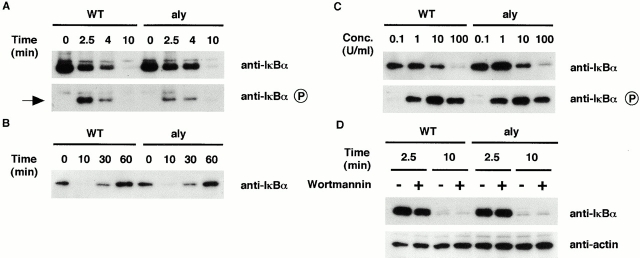
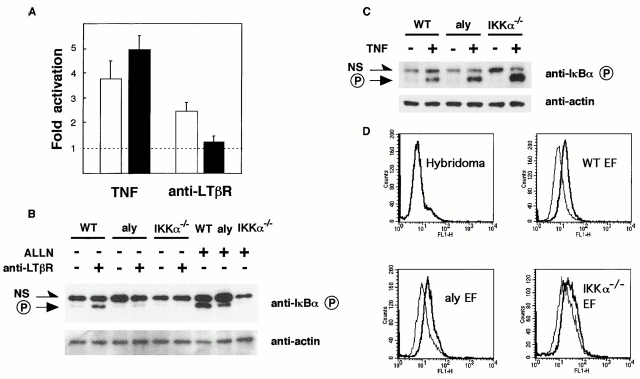
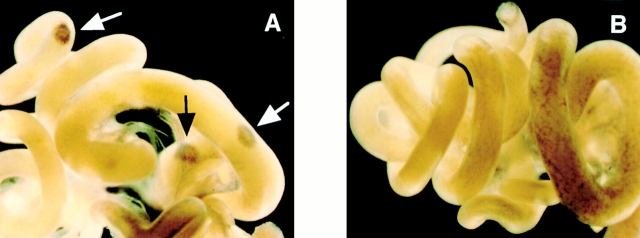
Both nuclear factor (NF)-kappaB-inducing kinase (NIK) and inhibitor of kappaB (IkappaB) kinase (IKK) have been implicated as essential components for NF-kappaB activation in response to many external stimuli. However, the exact roles of NIK and IKKalpha in cytokine signaling still remain controversial. With the use of in vivo mouse models, rather than with enforced gene-expression systems, we have investigated the role of NIK and IKKalpha in signaling through the type I tumor necrosis factor (TNF) receptor (TNFR-I) and the lymphotoxin beta receptor (LTbetaR), a receptor essential for lymphoid organogenesis. TNF stimulation induced similar levels of phosphorylation and degradation of IkappaBalpha in embryonic fibroblasts from either wild-type or NIK-mutant mice. In contrast, LTbetaR stimulation induced NF-kappaB activation in wild-type mice, but the response was impaired in embryonic fibroblasts from NIK-mutant and IKKalpha-deficient mice. Consistent with the essential role of IKKalpha in LTbetaR signaling, we found that development of Peyer's patches was defective in IKKalpha-deficient mice. These results demonstrate that both NIK and IKKalpha are essential for the induction of NF-kappaB through LTbetaR, whereas the NIK-IKKalpha pathway is dispensable in TNFR-I signaling.
核因子(NF)-κB诱导激酶(NIK)和κB抑制蛋白(IkappaB)激酶(IKK)均被认为是响应多种外部刺激时NF-κB激活的必需成分。然而,NIK和IKKα在细胞因子信号传导中的确切作用仍存在争议。通过使用体内小鼠模型,而非强制基因表达系统,我们研究了NIK和IKKα在通过I型肿瘤坏死因子(TNF)受体(TNFR-I)和淋巴毒素β受体(LTbetaR)(淋巴器官发生所必需的受体)进行信号传导中的作用。TNF刺激在野生型或NIK突变型小鼠的胚胎成纤维细胞中诱导了相似水平的IkappaBα磷酸化和降解。相比之下,LTbetaR刺激在野生型小鼠中诱导了NF-κB激活,但在NIK突变型和IKKα缺陷型小鼠的胚胎成纤维细胞中该反应受损。与IKKα在LTbetaR信号传导中的重要作用一致,我们发现IKKα缺陷型小鼠的派尔集合淋巴结发育存在缺陷。这些结果表明,NIK和IKKα对于通过LTbetaR诱导NF-κB均必不可少,而NIK-IKKα途径在TNFR-I信号传导中是可有可无的。