Webb D J, Thomas K S, Gonias S L
Department of Pathology, and Department of Biochemistry and Molecular Genetics, University of Virginia School of Medicine, Charlottesville, Virginia 22908, USA.
J Cell Biol. 2001 Feb 19;152(4):741-52. doi: 10.1083/jcb.152.4.741.
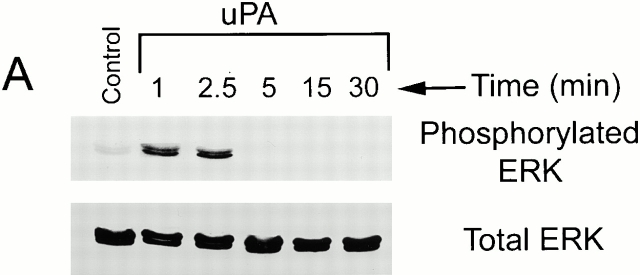
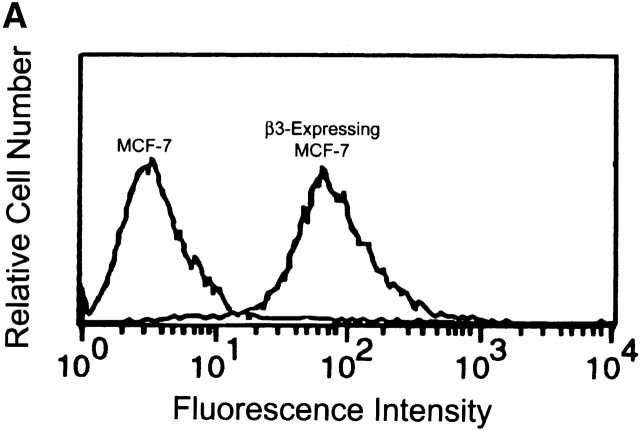
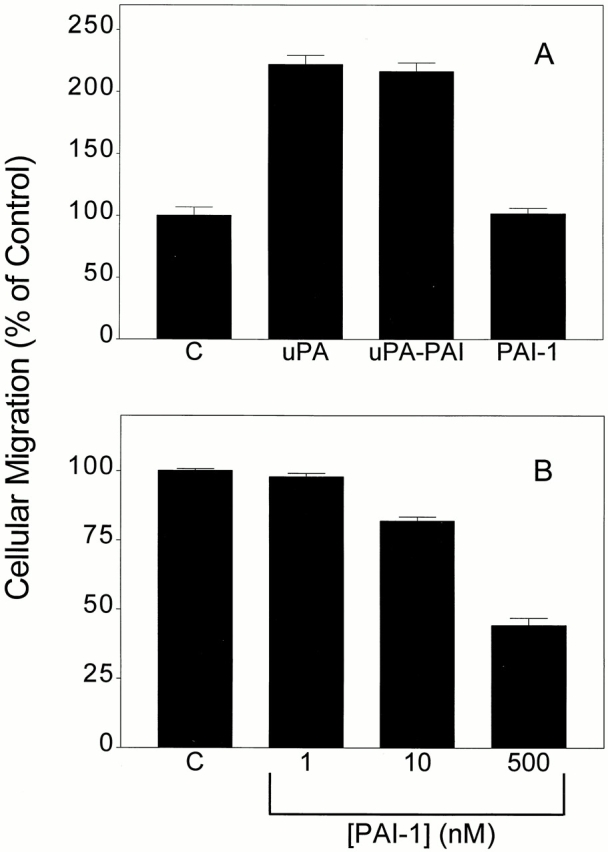
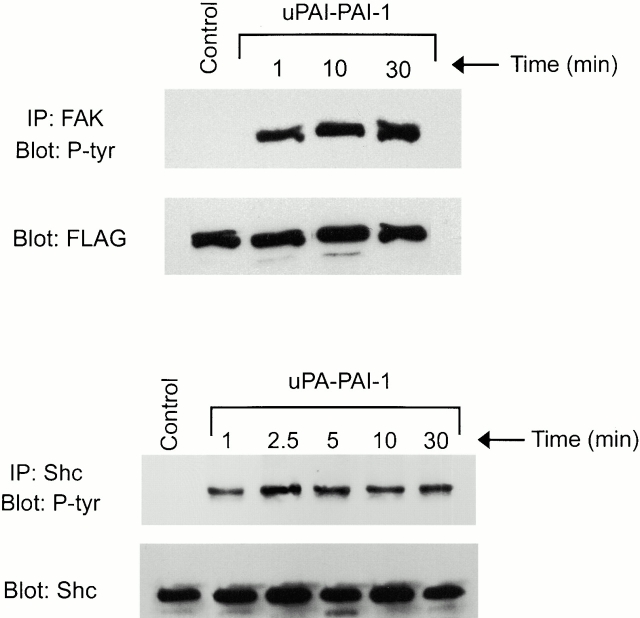
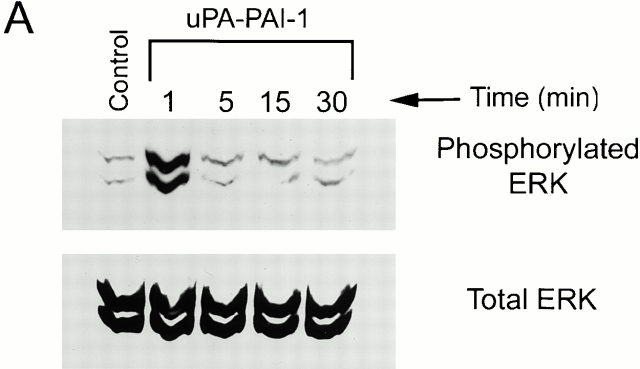
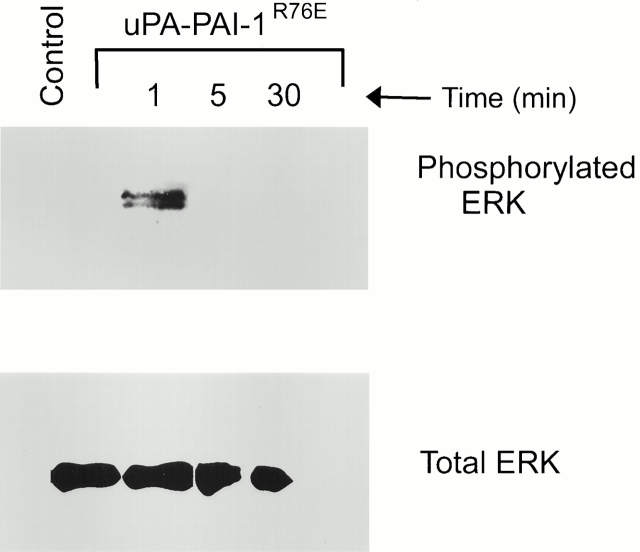
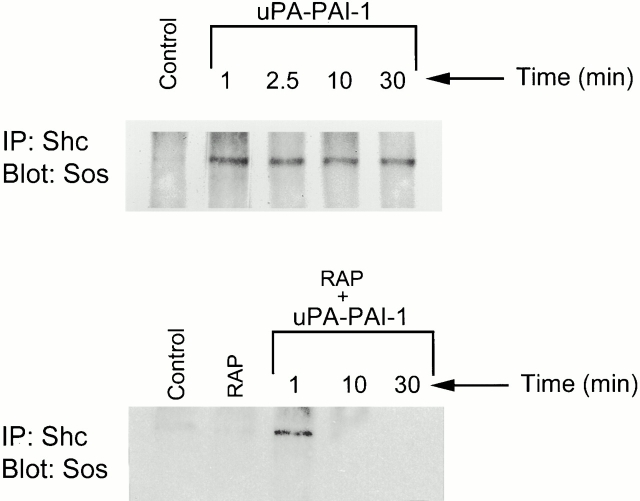
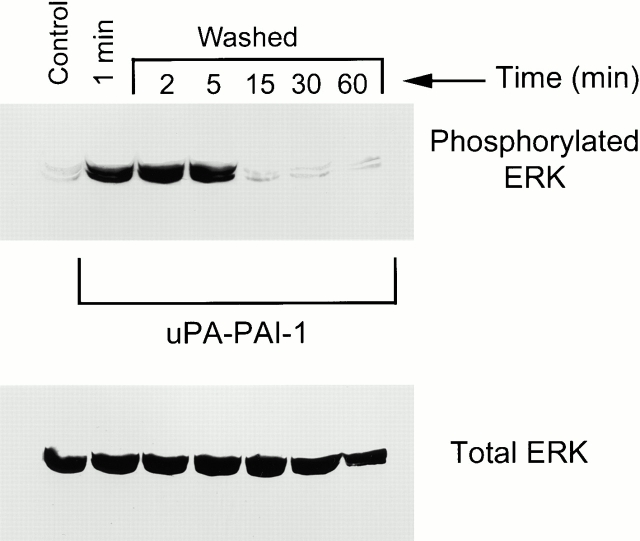
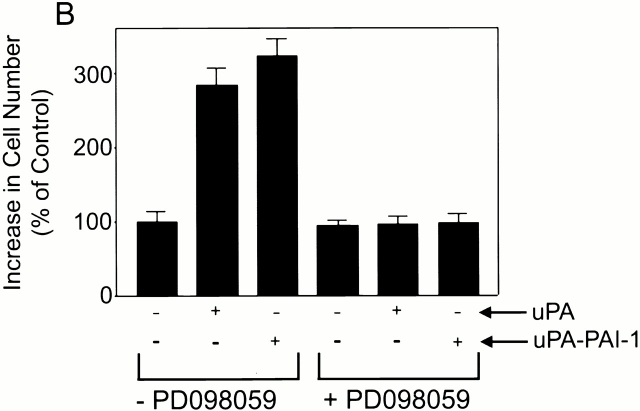
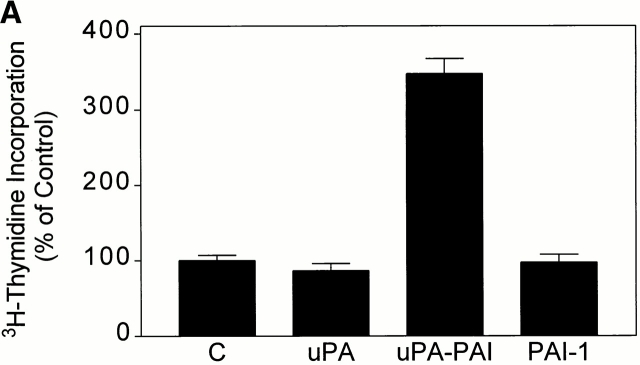
Plasminogen activator inhibitor 1 (PAI-1) is a major inhibitor of urokinase-type plasminogen activator (uPA). In this study, we explored the role of PAI-1 in cell signaling. In MCF-7 cells, PAI-1 did not directly activate the mitogen-activated protein (MAP) kinases, extracellular signal-regulated kinase (ERK) 1 and ERK2, but instead altered the response to uPA so that ERK phosphorylation was sustained. This effect required the cooperative function of uPAR and the very low density lipoprotein receptor (VLDLr). When MCF-7 cells were treated with uPA-PAI-1 complex in the presence of the VLDLr antagonist, receptor-associated protein, or with uPA-PAI-1(R76E) complex, which binds to the VLDLr with greatly decreased affinity, transient ERK phosphorylation (<5 min) was observed, mimicking the uPA response. ERK phosphorylation was not induced by tissue-type plasminogen activator-PAI-1 complex or by uPA-PAI-1 complex in the presence of antibodies that block uPA binding to uPAR. uPA-PAI-1 complex induced tyrosine phosphorylation of focal adhesion kinase and Shc and sustained association of Sos with Shc, whereas uPA caused transient association of Sos with Shc. By sustaining ERK phosphorylation, PAI-1 converted uPA into an MCF-7 cell mitogen. This activity was blocked by receptor-associated protein and not observed with uPA-PAI-1(R76E) complex, demonstrating the importance of the VLDLr. uPA promoted the growth of other cells in which ERK phosphorylation was sustained, including beta3 integrin overexpressing MCF-7 cells and HT 1080 cells. The MEK inhibitor, PD098059, blocked the growth-promoting activity of uPA and uPA-PAI-1 complex in these cells. Our results demonstrate that PAI-1 may regulate uPA-initiated cell signaling by a mechanism that requires VLDLr recruitment. The kinetics of ERK phosphorylation in response to uPAR ligation determine the function of uPA and uPA-PAI-1 complex as growth promoters.
纤溶酶原激活物抑制剂1(PAI-1)是尿激酶型纤溶酶原激活物(uPA)的主要抑制剂。在本研究中,我们探讨了PAI-1在细胞信号传导中的作用。在MCF-7细胞中,PAI-1不会直接激活丝裂原活化蛋白(MAP)激酶、细胞外信号调节激酶(ERK)1和ERK2,而是改变对uPA的反应,使ERK磷酸化得以持续。这种效应需要uPAR和极低密度脂蛋白受体(VLDLr)的协同作用。当MCF-7细胞在存在VLDLr拮抗剂、受体相关蛋白的情况下用uPA-PAI-1复合物处理,或用与VLDLr结合亲和力大大降低的uPA-PAI-1(R76E)复合物处理时,观察到短暂的ERK磷酸化(<5分钟),类似于uPA反应。组织型纤溶酶原激活物-PAI-1复合物或在存在阻断uPA与uPAR结合的抗体的情况下uPA-PAI-1复合物不会诱导ERK磷酸化。uPA-PAI-1复合物诱导粘着斑激酶和Shc的酪氨酸磷酸化以及Sos与Shc的持续结合,而uPA导致Sos与Shc的短暂结合。通过持续ERK磷酸化,PAI-1将uPA转化为MCF-7细胞有丝分裂原。这种活性被受体相关蛋白阻断,且用uPA-PAI-1(R76E)复合物未观察到,证明了VLDLr的重要性。uPA促进了其他细胞的生长,其中ERK磷酸化得以持续,包括过表达β3整合素的MCF-7细胞和HT 1080细胞。MEK抑制剂PD098059阻断了uPA和uPA-PAI-1复合物在这些细胞中的促生长活性。我们的结果表明,PAI-1可能通过一种需要募集VLDLr的机制来调节uPA启动的细胞信号传导。响应uPAR连接的ERK磷酸化动力学决定了uPA和uPA-PAI-1复合物作为生长促进剂的功能。