Adames N R, Oberle J R, Cooper J A
Department of Cell Biology and Physiology, Washington University School of Medicine, St. Louis, Missouri 63110, USA.
J Cell Biol. 2001 Apr 2;153(1):159-68. doi: 10.1083/jcb.153.1.159.
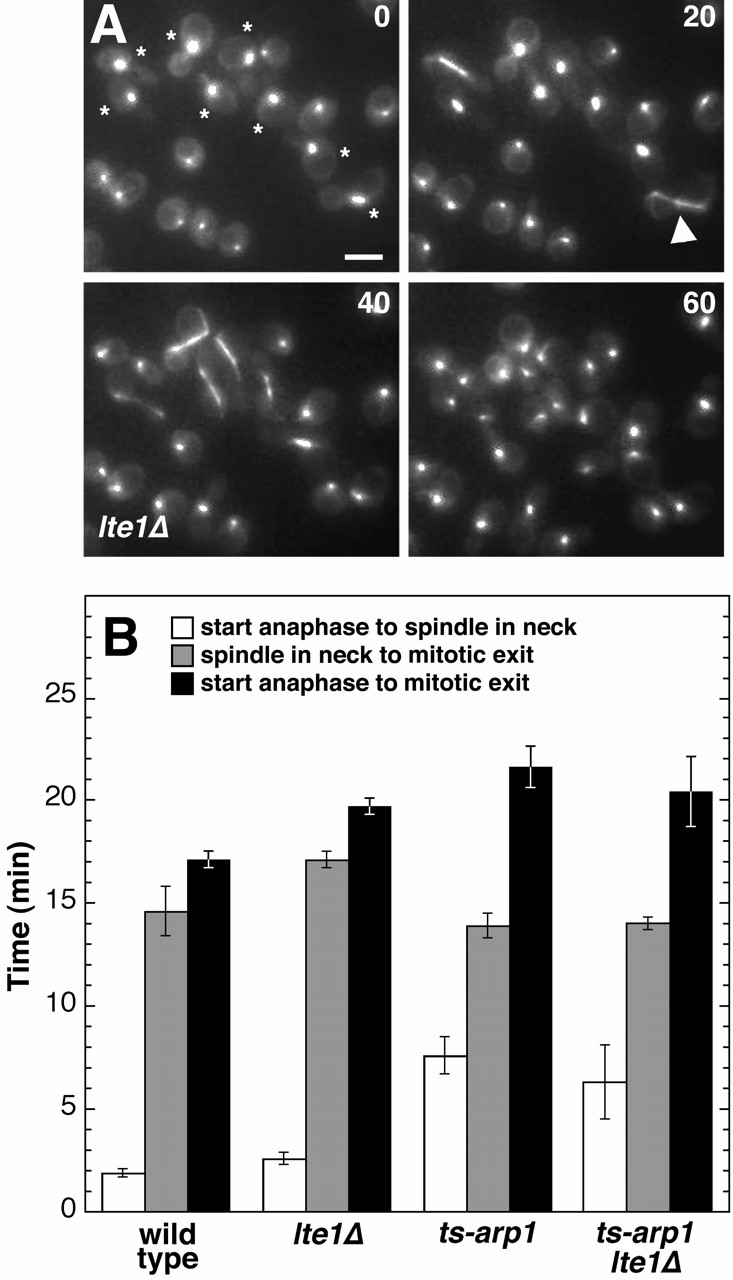
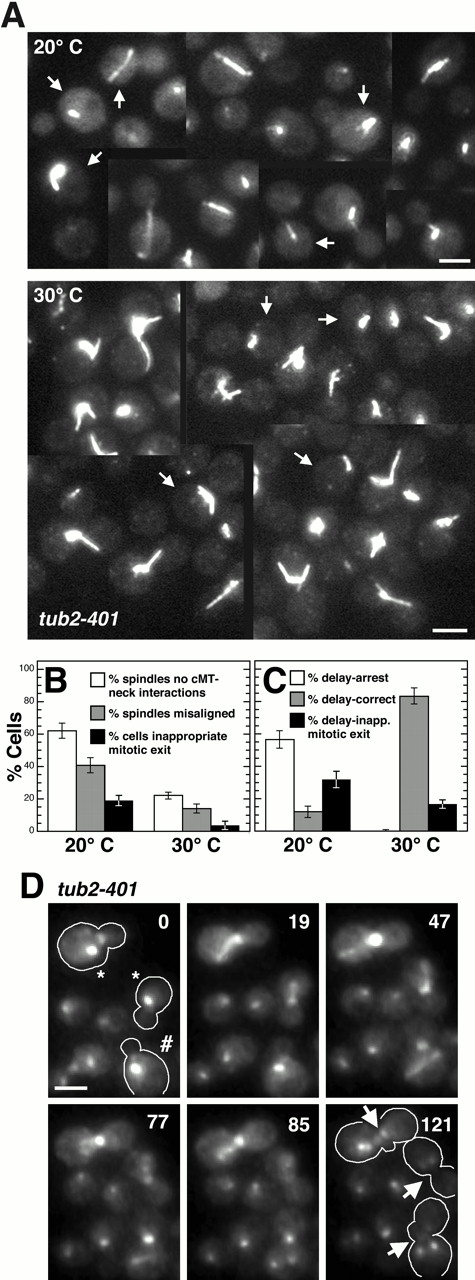
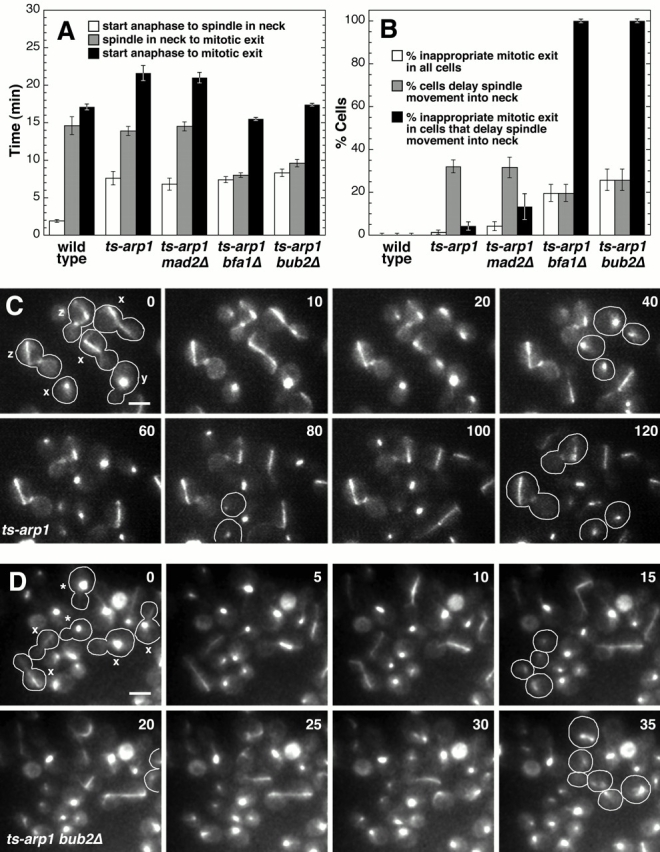
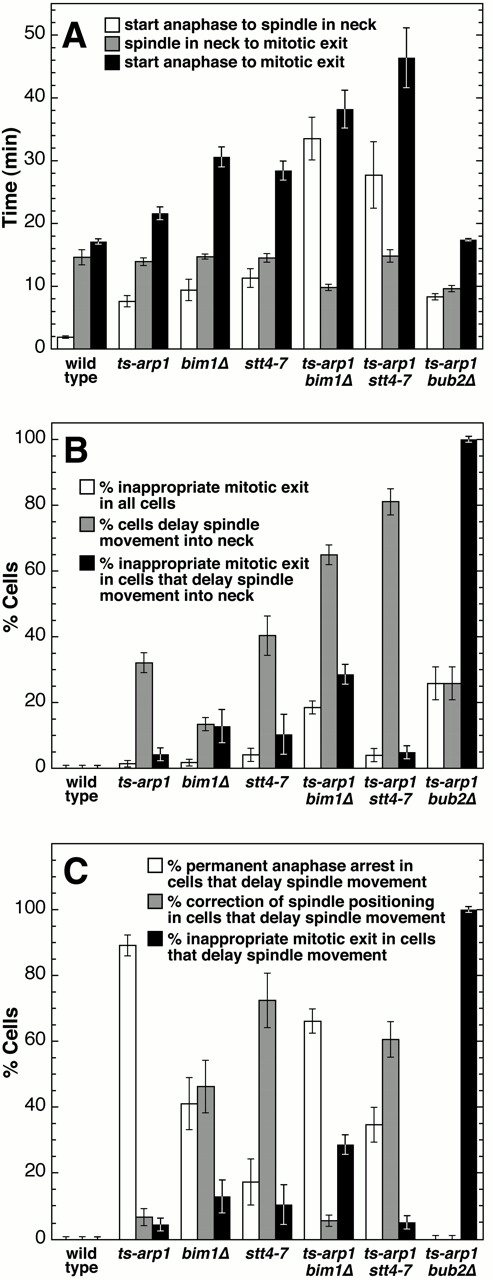
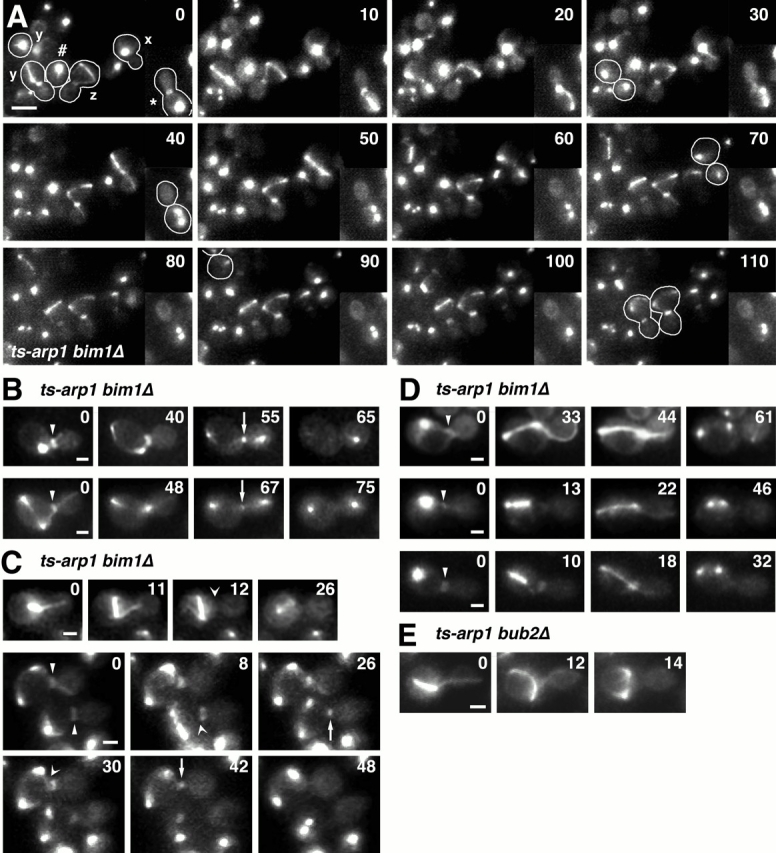
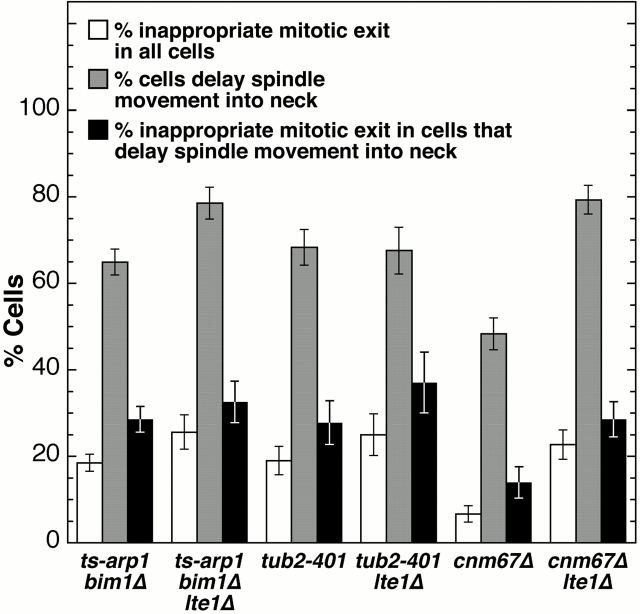
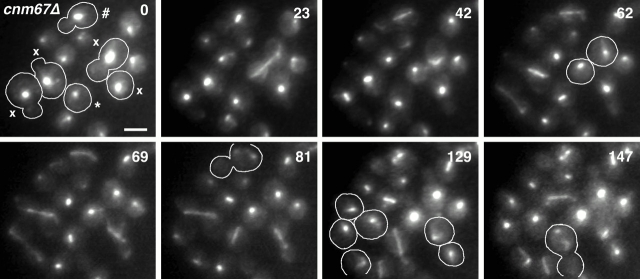
The spindle position checkpoint in Saccharomyces cerevisiae delays mitotic exit until the spindle has moved into the mother-bud neck, ensuring that each daughter cell inherits a nucleus. The small G protein Tem1p is critical in promoting mitotic exit and is concentrated at the spindle pole destined for the bud. The presumed nucleotide exchange factor for Tem1p, Lte1p, is concentrated in the bud. These findings suggested the hypothesis that movement of the spindle pole through the neck allows Tem1p to interact with Lte1p, promoting GTP loading of Tem1p and mitotic exit. However, we report that deletion of LTE1 had little effect on the timing of mitotic exit. We also examined several mutants in which some cells inappropriately exit mitosis even though the spindle is within the mother. In some of these cells, the spindle pole body did not interact with the bud or the neck before mitotic exit. Thus, some alternative mechanism must exist to coordinate mitotic exit with spindle position. In both wild-type and mutant cells, mitotic exit was preceded by loss of cytoplasmic microtubules from the neck. Thus, the spindle position checkpoint may monitor such interactions.
酿酒酵母中的纺锤体位置检查点会延迟有丝分裂退出,直到纺锤体移至母细胞与芽之间的颈部,以确保每个子细胞都能继承一个细胞核。小G蛋白Tem1p在促进有丝分裂退出过程中起关键作用,并集中于朝向芽的纺锤极。推测为Tem1p核苷酸交换因子的Lte1p则集中于芽中。这些发现提示了这样一个假说:纺锤极穿过颈部的移动使得Tem1p与Lte1p相互作用,促进Tem1p的GTP加载及有丝分裂退出。然而,我们报告称,缺失LTE1对有丝分裂退出的时间影响很小。我们还研究了几个突变体,其中一些细胞即使纺锤体仍在母细胞内也会不恰当地退出有丝分裂。在其中一些细胞中,有丝分裂退出之前纺锤极体并未与芽或颈部相互作用。因此,必然存在某种其他机制来将有丝分裂退出与纺锤体位置相协调。在野生型和突变体细胞中,有丝分裂退出之前颈部的细胞质微管都会消失。因此,纺锤体位置检查点可能会监测此类相互作用。