Medema J P, Schuurhuis D H, Rea D, van Tongeren J, de Jong J, Bres S A, Laban S, Toes R E, Toebes M, Schumacher T N, Bladergroen B A, Ossendorp F, Kummer J A, Melief C J, Offringa R
Department of Immunohematology and Blood Transfusion, Leiden University Medical Center (LUMC), 2333ZA Leiden, The Netherlands.
J Exp Med. 2001 Sep 3;194(5):657-67. doi: 10.1084/jem.194.5.657.
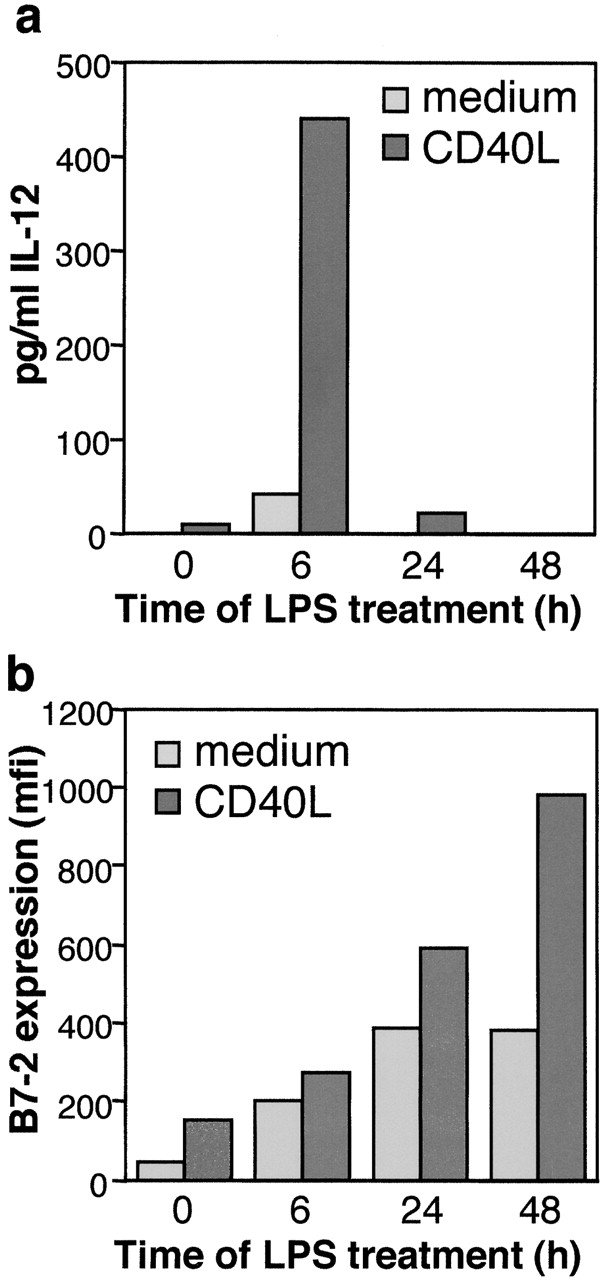
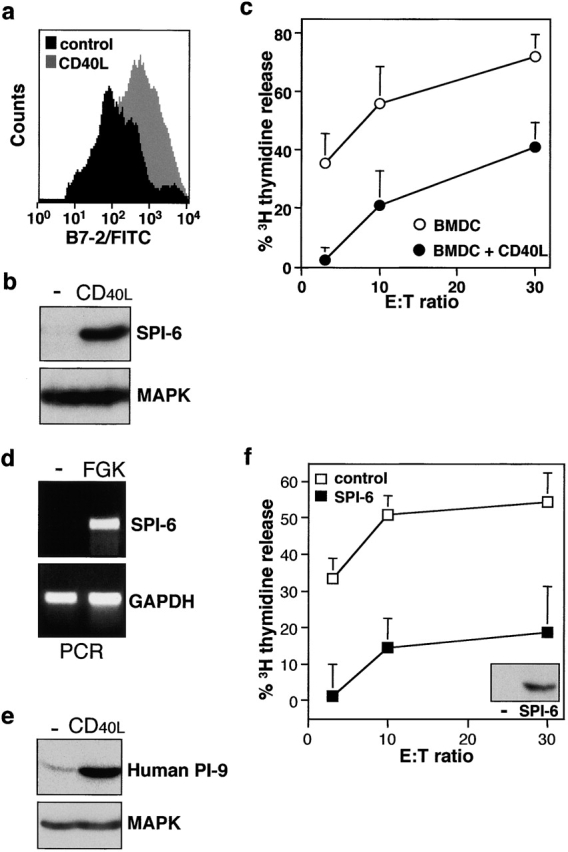
Dendritic cells (DCs) play a central role in the immune system as they drive activation of T lymphocytes by cognate interactions. However, as DCs express high levels of major histocompatibility complex class I, this intimate contact may also result in elimination of DCs by activated cytotoxic T lymphocytes (CTLs) and thereby limit induction of immunity. We show here that immature DCs are indeed susceptible to CTL-induced killing, but become resistant upon maturation with anti-CD40 or lipopolysaccharide. Protection is achieved by expression of serine protease inhibitor (SPI)-6, a member of the serpin family that specifically inactivates granzyme B and thereby blocks CTL-induced apoptosis. Anti-CD40 and LPS-induced SPI-6 expression is sustained for long periods of time, suggesting a role for SPI-6 in the longevity of DCs. Importantly, T helper 1 cells, which mature DCs and boost CTL immunity, induce SPI-6 expression and subsequent DC resistance. In contrast, T helper 2 cells neither induce SPI-6 nor convey protection, despite the fact that they trigger DC maturation with comparable efficiency. Our data identify SPI-6 as a novel marker for DC function, which protects DCs against CTL-induced apoptosis.
树突状细胞(DCs)在免疫系统中发挥核心作用,因为它们通过同源相互作用驱动T淋巴细胞的激活。然而,由于DCs高表达主要组织相容性复合体I类分子,这种密切接触也可能导致活化的细胞毒性T淋巴细胞(CTLs)消除DCs,从而限制免疫诱导。我们在此表明,未成熟的DCs确实易受CTL诱导的杀伤,但在用抗CD40或脂多糖成熟后会变得具有抗性。保护作用是通过丝氨酸蛋白酶抑制剂(SPI)-6的表达实现的,SPI-6是丝氨酸蛋白酶抑制剂家族的一员,可特异性地使颗粒酶B失活,从而阻断CTL诱导的细胞凋亡。抗CD40和LPS诱导的SPI-6表达会持续很长时间,这表明SPI-6在DCs的寿命中发挥作用。重要的是,使DCs成熟并增强CTL免疫的辅助性T1细胞可诱导SPI-6表达及随后的DC抗性。相比之下,辅助性T2细胞既不诱导SPI-6表达也不提供保护,尽管它们以相当的效率触发DC成熟。我们的数据确定SPI-6是DC功能的一种新型标志物,可保护DCs免受CTL诱导的细胞凋亡。