Niethammer Philipp, Delling Markus, Sytnyk Vladimir, Dityatev Alexander, Fukami Kiyoko, Schachner Melitta
Zentrum für Molekulare Neurobiologie, Universität Hamburg, D-20246 Hamburg, Germany.
J Cell Biol. 2002 Apr 29;157(3):521-32. doi: 10.1083/jcb.200109059.
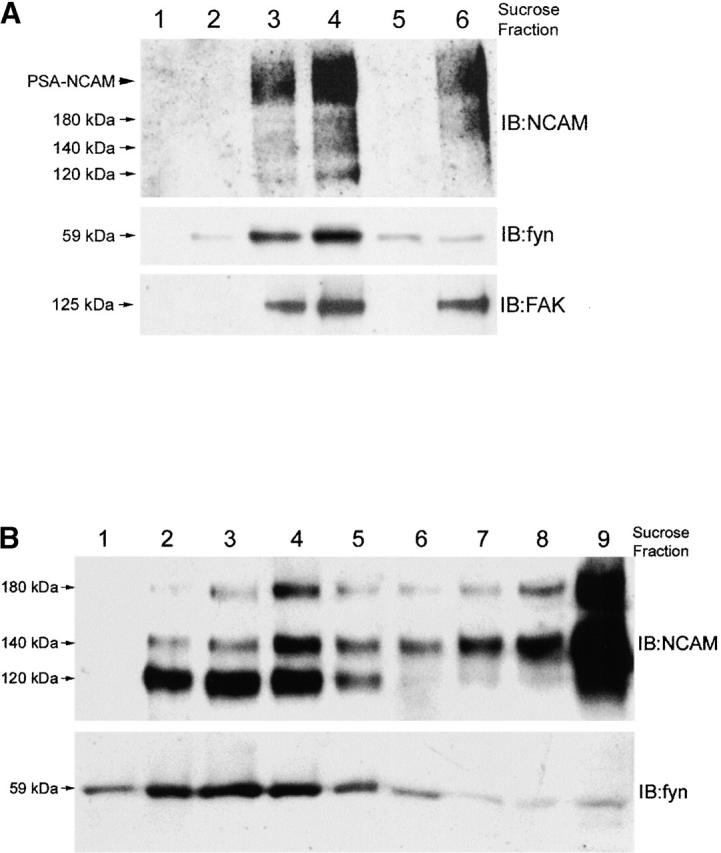
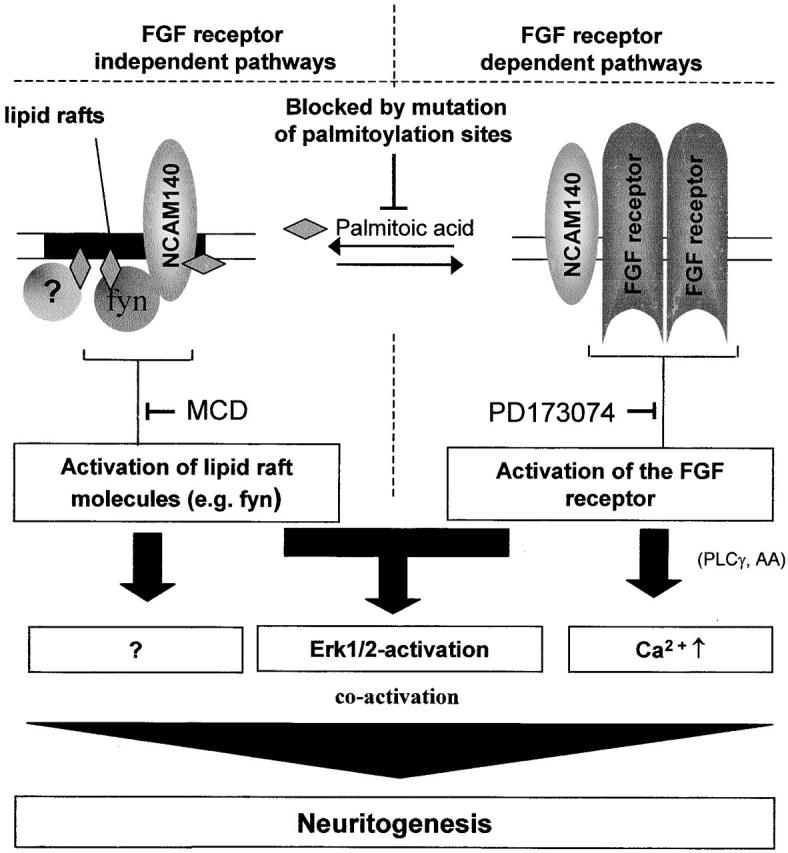
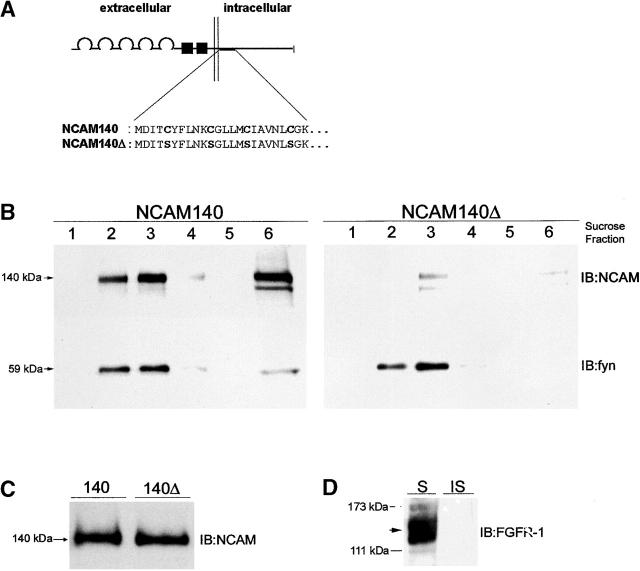
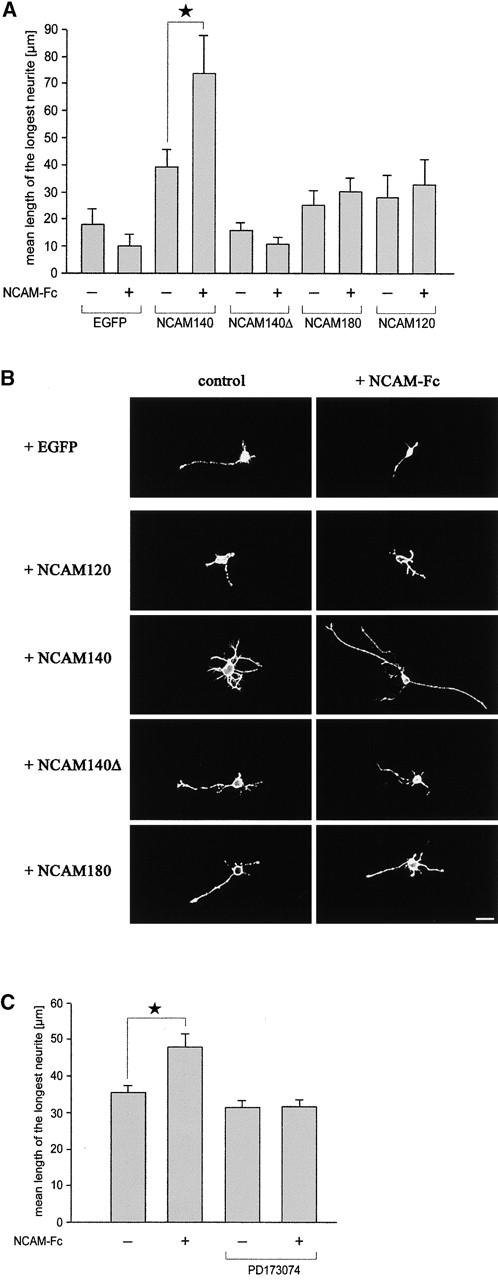
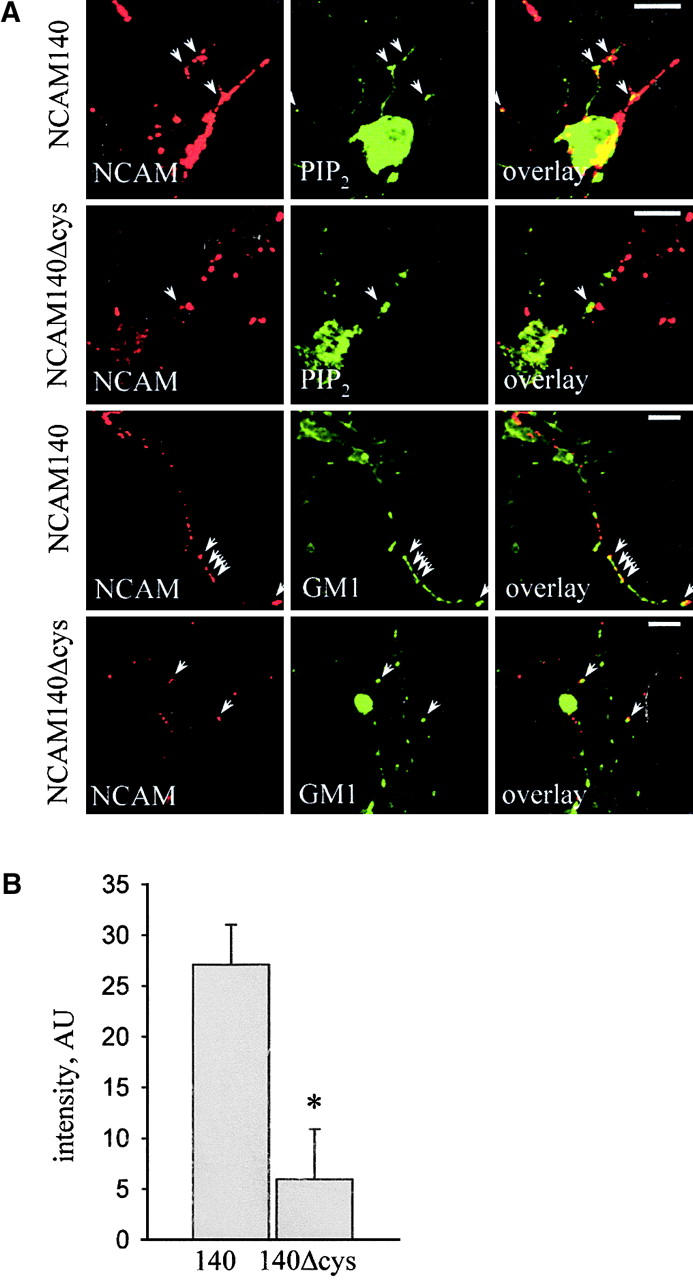
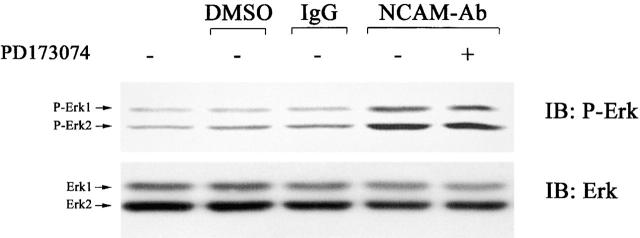
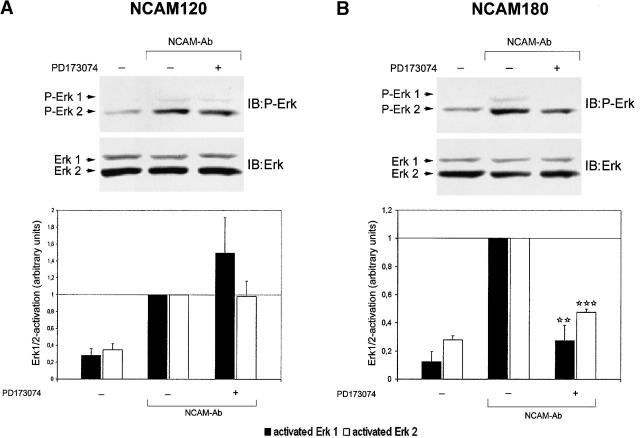
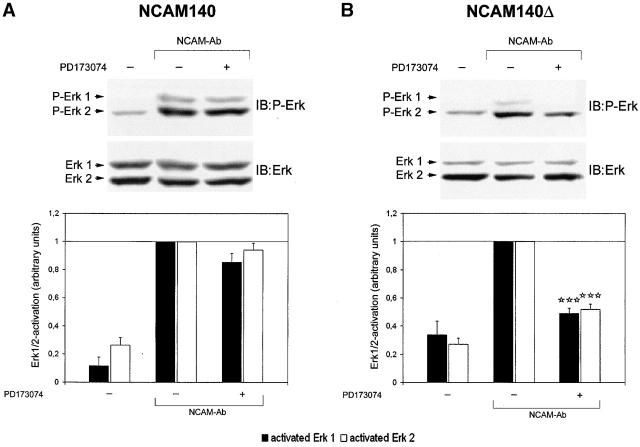
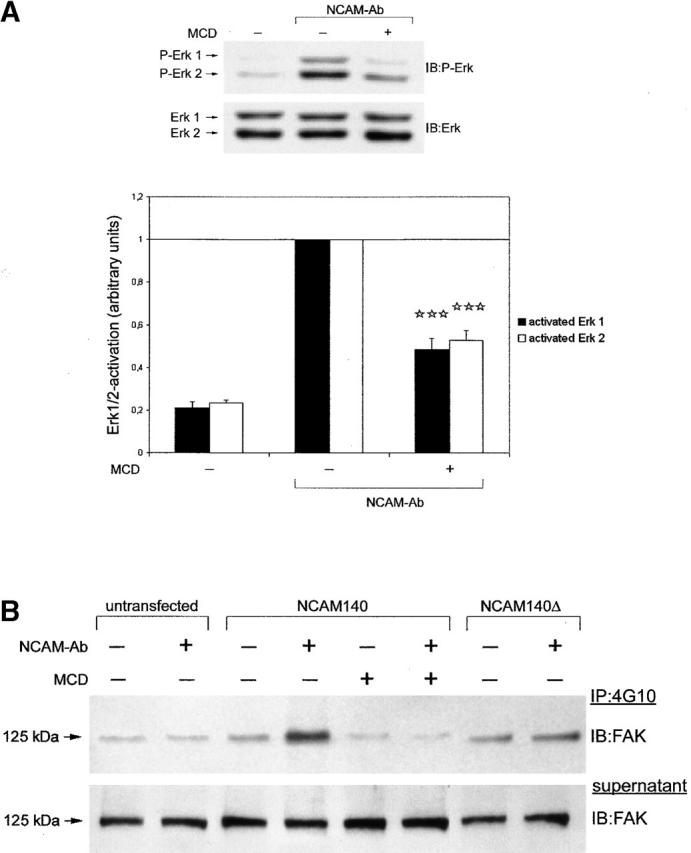
The neural cell adhesion molecule (NCAM) has been reported to stimulate neuritogenesis either via nonreceptor tyrosine kinases or fibroblast growth factor (FGF) receptor. Here we show that lipid raft association of NCAM is crucial for activation of the nonreceptor tyrosine kinase pathway and induction of neurite outgrowth. Transfection of hippocampal neurons of NCAM-deficient mice revealed that of the three major NCAM isoforms only NCAM140 can act as a homophilic receptor that induces neurite outgrowth. Disruption of NCAM140 raft association either by mutation of NCAM140 palmitoylation sites or by lipid raft destruction attenuates activation of the tyrosine focal adhesion kinase and extracellular signal-regulated kinase 1/2, completely blocking neurite outgrowth. Likewise, NCAM-triggered neurite outgrowth is also completely blocked by a specific FGF receptor inhibitor, indicating that cosignaling via raft-associated kinases and FGF receptor is essential for neuritogenesis.
据报道,神经细胞黏附分子(NCAM)可通过非受体酪氨酸激酶或成纤维细胞生长因子(FGF)受体刺激神经突生长。在此我们表明,NCAM与脂筏的结合对于非受体酪氨酸激酶途径的激活和神经突生长的诱导至关重要。对NCAM缺陷小鼠海马神经元进行转染后发现,在三种主要的NCAM亚型中,只有NCAM140可以作为诱导神经突生长的同源受体。通过NCAM140棕榈酰化位点突变或脂筏破坏来破坏NCAM140与脂筏的结合,会减弱酪氨酸黏着斑激酶和细胞外信号调节激酶1/2的激活,从而完全阻断神经突生长。同样,NCAM触发的神经突生长也会被一种特异性FGF受体抑制剂完全阻断,这表明通过与脂筏相关的激酶和FGF受体共同发出信号对于神经突生成至关重要。