Keramidas Angelo, Moorhouse Andrew J, Pierce Kerrie D, Schofield Peter R, Barry Peter H
Department of Physiology and Pharmacology, University of New South Wales, Sydney 2052, Australia.
J Gen Physiol. 2002 May;119(5):393-410. doi: 10.1085/jgp.20028552.
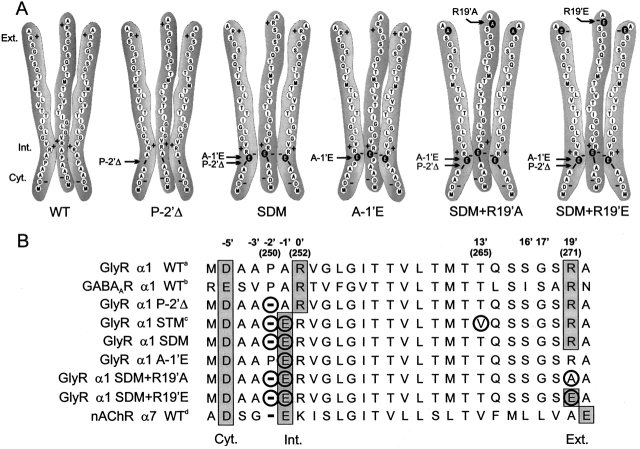
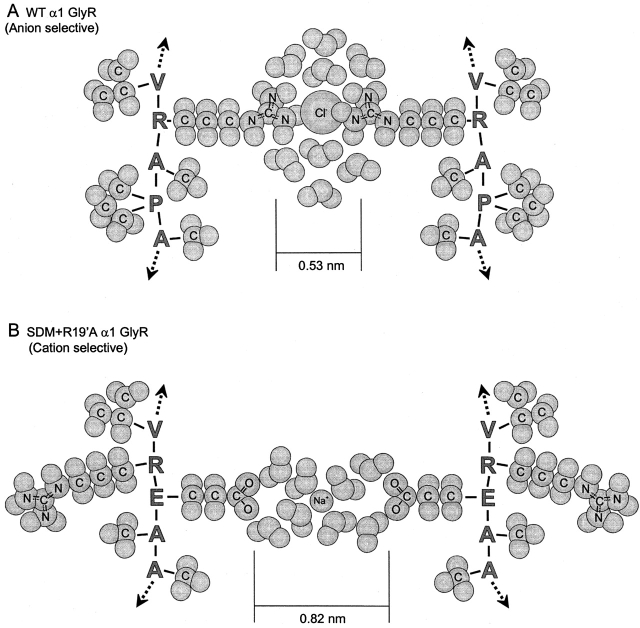
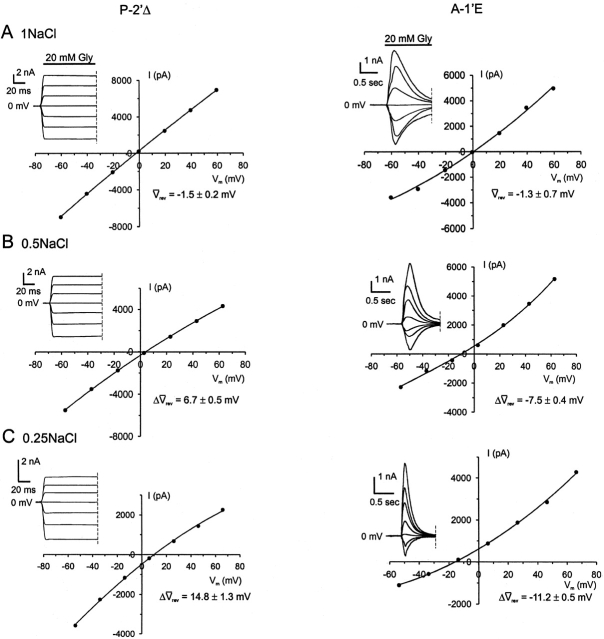
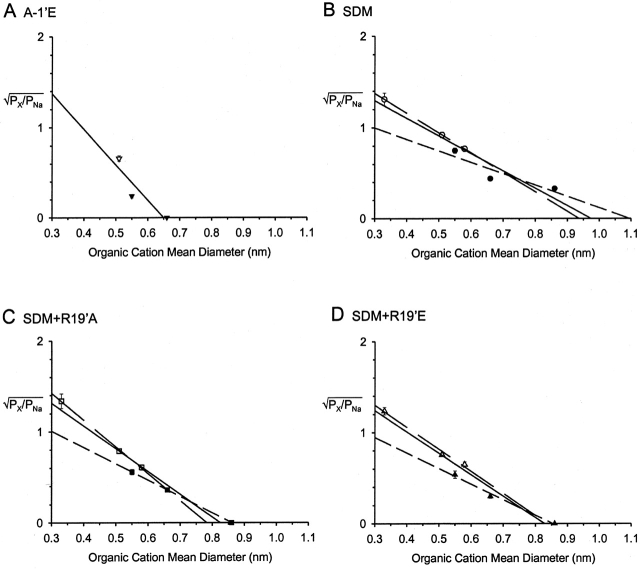
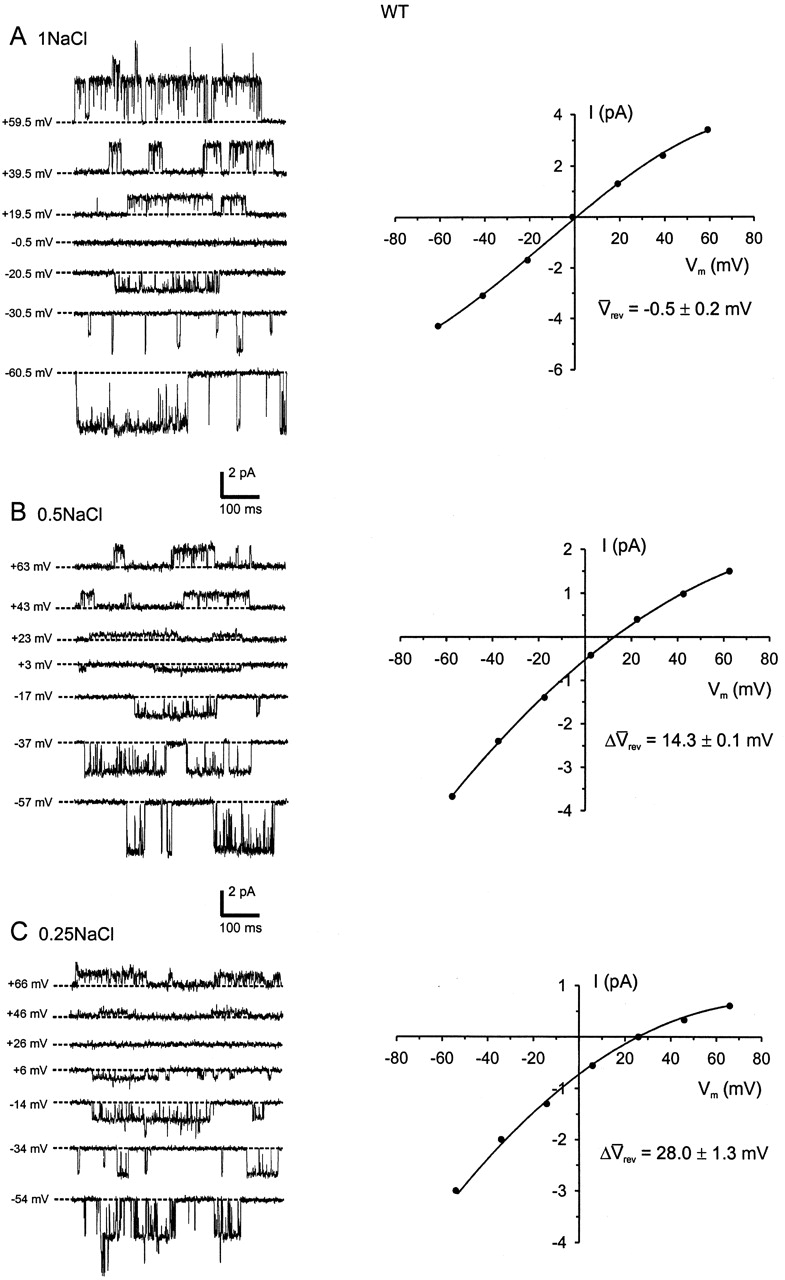
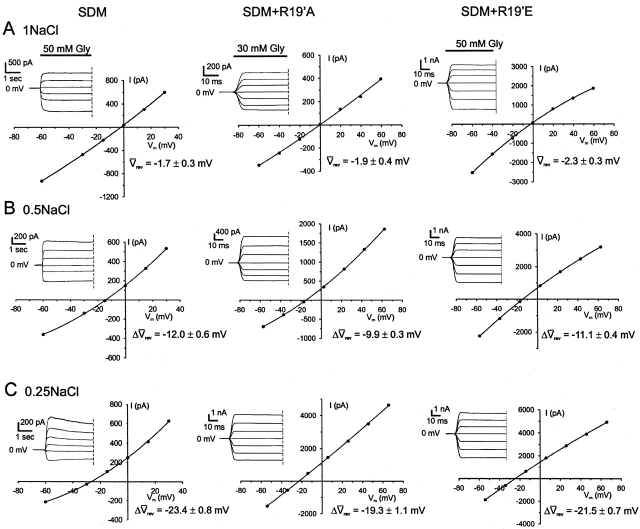
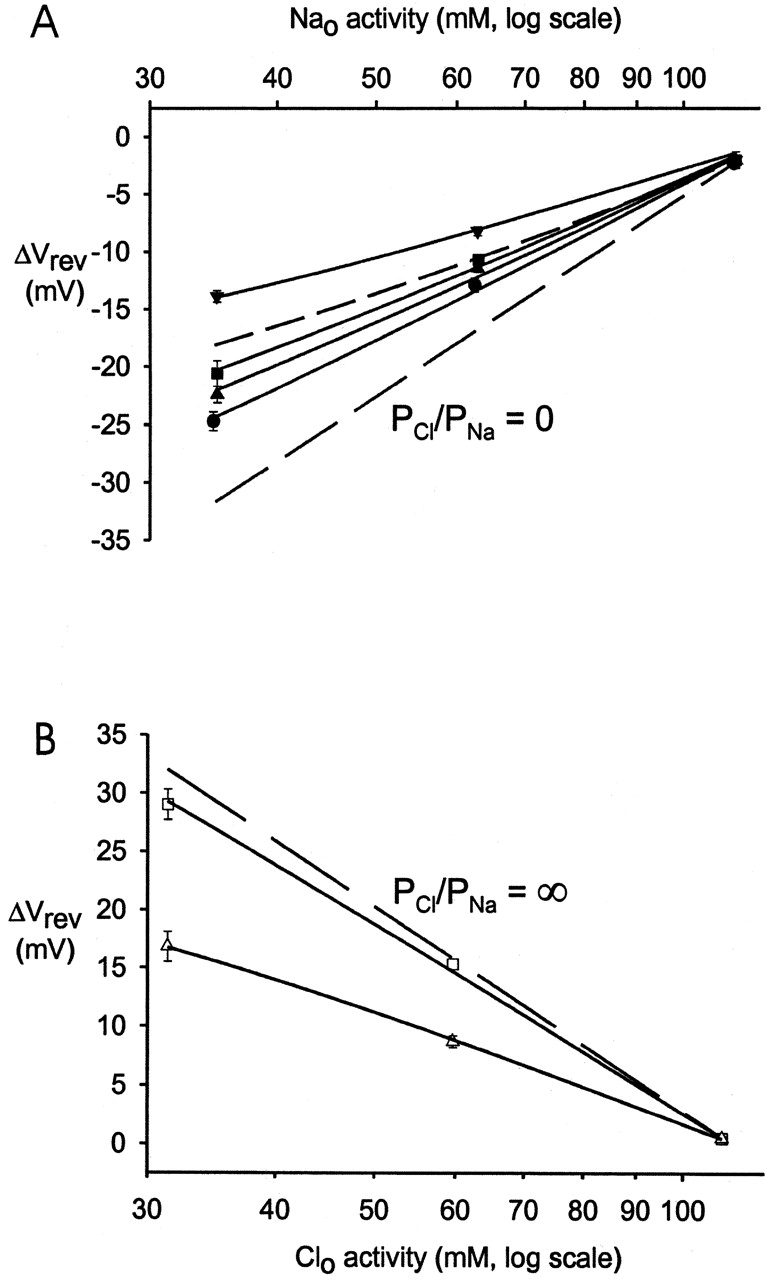
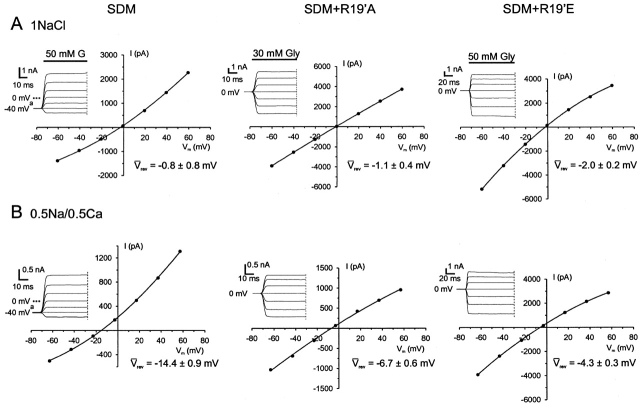
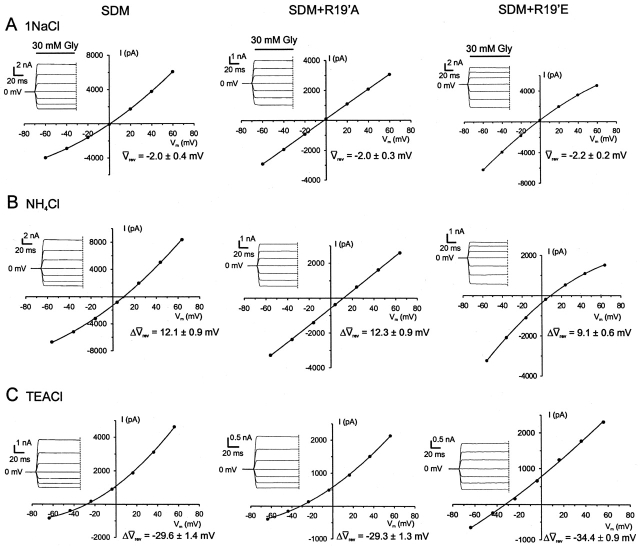
Ligand-gated ion channel receptors mediate neuronal inhibition or excitation depending on their ion charge selectivity. An investigation into the determinants of ion charge selectivity of the anion-selective alpha1 homomeric glycine receptor (alpha1 glycine receptor [GlyR]) was undertaken using point mutations to residues lining the extra- and intracellular ends of the ion channel. Five mutant GlyRs were studied. A single substitution at the intracellular mouth of the channel (A-1'E GlyR) was sufficient to convert the channels to select cations over anions with P(Cl)/P(Na) = 0.34. This result delimits the selectivity filter and provides evidence that electrostatic interactions between permeating ions and pore residues are a critical factor in ion charge selectivity. The P-2'Delta mutant GlyR retained its anion selectivity (P(Cl)/P(Na) = 3.81), but it was much reduced compared with the wild-type (WT) GlyR (P(Cl)/P(Na) = 27.9). When the A-1'E and the P-2'Delta mutations were combined (selectivity double mutant [SDM] GlyR), the relative cation permeability was enhanced (P(Cl)/P(Na) = 0.13). The SDM GlyR was also Ca(2+) permeable (P(Ca)/P(Na) = 0.29). Neutralizing the extracellular mouth of the SDM GlyR ion channel (SDM+R19'A GlyR) produced a more Ca(2+)-permeable channel (P(Ca)/P(Na) = 0.73), without drastically altering monovalent charge selectivity (P(Cl)/P(Na) = 0.23). The SDM+R19'E GlyR, which introduces a negatively charged ring at the extracellular mouth of the channel, further enhanced Ca(2+) permeability (P(Ca)/P(Na) = 0.92), with little effect on monovalent selectivity (P(Cl)/P(Na) = 0.19). Estimates of the minimum pore diameter of the A-1'E, SDM, SDM+R19'A, and SDM+R19'E GlyRs revealed that these pores are larger than the alpha1 GlyR, with the SDM-based GlyRs being comparable in diameter to the cation-selective nicotinic acetylcholine receptors. This result provides evidence that the diameter of the ion channel is also an important factor in ion charge selectivity.
配体门控离子通道受体根据其离子电荷选择性介导神经元抑制或兴奋。利用对离子通道胞外端和胞内端内壁残基进行点突变,对阴离子选择性α1同聚甘氨酸受体(α1甘氨酸受体[GlyR])的离子电荷选择性决定因素进行了研究。研究了五种突变型GlyR。通道胞内口的单个取代(A-1'E GlyR)足以使通道转变为对阳离子的选择性高于阴离子,P(Cl)/P(Na)=0.34。这一结果界定了选择性过滤器,并提供了证据表明渗透离子与孔道残基之间的静电相互作用是离子电荷选择性的关键因素。P-2'Delta突变型GlyR保留了其阴离子选择性(P(Cl)/P(Na)=3.81),但与野生型(WT)GlyR相比(P(Cl)/P(Na)=27.9)显著降低。当A-1'E和P-2'Delta突变结合(选择性双突变体[SDM]GlyR)时,相对阳离子通透性增强(P(Cl)/P(Na)=0.13)。SDM GlyR也对Ca(2+)通透(P(Ca)/P(Na)=0.29)。中和SDM GlyR离子通道的胞外口(SDM+R19'A GlyR)产生了一个对Ca(2+)通透性更高的通道(P(Ca)/P(Na)=0.73),而没有显著改变单价电荷选择性(P(Cl)/P(Na)=0.23)。在通道胞外口引入带负电荷环的SDM+R19'E GlyR进一步增强了Ca(2+)通透性(P(Ca)/P(Na)=0.92),对单价选择性影响很小(P(Cl)/P(Na)=0.19)。对A-1'E、SDM、SDM+R19'A和SDM+R19'E GlyRs最小孔径的估计表明,这些孔道比α1 GlyR大,基于SDM的GlyRs直径与阳离子选择性烟碱型乙酰胆碱受体相当。这一结果提供了证据表明离子通道的直径也是离子电荷选择性的一个重要因素。